

Your first move after a storm is not picking up a rake. It’s checking for downed power lines, gas smells, and unstable trees or roof sections before you touch anything. Once the property is safe, start sorting debris into loose, curb-accessible piles, never bagged vegetation, and call your local public works department before hauling anything large or hazardous to the curb.
TL;DR:
- Storm debris must be sorted into six categories, with vegetative material kept loose and free of bags to avoid collection delays.
- Debris piles should be placed near the street, away from fences, utility access points, and below power lines to ensure pickup eligibility.
- Hazardous waste like paint, pesticides, and batteries require special disposal separate from curbside debris, with containers secured and leaks documented.
- Only trained professionals should handle high-risk tasks such as tree removal in unstable areas or roof debris cleanup to prevent injury.
- Full cleanup can take weeks, with initial safety assessment and sorting in the first three days, followed by staged curb pickup and temporary repairs.
Table of Contents
- What Are the First Safety Steps for Storm Debris Cleanup?
- How Do You Sort Storm Debris Into the Right Categories?
- Where Should Storm Debris Go for Curbside Pickup?
- What Storm Debris Needs Special Disposal Instead of Curbside Pickup?
- When Should You Call a Professional Instead of Doing It Yourself?
- What’s a Realistic Cleanup Timeline After a Storm?
- Where Can You Find Official Storm Debris Guidance?
- A Contractor’s View on What Homeowners Get Wrong
- How Village Precision Pros Handles Post-Storm Property Repairs
- Sources
- FAQ
What Are the First Safety Steps for Storm Debris Cleanup?
Walk the property before you work it. Look for downed lines still carrying current, the smell of natural gas, standing water that could be contaminated with sewage or chemicals, and any structure, tree, or roof section that looks like it could shift. Extension safety guidance from the University of Florida’s IFAS program treats hurricane cleanup as genuinely dangerous work, not a weekend chore, and recommends working with a partner at all times.
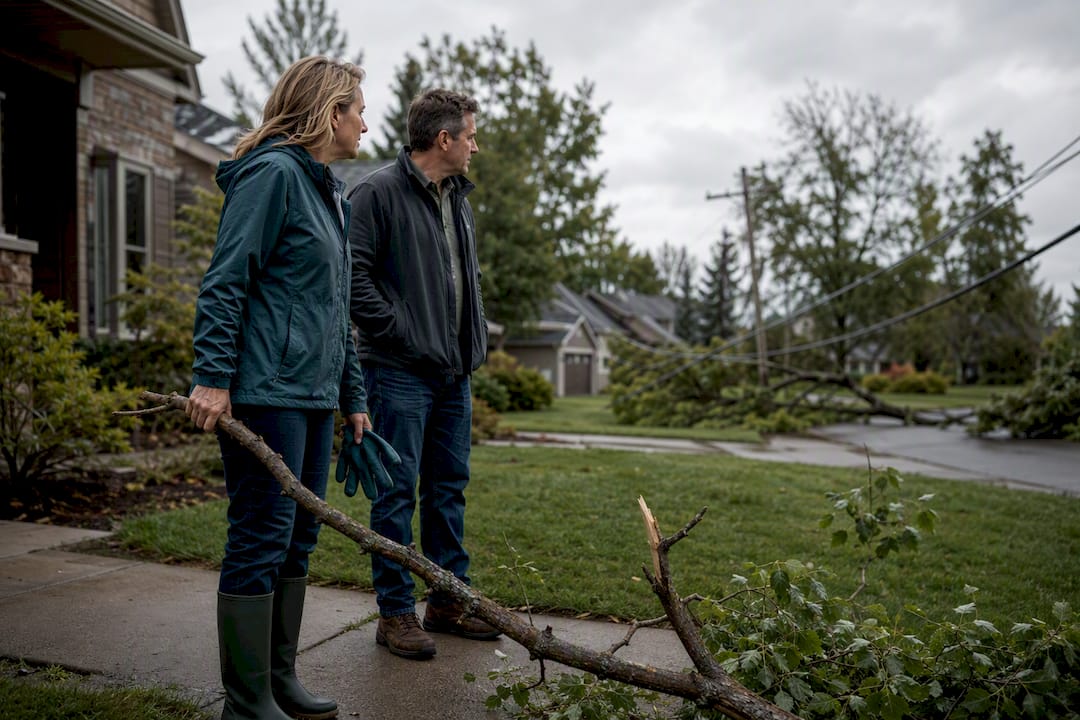
If you spot a live wire or smell gas, call 911 or your utility company immediately and stay back. Don’t wait to see if it resolves itself.
Once the immediate hazards are cleared, gear up properly:
- Heavy-duty work gloves that resist punctures from nails and splintered wood
- Safety glasses to keep flying debris and dust out of your eyes
- A hard hat if you’re working under damaged trees or rooflines
- Long sleeves and pants, even in summer heat, to guard against cuts and scrapes
- Slip-resistant boots for wet, uneven ground
- An N95 or better respirator for moldy insulation, drywall dust, or damp debris
Never work alone on high-risk tasks like clearing a fallen tree from your roof. Rotate breaks often. Storm cleanup is physically exhausting, and fatigue is when people get hurt. Leave chainsaw work and climbing to trained professionals.
Pro Tip: Tensioned tree limbs can spring back with real force once a cut releases pressure. If a branch is bent or wedged against something, treat it as loaded and call a professional rather than freeing it yourself.
How Do You Sort Storm Debris Into the Right Categories?
Municipalities across the country use a standard six-category system for post-storm debris, and knowing it before you start piling saves you from a missed pickup. The EPA’s disaster debris guidance outlines the categories crews are trained to collect separately:
- Vegetative debris — tree limbs, leaves, brush, and downed branches
- Construction and demolition (C&D) debris — lumber, drywall, roofing material, fencing
- White goods — refrigerators, washers, dryers, and other large appliances
- Electronics — TVs, computers, and other e-waste
- Household hazardous waste — paint, propane tanks, pesticides, cleaning chemicals
- Regular household garbage — everything else that isn’t storm-related
Crews often skip mixed piles entirely rather than sort them on-site, which means a single trash bag tossed into a vegetative pile can cost you an entire collection cycle. Keep vegetative debris loose, not bagged. Grappler trucks are built to scoop loose limbs and branches; bagged material jams the equipment and usually gets left behind.
A few placement habits matter just as much as the sorting itself:
- Keep piles clear of fire hydrants, gas meters, and mailboxes
- Never stack debris under low-hanging power lines
- Don’t lean branches or lumber against fences, sheds, or your house
Where Should Storm Debris Go for Curbside Pickup?
Place debris at the edge of your property nearest the street or public right-of-way, not between the sidewalk and your house. City guides, including Orlando’s storm debris reporting page, are explicit that many crews won’t pick up from that inner strip at all, and vegetative debris must stay loose rather than bagged.
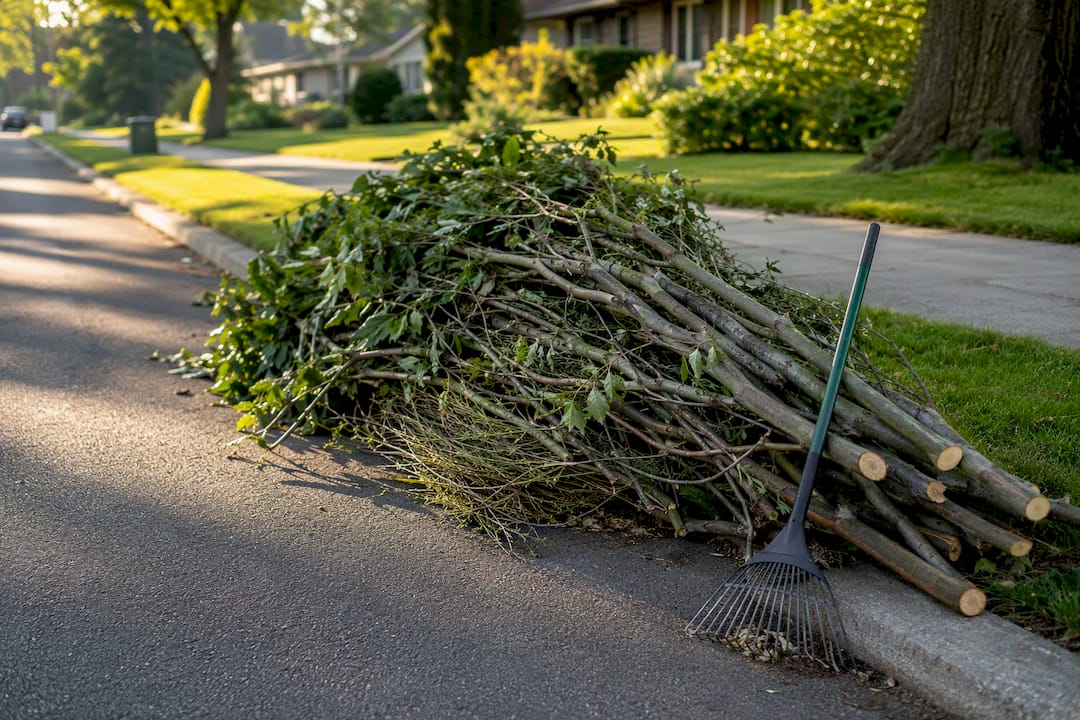
Municipal crews and their heavy grappler trucks won’t enter private property. If your pile sits behind a fence or tucked against the house, it may simply get passed over.
Common rules you’ll see repeated from city to city:
- No bagging vegetative debris, even in leaf bags
- No blocking storm drains, hydrants, or utility access
- Keep piles accessible to large equipment, with several feet of clearance on all sides
Timelines vary widely and depend on storm severity. Crews typically triage the worst-hit streets first, then work through contractor rounds over time. County-level guides like Charlotte County’s debris separation plan show how consistent these placement rules are across jurisdictions, even when the calendar for pickup differs. Debris management plans typically activate only after a formal disaster declaration, so check with your local public works office for guidance on pickup schedules. Until then, normal trash service may be your only option.
What Storm Debris Needs Special Disposal Instead of Curbside Pickup?
Some items should never sit in your curbside pile, no matter how storm-related they are. Paint, pesticides, gasoline, and old batteries count as household hazardous waste, and mixing them into a general debris pile creates a real contamination risk for crews and neighborhood soil.
Damaged refrigerators and freezers need their doors secured shut before they go anywhere near the curb, both for child safety and to keep spoiled contents contained. Electronics and vehicle wreckage almost always require a separate drop-off or scheduled special pickup rather than standard collection.
FEMA’s guidance on private property debris removal specifically warns homeowners to avoid handling containers that are leaking or unlabeled, and to contact local emergency managers when debris poses a public health risk.
- Check your city or county’s solid waste page for hazardous-waste drop-off dates and locations
- Photograph leaking containers before moving them, then set them upright in a secondary container if you can do so without direct contact
- Never burn debris; it releases toxic smoke and is illegal in most jurisdictions during active cleanup periods
Debris volume after major storms is enormous, and disposal costs are one of the largest line items in disaster recovery budgets. Sorting correctly the first time isn’t just about convenience; it keeps recovery costs down for the whole community.
When Should You Call a Professional Instead of Doing It Yourself?
Some jobs are not homeowner jobs, no matter how capable you feel. If you see a downed line that’s still live, smell gas, notice a structure that looks ready to collapse, or suspect someone is trapped, call 911 or your utility company immediately. Don’t attempt to assess the situation yourself first.
Beyond emergencies, hand these tasks to professionals every time:
- Tree removal, especially anything involving a chainsaw above waist height or on unstable ground
- Roof debris removal, where a single misstep can mean a serious fall
- Mold remediation in wet drywall or insulation
- Heavy equipment operation for large trees or structural debris
- Hazardous-waste handling beyond small household quantities
Pro Tip: If a contractor quotes tree work that involves cutting above your head or from a ladder, ask whether they carry certified arborist training. Storm-damaged trees behave unpredictably, and general landscaping skills aren’t the same as storm-specific tree work.
In federally declared disasters, FEMA’s Public Assistance program may reimburse local governments for large-scale debris removal, which is part of why some neighborhoods get faster service than others. It’s a local government function first, with federal assistance layered on top once a declaration is made.
What’s a Realistic Cleanup Timeline After a Storm?
Storm recovery is a marathon that starts with a sprint. The first three days are about safety and documentation, not finishing the job.
- Days 0 to 3: Assess hazards, photograph all damage before moving anything, sort debris into the six standard categories, and report downed lines or gas leaks right away.
- Week 1 to 4: Stage sorted piles at the curb for pickup, salvage anything worth drying out, and start getting contractor estimates for structural repairs.
- Ongoing: Keep every photo, receipt, and written estimate for insurance claims, and resist the urge to rush high-risk tasks just to speed things along.
If you’re staging yard waste for eventual pickup, our fall cleanup timing guide covers why raking or piling too early often means doing the work twice. The same logic applies after a storm: pace the work around what your municipality is actually ready to collect.
Where Can You Find Official Storm Debris Guidance?
Start with your city or county’s public works or solid waste division website. Most post updated pickup zones and schedules within days of a major storm. For federal context, the EPA’s disaster debris page and FEMA’s debris removal tips explain sorting rules and safety basics in plain language.
For insurance and any future federal assistance, keep a simple documentation folder:
- Time-stamped photos of damage before cleanup begins
- Receipts for any temporary repairs or disposal fees
- Written contractor estimates for larger repair work
A Contractor’s View on What Homeowners Get Wrong
We see the same mistakes on almost every storm-damaged property: mixed piles that get skipped by collection crews, bagged branches that jam equipment, and debris stacked so close to fences and structures that our crews can’t safely access the area. Staging debris correctly the first time saves days.
Hiring a professional crew makes the most sense when drainage has been disrupted, shoreline erosion has started, or hardscape features like patios and walkways took direct damage. Those repairs need more than a rake and a truck.
Before hiring anyone for cleanup, ask three things: What’s included in the quoted price? How do you handle hazardous materials if you find them? And what’s your plan if you uncover structural damage mid-job? Our contractor questions guide covers more of what to ask before signing anything.
— Ty
How Village Precision Pros Handles Post-Storm Property Repairs
Village Precision Pros is the alternative to piecing together separate haulers, tree crews, and repair contractors after a storm. One team handles debris hauling, drainage fixes, shoreline stabilization, and hardscape repair, so you’re not coordinating three different schedules while your yard sits torn up.

Storm damage rarely announces itself in one neat problem. A downed tree might reveal a cracked patio slab underneath, or heavy rain might expose a drainage issue that’s been building for years. Our crews assess the full picture on-site, safety first, before quoting anything, and we’re direct about scope so you’re not surprised by add-ons halfway through. Smaller, urgent jobs move through our Quick Task Management process without the wait of a full project queue. For larger repairs, drainage corrections, or shoreline work, schedule a landscaping consultation and we’ll walk the property with you and put the scope in writing before any work begins.
Sources
For deeper detail beyond this checklist, the EPA’s disaster debris management page covers category definitions and planning basics. FEMA’s private property debris tips and Public Assistance debris removal guidance explain safety practices and federal assistance eligibility. For a real-world example of city-specific pickup rules, see this Naples hurricane debris pickup guide from Fix. Move. Haul.
- Managing debris after a natural disaster | US EPA
- Tips for removing debris from your private property | FEMA
- FOR 115/FR170: Cleaning Up After a Hurricane: Safety Comes First! | IFAS (University of Florida)
FAQ
Does Homeowners Insurance Cover Debris Removal?
Many homeowners policies include limited debris removal coverage, often tied to your dwelling coverage limit, but the amount and conditions vary significantly by policy and insurer. Check your specific policy documents or call your agent before assuming a full cleanup is covered.
What Counts as Storm Debris?
Storm debris generally falls into six categories: vegetative material like limbs and brush, construction and demolition debris, appliances, electronics, household hazardous waste, and regular household garbage. Most municipalities require these to be sorted and kept separate for pickup.
How Long Does It Take to Clean Up After a Tornado or Hurricane?
Initial safety cleanup and sorting typically happens within the first three days, but full municipal debris pickup can take weeks depending on storm severity and how crews prioritize hard-hit areas. Larger repairs to structures, drainage, or hardscaping often extend well beyond the initial pickup window.
Can I Put Bagged Leaves and Branches at the Curb After a Storm?
No. Most cities require vegetative debris to stay loose rather than bagged, since collection trucks use grappler equipment designed to scoop unbagged material. Bagged debris often gets left behind entirely.
When Should I Hire a Professional Instead of Cleaning Up Myself?
Call a professional for tree removal involving chainsaws, roof debris, structural repairs, or drainage and shoreline damage. Professional crews handle the repair side once debris is cleared, particularly when a storm has exposed grading, drainage, or hardscape problems.