

Yes, a French drain needs routine inspection and occasional cleaning to prevent clogs and water damage. Run a hose flow test at the cleanout, clear debris from inlet grates, and call 811 before any digging near the trench. If you’re seeing standing water near your foundation or a basement that won’t dry out, skip the DIY steps and schedule a professional inspection.
TL;DR:
- Routine inspections and cleaning are essential to prevent sediment buildup that causes clogs and water damage in French drains.
- Flushing with a garden hose and snaking are common DIY methods, but persistent issues may require professional hydro-jetting or excavation.
- Material quality, including proper gravel, fabric, and smooth-wall pipe, significantly extends the drain’s lifespan and reduces maintenance needs.
- Repeated clogs, standing water beyond 24 hours, or visible pipe damage indicate a need for professional assessment and possible repair.
- Landscape upkeep, such as protecting against erosion and root intrusion, plays a crucial role in maintaining drain performance over decades.
Table of Contents
- Why French Drain Maintenance Starts With an Inspection Checklist
- How Do You Unclog a French Drain Yourself?
- When Do You Need Hydro-Jetting or Excavation Instead?
- What Materials Keep a French Drain From Needing Constant Repair?
- Quick Tests That Tell You What’s Actually Wrong
- Common Failure Modes We See in the Field
- Protecting the Landscape Around Your Drain
- Not All French Drains Are Built the Same
- Weighing DIY Checks Against Calling a Pro
- Get Your French Drain Inspected by Village Precision Pros
- Sources
- FAQ
Why French Drain Maintenance Starts With an Inspection Checklist
You can’t fix what you haven’t found, and most French drain problems hide below grade until they announce themselves as a wet basement or a soggy corner of the yard. A methodical walk-through twice a year catches small issues before they become excavation projects.
Start by locating your access points. Cleanouts are usually capped PVC pipes sticking a few inches out of the ground near the drain’s high end. Inlet grates sit at low points where surface water enters, and the daylight outlet is wherever the pipe exits, often at a slope, a ditch, or a curb.
Walk the entire run and check for these red flags:
- Pooling water that lingers more than a few hours after rain
- New soggy patches along the trench line that weren’t there last season
- Heaving or sunken soil, which signals a collapsed pipe or washed-out gravel bed
- Missing or cracked cleanout caps that let debris and roots into the system
- An outlet that’s buried, crushed, or clogged with silt and leaves
Extension research from LSU AgCenter recommends routine inlet and outlet checks paired with flushing as part of standard upkeep, not just emergency response. Write down what you find, then retest with a hose flush a week later. If pooling returns in the same spot, that’s your target for deeper cleaning.
Pro Tip: Take a phone photo of your cleanout and outlet locations the first time you find them. Six months later, when the yard is overgrown, you’ll thank yourself.
How Do You Unclog a French Drain Yourself?
Most clogs respond to the least invasive method first, so work your way up in force rather than jumping straight to power tools.
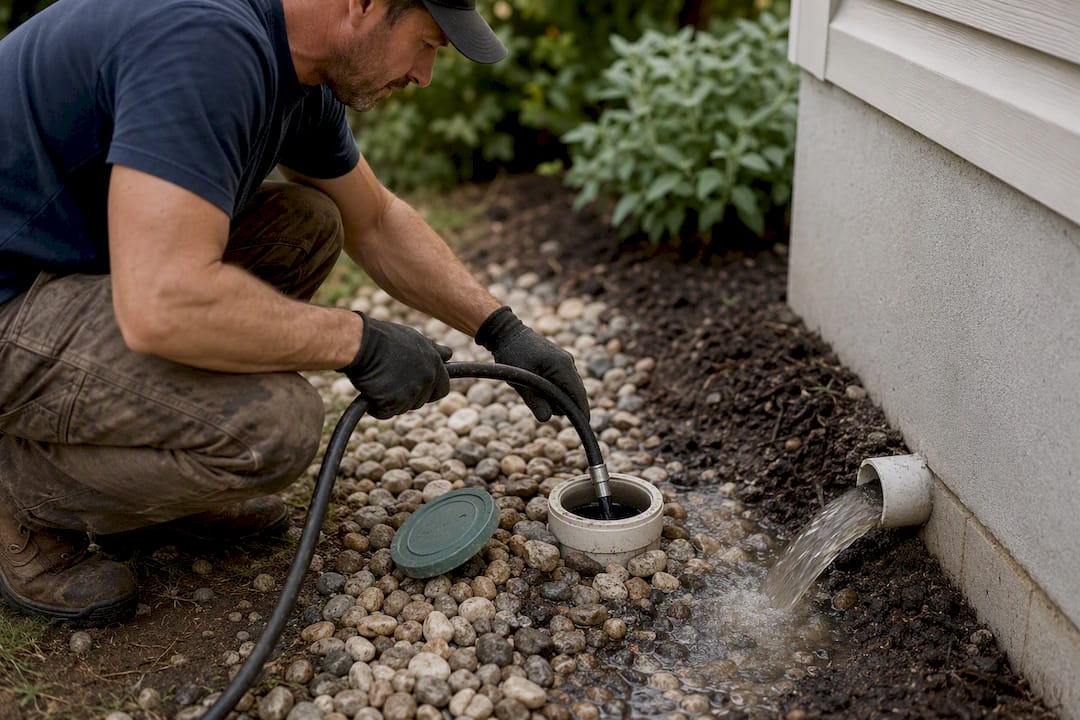
- Flush with a garden hose. Run water into the cleanout at full pressure for several minutes. Success looks like a steady, unobstructed flow out the daylight outlet within a minute or two. If water backs up or takes a long time to appear, you’ve got a partial blockage.
- Step up to a pressure washer. Insert the nozzle a foot or two into the pipe, angle it away from your face, and use a fan tip rather than a pinpoint jet, which can gouge softer PVC. Wear eye protection, since debris and dirty water will come back at you.
- Rent an electric drain snake for stubborn clogs. Choose a auger head sized for 4 inch pipe, feed it in slowly, and let the motor do the cutting rather than forcing it. Back off in short bursts to clear cut debris instead of pushing it deeper into the line.
Avoid chemical drain solvents entirely. They’re formulated for household plumbing, not perforated pipe surrounded by soil and gravel, and they can degrade pipe fittings while doing nothing to fix sediment buildup around the perforations.
When Do You Need Hydro-Jetting or Excavation Instead?
Hydro-jetting is the professional standard for clearing fine silt that a garden hose or snake can’t touch, since it blasts high-pressure water through the entire pipe length and flushes sediment out the outlet in one pass, according to MiamiRooterPro’s maintenance guide. It’s typically the right call once you’ve tried flushing and snaking without lasting results.
Excavation becomes necessary when the problem isn’t sediment but structural. Fabric that’s disintegrated, a pipe that’s crushed or collapsed, or clogs that return within weeks of cleaning all point to a failure below the surface that no amount of jetting will fix.
Before anyone breaks ground, call 811 to have utility lines marked. It’s free, it’s often required by law, and hitting a gas or electrical line while digging a drain trench turns a maintenance job into an emergency. Deeper trenches may also need shoring or a permit depending on local code, which is one more reason this stage belongs to a licensed contractor rather than a weekend project.
Bring in a professional when you see:
- Repeated clogs within the same season despite cleaning
- Standing water that doesn’t recede within 24 hours of rain
- Visible pipe collapse, crushed sections, or exposed fabric
- Any digging deeper than a foot or two near utility lines
What Materials Keep a French Drain From Needing Constant Repair?
The maintenance schedule you’ll actually need depends heavily on what’s in the ground. A drain built with the right materials from day one can go years between service calls; one built with shortcuts will fight you every season.
- Non-woven geotextile fabric wraps the gravel bed and keeps soil out, but it isn’t permanent. Fine soil particles migrating into the gravel envelope over decades is a primary cause of long-term clogging, as Practical Engineering explains in its breakdown of how these systems actually fail.
- Washed, graduated gravel matters more than people expect. Ungraded or dirty gravel traps fines instead of letting water pass, which speeds up the same clogging process fabric is meant to prevent.
- Smooth-wall SDR pipe outperforms corrugated pipe for long-term flow. Corrugated pipe’s ridges catch sediment more readily, while smooth-wall pipe moves water faster and stays cleaner over time.
- Consistent slope, typically in the 1% to 2% range, keeps water moving toward the outlet instead of sitting in low spots where sediment settles.
In heavy clay or silt soils, a staged filter of sand plus graded gravel can outperform a single layer of fabric, a distinction Practical Engineering’s testing makes clear and one worth raising with a contractor before installation, not after. If you’re weighing a full drainage system upgrade, these material choices are where the conversation should start.
Quick Tests That Tell You What’s Actually Wrong
You don’t need a camera crew to diagnose most French drain problems. A few low-tech tests give you a clear pass or fail answer in under a day.
- Flow test at the cleanout. Pour water in and watch the outlet. A steady stream means the pipe is clear; a slow trickle or backup at the inlet means a blockage somewhere in the run.
- 24-hour percolation check. Dig a small hole near the trouble spot, fill it with water, and see how long it takes to drain. Water still sitting there after a day points to a soil or grading problem, not just a pipe issue.
- Basement inspection. Efflorescence (that white, chalky mineral residue on foundation walls), a musty smell, or rising damp near the base of a wall are surface symptoms of a drain that’s not doing its job below grade.
While you arrange repairs, buy time with temporary fixes: redirect downspouts away from the saturated area, clear anything blocking the outlet, and sandbag low spots that keep collecting water. These are stopgaps, not solutions, but they limit damage while you get a permanent fix scheduled.
Common Failure Modes We See in the Field
Most French drain failures trace back to the same handful of shortcuts. Missing or degraded filter fabric lets soil migrate into the gravel bed until the whole system chokes on sediment. Poor gravel selection, corrugated pipe instead of smooth-wall, and slope that’s too flat or uneven all show up repeatedly in InterNACHI’s inspection guidance as common causes that eventually require excavation to correct.
Diagnosing which one you’re dealing with usually takes more than a visual walk-through. Camera inspection lets a technician see sediment buildup, root intrusion, or a collapsed section without guesswork. Slope measurement confirms whether water is actually moving downhill the whole way or pooling at a hidden low point partway through the run. Outlet tracing follows the discharge to confirm it’s not buried, crushed, or dumping water somewhere it shouldn’t, a concern LSU AgCenter’s guidance also raises when it comes to keeping discharge off neighboring property.
When our crews inspect a failing drain, we look at material choices first: was the right fabric used, is the gravel graded correctly, and does the pipe have the flow capacity for the site’s water volume. Outlet solutions matter just as much as the trench itself. A pop-up disperser or a properly graded daylight outlet prevents the exact ponding that sends homeowners looking for help in the first place. Where a full re-dig isn’t necessary, we favor minimally invasive repairs, spot-excavating a failed section rather than tearing out a healthy run.
Pro Tip: If your yard has one persistent wet spot but the rest of the drain performs fine, ask for a spot repair quote before agreeing to a full trench replacement. It’s often a fraction of the cost.
Protecting the Landscape Around Your Drain
A French drain doesn’t operate in isolation. It sits inside a yard that’s constantly shifting, eroding, and growing new root systems, and the ground around the trench needs its own upkeep to keep the drain working.
Erosion along the trench line is the most common landscape issue we see. Bare soil above a French drain washes out easily during heavy rain, exposing gravel or even pipe sections. Ground cover, mulch, or turf established directly over the trench line holds soil in place and keeps sediment from washing directly into the inlet grates.
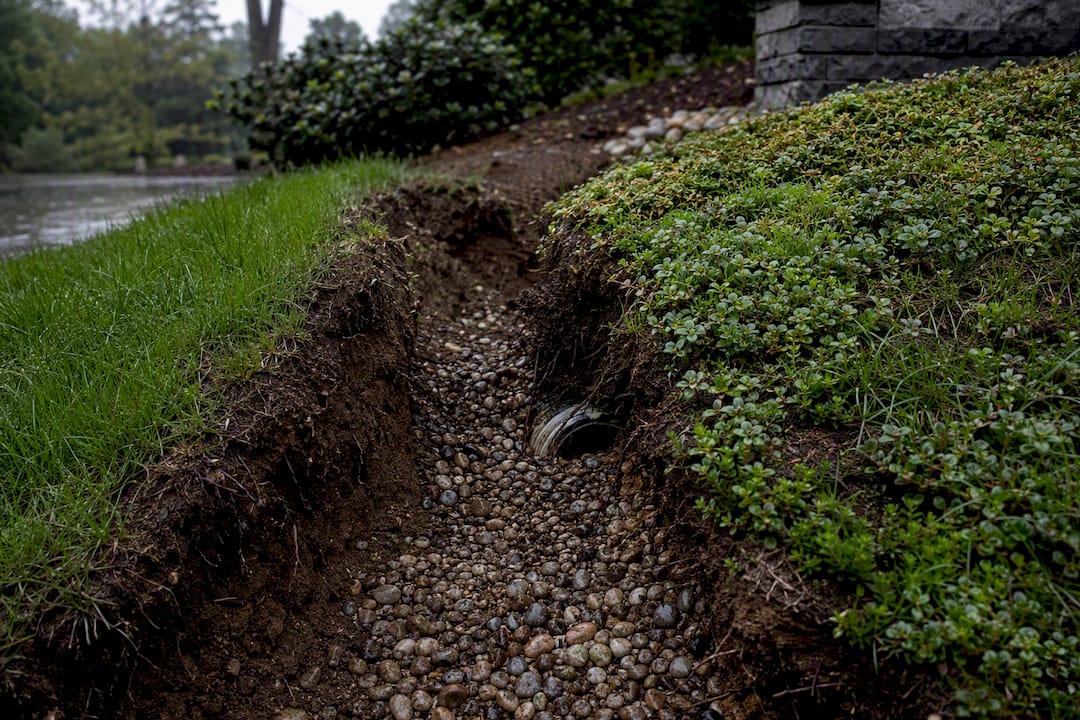
Tree and shrub placement deserves real thought. Roots seek out the moisture and oxygen inside a gravel-filled trench, and over years they can infiltrate joints or crush pipe sections outright. Keep fast-growing, water-seeking species like willows or silver maples well away from any known drain run, and if mature trees already sit close to the trench, budget for periodic root inspection rather than hoping for the best.
Grading matters just as much as what’s planted. If regrading, filling low spots, or adding retaining structures near the drain, confirm the surrounding slope still directs surface water toward the inlets rather than away from them, since a well-intentioned landscaping change can quietly starve a drain of the water flow it was designed to intercept. Homeowners dealing with sloped yards often find that correcting the grade solves problems a French drain alone can’t. And if a retaining wall sits near the outlet, its own drainage details need to work in concert with the French drain, not against it.
Not All French Drains Are Built the Same
The maintenance schedule and failure points shift depending on which type of French drain you’re dealing with, and knowing which one you have changes how you inspect and clean it.
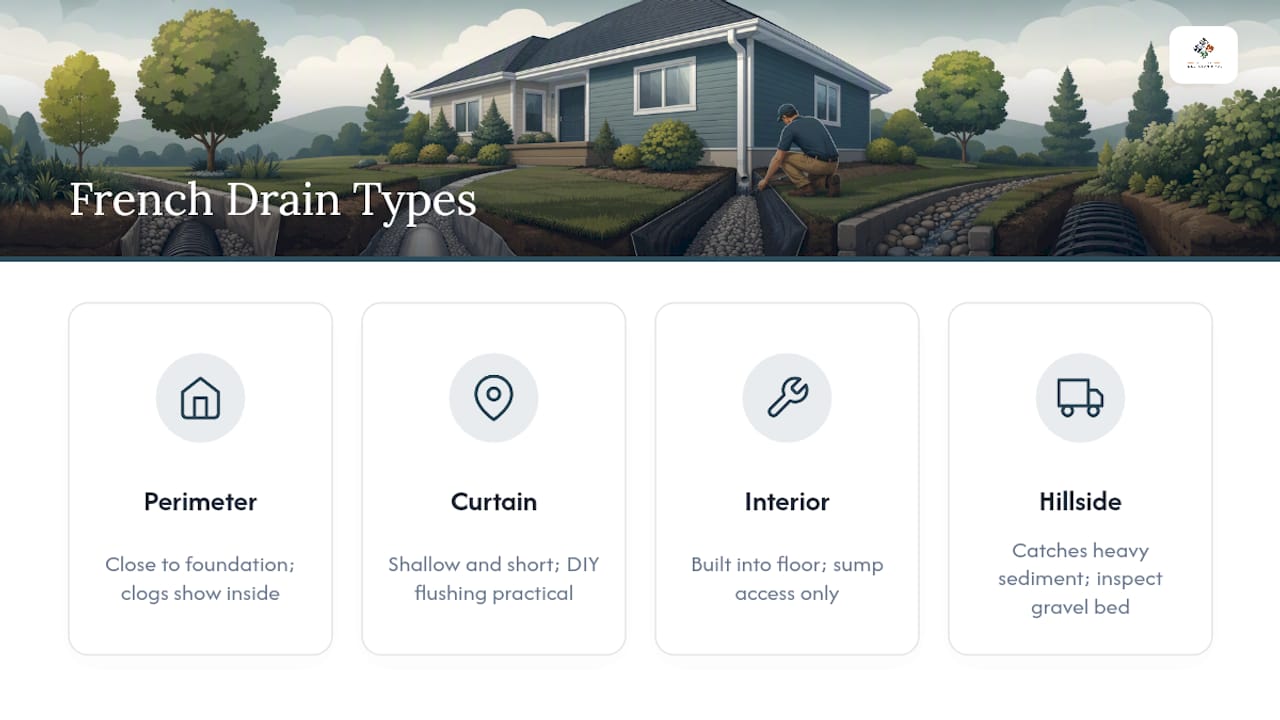
Perimeter drains run around the outside of a foundation to intercept groundwater before it reaches basement walls. Because they sit close to the house, clogs here show up fastest as interior symptoms, damp walls, efflorescence, or a musty crawlspace, and they warrant more frequent inspection given the proximity to the structure.
Curtain drains intercept water flowing downhill before it reaches a specific area, like a patio or a low section of yard, rather than surrounding a structure. They’re typically shorter and shallower than perimeter systems, which makes DIY flushing more practical but also means they clog faster if leaf litter and topsoil aren’t kept clear of the inlet.
Interior French drains, built into a basement floor along the foundation wall, deal with a different challenge entirely. Sediment here tends to be finer, and access for cleaning is usually limited to a sump pit rather than an outdoor cleanout, which is one reason interior systems often need professional attention sooner than yard-based drains.
Slope or hillside drains, cut across a grade to redirect surface runoff, take the heaviest sediment load of any type because they’re constantly catching soil washed downhill. These need more frequent gravel-bed inspection than a flat-yard perimeter system.
Whatever type you have, the same core principle from LSU AgCenter’s guidance applies across all of them: accessible cleanouts and clear outlet points make the difference between a five-minute flush and a half-day excavation.
Weighing DIY Checks Against Calling a Pro
Annual flushing and a twice-yearly walk-through will keep a healthy French drain healthy for years. That part is squarely in a homeowner’s wheelhouse, and skipping it is the single biggest reason otherwise well-built systems fail early.
Where I’d draw the line is repetition. One clog is maintenance. A clog that returns within a month, or any hint of foundation moisture, isn’t a DIY problem anymore. Professional inspection at that point usually costs far less than the re-excavation and foundation repair that follow when a failing drain goes ignored, and it protects whatever hardscape investment sits nearby.
— Ty
Get Your French Drain Inspected by Village Precision Pros
If your drain is showing warning signs and the DIY steps above haven’t solved it, Professional services provide Central Arkansas homeowners with a direct path to a fix instead of another season of guesswork. Our crews inspect the full run, from cleanout to outlet, and recommend targeted repairs, whether that’s a slope correction, an outlet fix, or replacing degraded fabric and gravel, rather than pushing a full trench replacement you don’t need.

A consultation starts with that same kind of walk-through: locating access points, checking flow, and identifying whether you’re dealing with sediment, a structural failure, or a grading issue in the surrounding yard. From there, we outline the repair process and what materials we’d use, so you know exactly what you’re paying for before work begins. Experience from numerous completed projects across Central Arkansas shows that most failure modes covered in this guide can be encountered firsthand.
If standing water or a damp basement has you wondering what’s happening underground, schedule a consultation and get a straight answer instead of another guess.
Sources
For technical detail beyond this guide, see Practical Engineering’s breakdown of drain mechanics and InterNACHI’s inspection standards. Always call 811 before digging.
- How French Drains Work — Practical Engineering
- Installing and maintaining a French drain — LSU AgCenter
- French drain inspection — InterNACHI
- What is a French drain? How French drains work — Modernize
- How a French Drain Works: Repair, Cleanout & Maintenance Guide — MiamiRooterPro
FAQ
Do French Drains Require Maintenance?
Yes. Routine inspection, inlet clearing, and occasional flushing prevent the sediment buildup and clogging that eventually lead to standing water or excavation.
How Many Years Does a French Drain Last?
A well-installed French drain can last 30 to 40 years, depending on material quality and whether it receives regular maintenance.
Do French Drains Eventually Clog?
Most do, over long enough time. Fine soil particles migrating into the gravel bed is the primary cause, which is why filter fabric and graded gravel matter so much at installation.
How Do You Tell if a French Drain Is Clogged?
Run a flow test at the cleanout. A slow trickle or backed-up water, combined with surface pooling or a damp basement, signals a blockage that needs cleaning or professional inspection.
Can I Clean a French Drain Myself?
Garden-hose flushing and a rented drain snake handle most routine clogs. Persistent blockages, structural damage, or basement moisture call for hydro-jetting or a professional inspection instead.