


For fast seclusion, use modular fabric panels or tall planters; for lasting privacy, pair a layered living screen with a structural element like a slatted wall or pergola. The University of Maryland Extension found evergreens spaced 3 to 4 feet apart block nearly all sightlines at a 45 degree angle, but that takes seasons to fill in. Map your sightlines before you buy anything, then choose accordingly as effective privacy depends on site conditions and plant maturity periods.
TL;DR:
- Evergreen plants spaced 3 to 4 feet apart can block nearly all sightlines but may take several seasons to fully fill in.
- Modular options like fabric panels on T-posts can be installed in an afternoon for immediate privacy.
- Combining layered plantings with structural elements, such as slatted walls or pergolas, creates longer-lasting and more effective screens.
- Proper mapping of sightlines with photographs and height simulations can prevent investing in ineffective privacy solutions.
- Fast-growing container plants and prebuilt screens are best for quick privacy, but permanence and durability depend on materials and anchoring methods.
Table of Contents
- Privacy Screen Ideas That Actually Solve the Problem
- How to Map Sightlines Before You Build Anything
- Materials and Durability: What Holds Up Outdoors
- Fast-Track Options When You Need Privacy Now
- What Privacy Screens Actually Cost You in Time
- Anchoring, Job-Fit, and When to Call a Pro
- Do Privacy Screens Actually Cut Down Noise?
- A Note on Balancing Privacy and Airflow
- Get Help Designing and Installing Your Privacy Screen
- Sources
- FAQ
Privacy Screen Ideas That Actually Solve the Problem
Most privacy screen ideas fail because homeowners pick a style before checking whether it fits the sightline problem they actually have. The list below covers the ones that hold up, from plantings that take three seasons to mature to panels you can bolt in over a weekend.
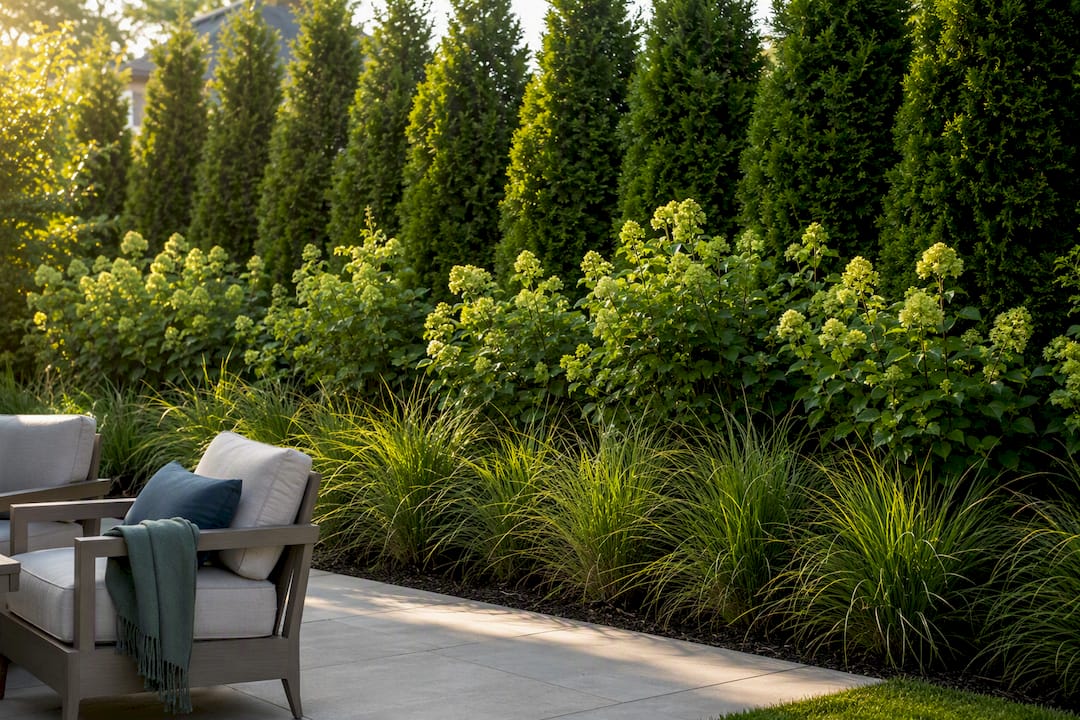
- Layered living screen. Plant a back row of tall evergreens like arborvitae 3 to 4 feet apart on center, a middle row of medium shrubs staggered in front of the gaps, and a front row of ornamental grasses. This structure gives you the density the University of Maryland Extension measured, and mixing species (not a single hedge variety) protects the whole screen from one pest or disease wiping it out, according to Gardening Know How.
- Slatted cedar wall. Vertical cedar boards with gaps between them block direct sightlines while letting air move through, which matters more than most people expect, once summer heat sets in. Anchor posts in concrete footings below the frost line, or use heavy-duty post bases bolted to an existing slab.
- Laser-cut metal panels. Powder-coated steel or aluminum panels with decorative cutouts add visual interest most wood and fabric options can’t match, and they shrug off rot, warping, and insect damage for decades.
- Pergola with drop curtains or bamboo blinds. A pergola blocks overhead sightlines from second-story neighbors; add outdoor curtains or roll-down bamboo blinds on the sides for privacy you can open or close depending on the day; for expert support, consider hiring a pergola installer.
- Trellis with climbing vines on large planters. This is the best option for renters and balconies, since the whole structure sits in a container and moves with you.
- Rolling planter boxes with container bamboo. Clumping bamboo varieties (not running types, which spread aggressively) grow fast in containers and roll into place wherever the sightline problem actually is.
- Fabric privacy panels on T-posts. Shade fabric rated for 95% UV block, tensioned between steel T-posts, gives you a screen in an afternoon. It’s the fastest fix on this list.
- Lattice with potted vines. A softer, semi-permanent option that reads more garden than fence, good for softening a harder structural screen elsewhere in the yard.
- Multiuse screens. A slatted panel that doubles as a storage bench back, or a privacy panel built around an outdoor shower, gets two jobs done with one structure.
- Freestanding folding screens. Great for entertaining, since you can reposition them depending on where guests are sitting that day.
- Hybrid planter-backed slatted panel. Build a slatted wall with an integrated planter box along the base, then plant it with climbers or grasses. You get immediate coverage from the panel and a living layer that fills in over the following seasons, which is the approach DesignTimes points to as the fix for the “wall effect” of solid barriers.
Pro Tip: If you’re combining a structure with plants, build the planter box a few inches wider than the mature root spread listed on the plant tag. Cramped roots stunt growth and slow down the exact coverage you’re trying to speed up.
How to Map Sightlines Before You Build Anything
Privacy problems are directional, not general, so the fix should be too. A few afternoons of planning save you from installing a screen that misses the actual line of sight.
- Photograph the problem views. Stand where you actually sit or grill, then photograph what a neighbor’s second-story window, the sidewalk, or a driveway can see into your space.
- Simulate height on site. Use stakes, cardboard, or a tall friend standing where the screen would go to check what height actually interrupts the view, both seated and standing. Harmony Landscape Design recommends this exact test before ordering materials.
- Match height to the problem. Low porch screens usually need 3 to 4 feet, patio-level privacy calls for 6 to 8 feet, and blocking a second-story view takes 8 to 12 feet of combined structure and planting.
- Check local rules and talk to your neighbor. Fence and screen height limits vary by city and by whether the structure sits on a property line, and a quick conversation avoids disputes before they start.
Materials and Durability: What Holds Up Outdoors
Wood is the classic choice, and cedar naturally resists rot and insects better than pine, so it’s worth the extra cost if you want the screen to outlast a decade outdoors. Pressure-treated pine costs less upfront but needs to dry fully before staining, or the finish will blotch. Composite boards cost the most but need almost no upkeep beyond an occasional wash.
Metal panels hold up best when they’re powder-coated and perforated enough to let wind pass through instead of stress the frame. Outdoor fabric should carry a UV rating and a mildew-resistant treatment, and it needs an occasional hose-down to stay clean. Living materials like container bamboo and ornamental grasses need less structural maintenance but more watering attention than arborvitae once established.
Anchoring is where most DIY screens fail. On concrete, use steel post bases with masonry anchors rated for outdoor use. Where drilling isn’t an option, build a wide, weighted planter base instead. A narrow, lightweight frame with no ballast is a wind hazard the first time a storm rolls through.
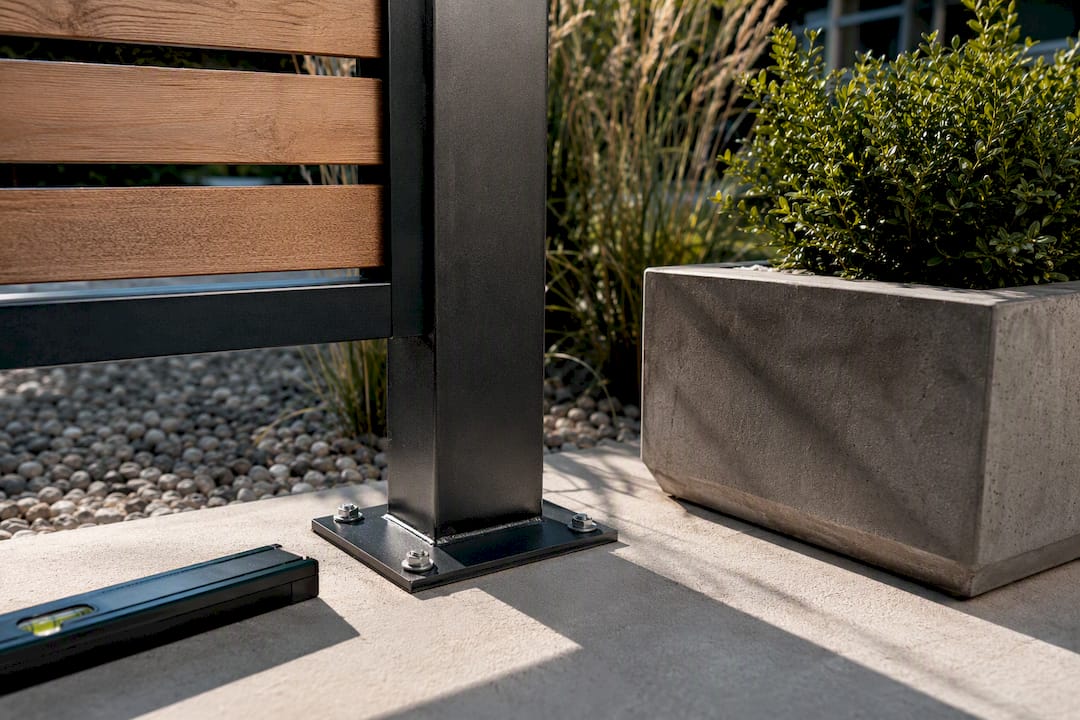
Pro Tip: For visible slats, specify S4S (surfaced four sides) lumber. It costs a little more than rough-sawn boards, but the clean edges make a slatted wall look intentional instead of improvised.
Fast-Track Options When You Need Privacy Now
Some fixes work while you wait for anything else to mature. Container-grown clumping bamboo, oversized ornamental grasses, and rolling planters give you height without a single shovel of digging. Fabric panels tensioned between T-posts install in a few hours and, according to The Garden Magazine, skip the contractor scheduling and permitting that a permanent fence requires.
- Tall container plants (bamboo, ornamental grasses) for instant height without digging.
- Fabric panels on T-posts for near-instant coverage in an afternoon.
- Prebuilt foldable screens or lattice panels that need minimal anchoring.
Watch the wind rating on anything freestanding, and never position a screen where it blocks a drainage path or cuts off light a neighboring garden bed depends on.
What Privacy Screens Actually Cost You in Time
Coverage speed depends entirely on what you plant or build. Fast-growing options like ornamental millet or clumping bamboo can show real coverage in one growing season, while evergreen hedges typically need 3 to 5 seasons to knit together into a solid screen.
- Maintenance: hedges need pruning once or twice a year; wood needs restaining every 2 to 3 years; fabric panels need periodic hosing down to prevent mildew buildup.
- Cost brackets: DIY materials sit at the low end, prebuilt modular systems land in the middle, and custom contractor installs cost the most upfront.
Proper anchoring adds to the install cost, but it cuts your risk of rebuilding after the first bad windstorm, which usually makes it the cheaper option over a few years.
Anchoring, Job-Fit, and When to Call a Pro
On a concrete patio, heavy-duty steel post bases with masonry anchors are recommended whenever drilling is possible. When it isn’t, we build a wide planted base instead, which adds weight and living coverage in one move.
Call a professional once the project involves uneven ground, drainage concerns, integrated seating, or a screen that needs to tie visually into an existing patio or hardscape. A good approach is to pair a structural screen for privacy on day one with a living layer that takes over the job as it matures.
Pro Tip: If your patio slopes even slightly, get a level check before setting posts. A screen that’s plumb to the eye but off-level at the base will lean visibly within a year.
Do Privacy Screens Actually Cut Down Noise?
Privacy screens block sightlines far more reliably than they block sound, and that distinction matters if noise is your main complaint. A solid slatted wall or a dense fence panel will knock down some street noise and reflect some sound away from a patio, but the gaps between slats that keep a screen breathable also let sound pass through fairly easily.
Living screens perform differently depending on density and depth. A thin single row of shrubs does almost nothing for sound, but a layered planting with a deep evergreen back row, mid shrubs, and ground-level grasses creates enough mass and irregular surface area to absorb and scatter some mid and high-frequency noise, like traffic hum or nearby conversation. It won’t compete with a masonry wall built specifically for acoustic dampening, but it does more than a flat fence panel of the same height.
For patios near busy roads or shared property lines, the best noise result usually comes from combining depth with density: a solid or near-solid structural base (a slatted wall with tighter gaps, or a low masonry wall) topped or backed with layered plantings. Water features and outdoor speakers playing ambient sound can also mask noise more effectively than any physical barrier alone, since they change what you hear rather than trying to block what’s coming in. If noise reduction is your priority over pure sightline privacy, say so upfront when planning your layout, because the material and gap spacing choices differ from a screen built purely to block a neighbor’s view.
A Note on Balancing Privacy and Airflow
Good privacy design breathes. A solid wall might block every sightline, but it also traps heat and kills the breeze that makes a patio worth sitting on in July.
One client wanted their patio reclaimed from a direct sightline into a neighbor’s yard, with almost no excavation and no major structural rebuild. A slatted panel with an integrated planter solved it in a weekend, and the plantings have filled in since. For anything more complex than that, a consultation is worth the hour.
— Ty
Get Help Designing and Installing Your Privacy Screen
If you’d rather skip the trial and error, Villageprecisionpros builds custom privacy solutions designed to fit your yard’s actual sightlines instead of a one-size-fits-all panel kit. Our crews handle custom slatted walls, integrated planter boxes, drainage-aware installs, and pergolas built to tie directly into your existing patio.

Pricing stays transparent from the first site visit, and a professional install often costs less over time than a DIY fix that needs rebuilding after one bad storm season. If your project involves uneven ground, drainage issues, or a design that needs to match existing hardscape, that’s exactly where a pro saves you both time and money. Start with a landscaping consultation and get a plan built around your actual sightlines, not a generic layout.
Sources
For layered planting specs and spacing guidance, the University of Maryland Extension guide covers mixed screen design in detail. For quick-install and non-fence approaches, DesignTimes and The Garden Magazine both walk through practical, budget-conscious options.
- Plants for mixed privacy screens — University of Maryland Extension
- Budget screens turn ordinary patios into private retreats — The Garden Magazine
- No fence needed: stylish backyard privacy ideas with plants, screens and smart landscaping — DesignTimes
- 6 Stylish privacy plants to screen a yard from neighbors — Gardening Know How
FAQ
Are there alternatives to a solid privacy screen?
Yes. Slatted wood or metal panels, pergolas with drop curtains, trellised planters, and fabric panels on T-posts all block sightlines without the heat buildup and heavier footprint of a solid wall.
How do I create a natural privacy screen?
Plant a back row of evergreens spaced 3 to 4 feet apart, add a middle row of shrubs, and finish with ornamental grasses in front. Mixing species instead of planting a single hedge type improves resilience against pests and disease.
How long does it take for a living privacy screen to fill in?
Fast-growing options like ornamental millet or clumping bamboo can show real coverage in one season, while evergreen hedges typically take 3 to 5 seasons to knit into a solid screen.
Do I need a permit to install a privacy screen?
Modular and prebuilt screens usually skip permitting entirely, but permanent structures like slatted fences or pergolas may fall under local height or setback rules, so check with your city before building.
What’s the fastest way to get privacy on a patio?
Fabric panels tensioned between T-posts or tall container plants like clumping bamboo give you coverage within a day, while permanent fixes take a season or more to mature or get built.