

Paver patio installation cost is defined as the total price to excavate, prepare, and lay interlocking pavers on a residential outdoor surface. In 2026, most homeowners spend between $3,000 and $9,000 for a standard 300-square-foot patio, with a typical range of $10 to $30 per square foot installed. That wide spread exists because material type, patio size, site conditions, and labor complexity each pull the final number in different directions. Understanding what drives each cost category puts you in control of the budget before a single shovel hits the ground.
What affects paver patio installation cost the most?
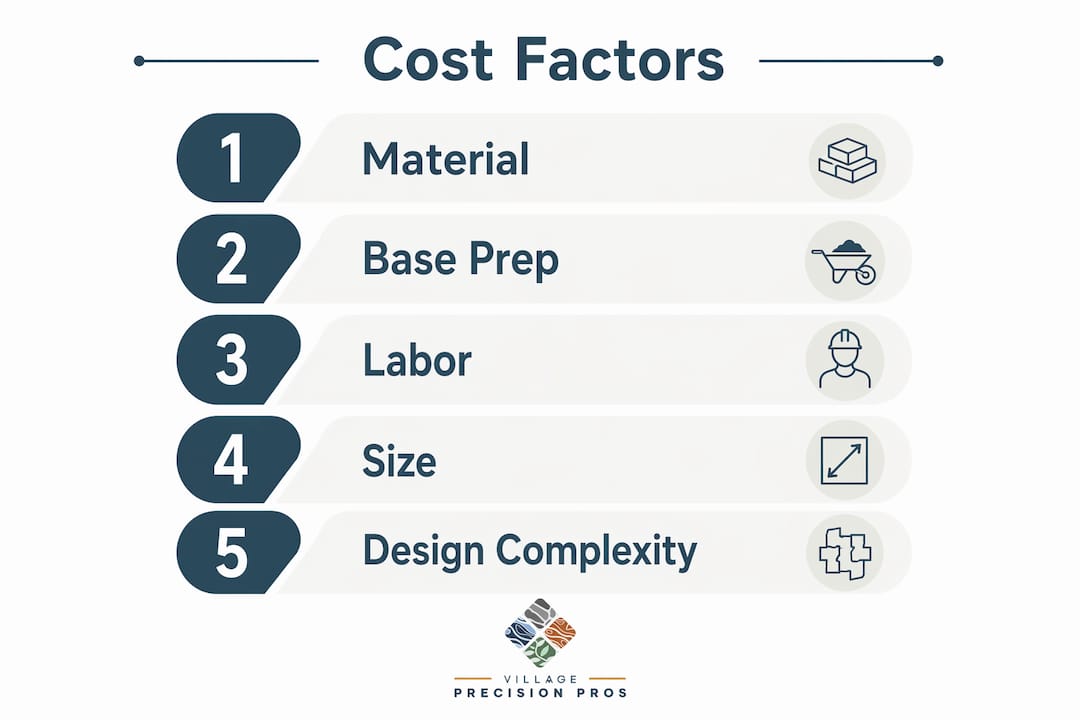
Material choice is the single biggest variable in patio paver installation cost. Concrete pavers run $10–$18 per square foot installed, brick pavers land at $12–$22 per square foot, and premium natural stone or high-end systems reach $18–$50 per square foot. Porcelain pavers sit near the top of that range because of their density and the precision cuts they require. Choosing the right material for your Arkansas climate means weighing freeze-thaw resistance and compressive strength alongside aesthetics.
How patio size changes the price per square foot
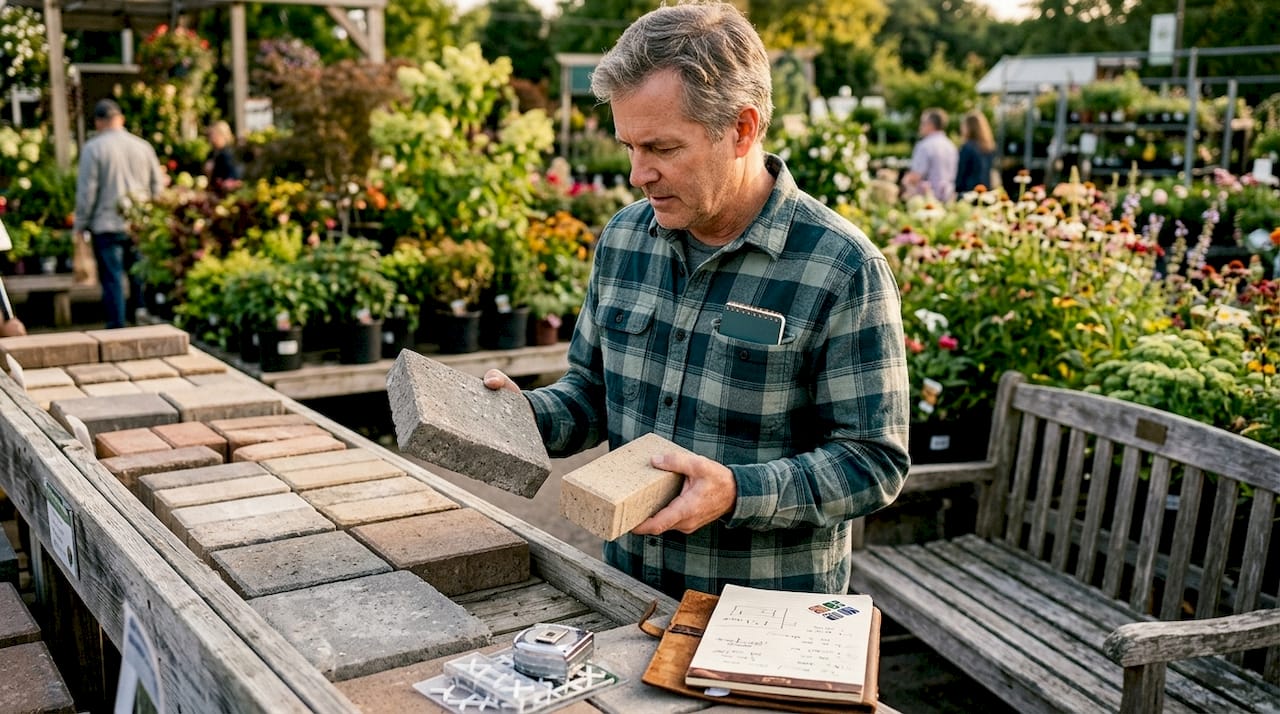
Patio size affects the cost per square foot in a way most homeowners do not expect. A 100-square-foot patio may cost around $20 per square foot, while a 500-square-foot patio can drop to roughly $14 per square foot. Fixed mobilization costs, such as equipment delivery and crew setup, spread across more area as the project grows. That means going slightly larger can actually lower your per-square-foot cost, not raise it.
Site conditions and their effect on labor
Site conditions are where budgets quietly expand. Poor natural drainage, clay soil, or high frost risk can require a deeper gravel base or added drain pipes, both of which raise the installed cost. Central Arkansas has its share of clay-heavy soils, so drainage upgrades are often a necessity rather than an option. Sites without direct equipment access force crews to hand-carry or wheelbarrow all materials, and difficult access raises labor costs significantly compared to a driveway-accessible backyard.
Pattern complexity and demolition
Intricate laying patterns, such as herringbone or circular designs, require more cuts and more time. Each additional cut adds labor minutes that accumulate quickly across a large surface. Demolition and disposal of an existing concrete slab or old patio surface adds a separate line item that many homeowners overlook during initial budgeting. Getting a clear scope of work in writing before the project starts prevents these surprises.
| Cost factor | Typical impact |
|---|---|
| Concrete pavers | $10–$18 per sq ft installed |
| Brick pavers | $12–$22 per sq ft installed |
| Natural stone | $18–$50 per sq ft installed |
| Difficult site access | Significant labor cost increase |
| Complex patterns | Higher cut count raises labor hours |
Pro Tip: Request itemized quotes that separate material, base prep, and labor costs. A single lump-sum bid makes it impossible to identify where corners might be cut.
What does professional paver patio installation involve?
Labor and base work account for 60–70% of the total installed cost. That figure surprises most homeowners who focus on the pavers themselves. Understanding each step explains why skilled installation commands a real price and why cutting corners on base prep leads to early failures.
A proper installation follows this sequence:
- Utility marking. Before any digging starts, underground utilities must be located and flagged to prevent damage and liability.
- Excavation. Our crews excavate 6–8 inches of soil to create a stable, level starting point for the base layers.
- Compacted aggregate base. We install 4–6 inches of compacted gravel in lifts, typically 2–3 inches at a time, compacting each lift before adding the next. This layered compaction is what prevents settling.
- Sand bedding layer. A 1-inch layer of coarse bedding sand is screeded flat across the compacted base. This layer allows minor adjustments and cushions the pavers.
- Slope for drainage. We set the surface with at least 1/4 inch per foot of slope directing water away from the home’s foundation. Skipping this step causes pooling and long-term water damage.
- Edge restraints. Plastic or metal edge restraints lock the perimeter pavers in place and prevent the field from spreading over time.
- Paver laying. Pavers are set by hand in the chosen pattern, cut as needed at borders, and checked for level throughout.
- Polymeric sand. Polymeric sand is swept into the joints and activated with water. It locks the interlocking joints against weeds, ants, and erosion.
- Final compaction and cleanup. A plate compactor runs over the finished surface to seat the pavers firmly into the sand bed. The site is then cleaned and inspected.
Pro Tip: Ask your installer whether polymeric sand and final compaction are included in the quoted price. Some low bids omit these steps, which shortens the patio’s lifespan considerably.
How to budget and plan your paver patio project
Start with a realistic size estimate and multiply by the material cost range that fits your goals. A 300-square-foot patio using concrete pavers at $14 per square foot installed lands around $4,200. The same footprint in natural stone at $25 per square foot reaches $7,500. Those numbers give you a baseline before you call a single contractor.
Budget for these additional items from the start:
- Material waste allowance. Add 10% to your material order to cover cuts, breakage, and pattern adjustments. Ordering short forces a second delivery and often a price difference on a small quantity.
- Site prep and drainage. If your yard has clay soil or poor drainage, budget for drain pipes or a deeper base. Treating drainage as optional is the most common mistake we see in Central Arkansas.
- Demolition. If an old slab or surface needs removal, get a separate line item for hauling and disposal.
- Contingency fund. Set aside 10–15% of the total budget for unexpected conditions found during excavation, such as buried debris or unstable subsoil.
Dimension planning also affects cost in a way that is easy to control. Planning patio dimensions in increments that match standard paver sizes, such as 4-inch or 8-inch modules, reduces the number of cuts needed and produces cleaner edges. A patio sized at 16 by 20 feet works cleanly with most standard pavers. A patio sized at 15 by 19 feet forces cuts on every border row.
Pro Tip: Use a paver patio installation cost calculator to model different size and material combinations before meeting with contractors. Knowing your numbers going in prevents you from being anchored to the first bid you receive.
The DIY versus professional question deserves an honest answer. DIY installation saves on labor but requires renting a plate compactor, a wet saw, and a screed setup, plus the time to learn proper compaction technique. Base work quality and longevity depend far more on hidden layers and workmanship than on the pavers themselves. A poorly compacted DIY base that settles in year two costs more to repair than the original labor savings.
Common pitfalls that inflate or undermine patio costs
Most cost overruns and early failures trace back to a short list of avoidable mistakes. Knowing them in advance protects both your budget and your patio’s lifespan.
- Underestimating base preparation. Inadequate excavation depth, insufficient gravel thickness, or poor compaction cause uneven settling and cracked pavers within a few seasons. This is the most expensive mistake to fix after the fact.
- Ignoring slope requirements. A flat patio looks fine until the first heavy rain. Water pooling against a foundation causes structural damage that dwarfs the cost of proper grading.
- Choosing complex patterns without budgeting for them. Herringbone and diagonal patterns can add meaningful labor hours to a project. If you love the look, price it in from the start.
- Overlooking site access. A backyard accessible only through a gate or narrow side yard requires hand-carrying all gravel, sand, and pavers. Labor costs rise sharply when equipment cannot reach the work area.
- Skipping polymeric sand or final compaction. These two steps lock the surface together. Omitting them leads to joint erosion, weed growth, and pavers that shift underfoot within a year or two.
- Not accounting for old surface removal. Laying new pavers over an existing cracked concrete slab is not a sound solution. Proper removal and disposal add cost upfront but prevent base problems later.
A low bid that omits any of these elements is not a deal. It is a deferred expense that lands back on you when the patio fails.
Key Takeaways
Paver patio installation cost in Arkansas ranges from $10 to $30 per square foot, and base preparation, drainage, and site access drive the final number more than paver material alone.
| Point | Details |
|---|---|
| Typical cost range | Most homeowners spend $3,000–$9,000 for a standard 300-square-foot patio. |
| Labor dominates the budget | Labor and base work account for 60–70% of total installed cost. |
| Size lowers unit cost | Larger patios spread fixed costs, dropping the per-square-foot price. |
| Base prep determines longevity | Proper excavation, gravel lifts, and compaction prevent settling and early failure. |
| Plan dimensions strategically | Sizing in standard paver module increments reduces cuts, waste, and labor time. |
What I’ve learned from 1,750 patio projects in Central Arkansas
Homeowners consistently underestimate the base. They spend hours choosing between travertine and concrete pavers, then accept a bid that skimps on gravel depth or skips final compaction. I have seen beautiful patios fail in 18 months because the base was rushed. The pavers were perfect. The ground beneath them was not.
Arkansas clay soil is unforgiving. It expands when wet and contracts when dry, and a shallow or poorly compacted base moves with it. Our crews always go to the full 6–8 inch excavation depth and compact in 2–3 inch lifts, even when it would be faster not to. That discipline is what separates a patio that lasts 20 years from one that needs releveling in year three.
My honest advice on budget: do not cut the base to afford better-looking pavers. A $12-per-square-foot concrete paver on a properly prepared base outlasts a $30-per-square-foot natural stone slab on a thin one. Spend the money where it cannot be seen, and the surface you can see will take care of itself.
On drainage, treat it as a structural requirement, not a landscaping detail. Every dollar spent on proper slope and drain pipes in a clay-heavy yard pays back many times over in avoided foundation repairs. If a contractor tells you drainage is optional on your site, get a second opinion. You can explore landscape drainage solutions to understand what proper drainage management looks like before you sign anything.
Finally, plan your dimensions before you plan your pattern. Matching your patio footprint to standard paver module sizes is a free cost reduction. It takes five minutes on paper and saves hours of cutting on site. That is the kind of detail that separates a well-planned project from one that runs over budget.
— Ty
Villageprecisionpros: your Central Arkansas patio partner
Villageprecisionpros has completed over 1,750 outdoor projects across Central Arkansas since 2020, and paver patios are among our most requested services. We handle every phase, from site assessment and drainage planning to base preparation, paver installation, and final compaction, so nothing gets skipped to hit a low number.
Every project starts with a thorough site evaluation. We assess soil conditions, existing drainage, and access before quoting, so the price you receive reflects the actual work your yard requires. Our team builds custom paver patios sized and designed to fit your space, your style, and your budget. If you are ready to get accurate numbers for your project, schedule a consultation with our team today and get a clear, itemized estimate with no surprises.
FAQ
What is the average paver patio installation cost per square foot?
The average patio paver installation cost runs $10–$30 per square foot installed in 2026, depending on material type, site conditions, and labor complexity. Concrete pavers sit at the lower end, while natural stone reaches the upper range.
How do I estimate the cost for my paver patio installation?
Multiply your planned square footage by the per-square-foot cost for your chosen material, then add 10% for material waste and a separate allowance for site prep and drainage. A paver patio installation cost calculator helps model different size and material combinations before you request bids.
Does patio size affect the cost per square foot?
Yes. Larger patios typically cost less per square foot because fixed mobilization and setup costs spread across more area. A 500-square-foot patio can cost noticeably less per square foot than a 100-square-foot patio using the same material.
Why does base preparation matter so much for paver patio cost?
Labor and base work account for 60–70% of total installed cost, and skimping on excavation depth or compaction causes settling and early failure. A properly prepared compacted aggregate base is what gives a paver patio its 20-plus-year lifespan.
Is DIY paver installation cheaper than hiring a professional in Arkansas?
DIY installation saves on labor but requires equipment rental and carries a high risk of base preparation errors that lead to costly repairs. Professional installation from a qualified crew delivers a properly compacted, sloped, and stabilized surface that holds up through Arkansas’s clay soil conditions and seasonal temperature swings.