
A backyard putting green typically runs $15 to $40 per square foot professionally installed, with most homeowners landing somewhere between $3,500 and $20,000 total. A small 200 square foot green might come in near the low end; a large 1,000 square foot green with tiers, extra cups, and fringe pushes toward the top. Site prep, turf quality, and how much shaping the design calls for decide where your project actually falls.
TL;DR:
- Smaller greens tend to have higher per-square-foot costs due to fixed installation and setup expenses, making them more expensive overall compared to larger projects.
- Turf quality greatly influences costs, with specialized putting turf costing between $6 and $15 per square foot, compared to general landscape turf which rolls inconsistently.
- Proper base construction, drainage, and site grading are essential and can significantly raise overall costs, especially if the yard has poor natural drainage or slope issues.
- DIY kits are cheaper but often lack proper foundation work and drainage, risking uneven play and turf failure within a few years.
- A realistic budget for a backyard putting green depends heavily on site conditions, with small projects costing around $4,000, medium-sized greens $10,000 to $18,000, and large or custom greens exceeding $20,000.
Table of Contents
- How Much Does a Backyard Putting Green Cost Per Square Foot?
- What Seven Factors Actually Drive Your Price?
- What Do Real Project Budgets Look Like?
- Should You DIY or Hire a Professional Installer?
- What Does Upkeep Actually Cost Each Year?
- Does a Backyard Putting Green Add Resale Value?
- How Village Precision Pros Scopes and Builds Your Green
- What Homeowners Get Wrong About Putting Green Budgets
- How to Get an Accurate Estimate for Your Project
- Sources
- FAQ
How Much Does a Backyard Putting Green Cost Per Square Foot?
That $15 to $40 per square foot range isn’t padding, it reflects real differences in what’s under your feet. At the low end, you’re getting a flat pad, decent turf, and one or two cups. At the high end, you’re paying for contoured greens, premium putting-specific turf, and drainage engineered for Arkansas clay and heavy spring rain.
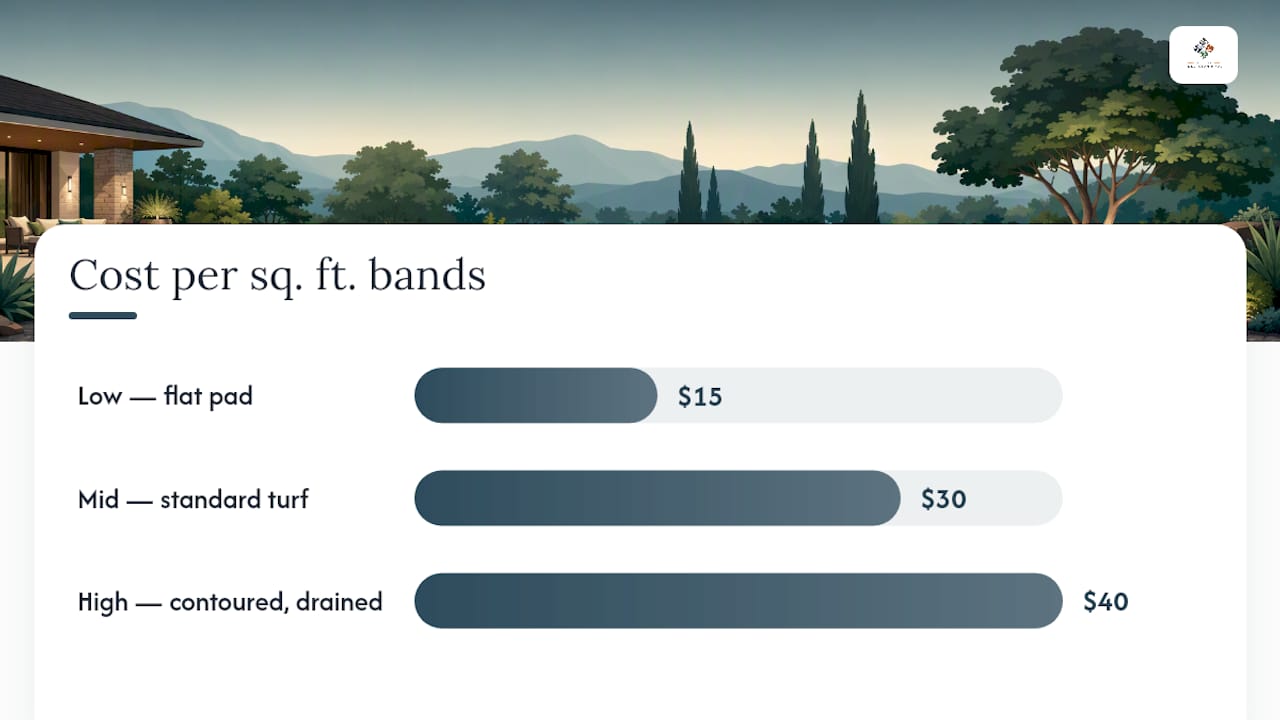
Size changes the math in a way most homeowners don’t expect. Smaller greens often carry a higher per-square-foot price because mobilization, equipment setup, and finish work cost roughly the same whether you’re building 200 square feet or 800. Spread those fixed costs over less turf, and your unit price climbs.
Rough math for planning purposes:
- A 250 square foot green at $30/sq. ft. lands near $7,500.
- A 600 square foot green at $22/sq. ft. lands near $13,200.
- A 1,200 square foot green at $18/sq. ft. lands near $21,600.
Bigger footprint, lower rate per foot, but a bigger check overall. National project averages tend to cluster between $3,500 and $9,000 for the most common backyard sizes, with custom multi-hole builds running well past that.
What Seven Factors Actually Drive Your Price?
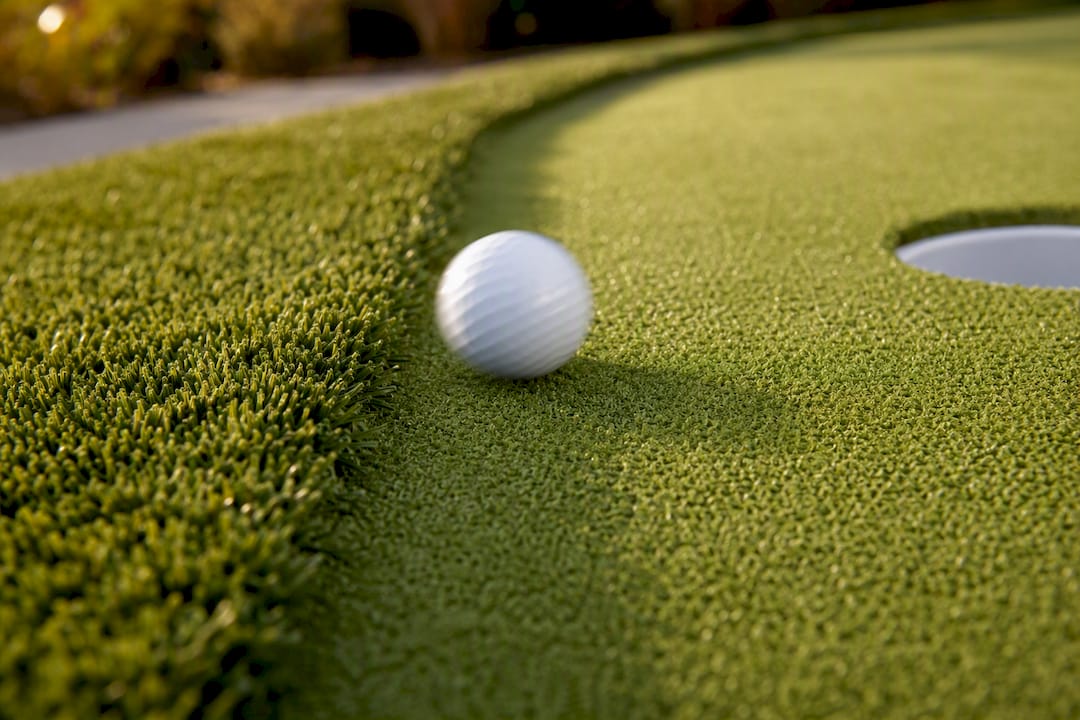
Turf quality is where the biggest swing happens. Putting-specific turf, engineered for consistent ball roll and stimp speed, costs more per square foot than general artificial grass, often $6 to $15 or more in material cost alone. General landscape turf looks fine underfoot but rolls inconsistently and won’t hold a true line.
Base construction matters more than most homeowners budget for. Excavation, compacted aggregate layers, and proper drainage aren’t optional extras. The USGA’s own construction guidance treats drainage as foundational, not cosmetic, because a green that holds water after rain turns spongy, uneven, and unplayable within a season.
Here’s where the rest of your budget goes:
- Grading and contours: A flat green is cheaper to build than one with subtle breaks; every slope has to be shaped and compacted by hand.
- Cups and fringe: Each additional cup, plus fringe turf around the edges, adds material and labor.
- Bunkers and edging: Sand traps and clean border edging add both material cost and finish time.
- Access and site logistics: Tight side yards, extra hauling distance, or retaining walls near the build site raise labor hours fast.
- Permits: Most residential putting greens don’t require permits, but check local rules if you’re adding structures like retaining walls or lighting.
Pro Tip: Installation is a one-time cost, but turf quality decisions follow you for a decade. Spend where it affects roll and drainage; save on secondary features like bunkers if the budget is tight.
What Do Real Project Budgets Look Like?
Numbers mean more with context. Here’s how three common project sizes typically break down:
- Small (200–300 sq. ft.): Basic putting-grade turf, one cup, minimal grading, standard base and drainage. Total: roughly $4,000 to $8,000.
- Medium (400–800 sq. ft.): Two to three cups, modest contouring, fringe around the perimeter, upgraded drainage for a larger footprint. Total: roughly $10,000 to $18,000.
- Large/custom (1,000+ sq. ft.): Multiple tiers, four or more cups, bunkers, integrated lighting, and possibly a seating area. Total: $20,000 and up.
Site conditions swing these numbers more than turf choice alone. A yard with poor natural drainage or a significant slope adds excavation and grading hours before a single square foot of turf goes down, regardless of which size category you’re in.
Should You DIY or Hire a Professional Installer?
DIY putting green kits typically run $3 to $8 per square foot in materials, a fraction of professional pricing, and that gap is exactly why they’re tempting. But that price usually skips proper base work and drainage, the two things that determine whether your green plays well in year three.
Common DIY failure points:
- Inadequate compaction leads to soft spots and uneven roll within months.
- Skipped drainage layers cause standing water and turf rot after heavy rain.
- Seams and edges installed without proper base preparation lift or separate over time.
DIY makes sense for a flat, well-draining yard and a simple single-cup layout where mistakes are cheap to fix. Anything with contours, poor drainage, or multiple holes is where professional installation earns its price.
What Does Upkeep Actually Cost Each Year?
Synthetic putting turf is low-maintenance compared to a natural green, but it isn’t zero-maintenance. Budget for:
- Regular brushing to keep turf fibers upright for consistent roll.
- Infill top-ups every year or two to maintain ball speed and cushioning.
- Occasional deep cleaning to clear debris and prevent bacterial buildup.
Most homeowners spend $200 to $600 annually on this upkeep, a small fraction of what a natural grass putting green demands in mowing, fertilizing, aerating, and irrigation. Quality synthetic turf typically lasts 15 to 20 years before resurfacing becomes worth considering, making the long-term maintenance math favor synthetic turf heavily over time.
Does a Backyard Putting Green Add Resale Value?
It can, but only when it’s built well and looks intentional. A green that’s cleanly integrated into the surrounding landscaping, with smooth transitions into patios, walkways, or garden beds, reads as an amenity rather than lost yard space. A poorly shaped or awkwardly placed green can do the opposite.
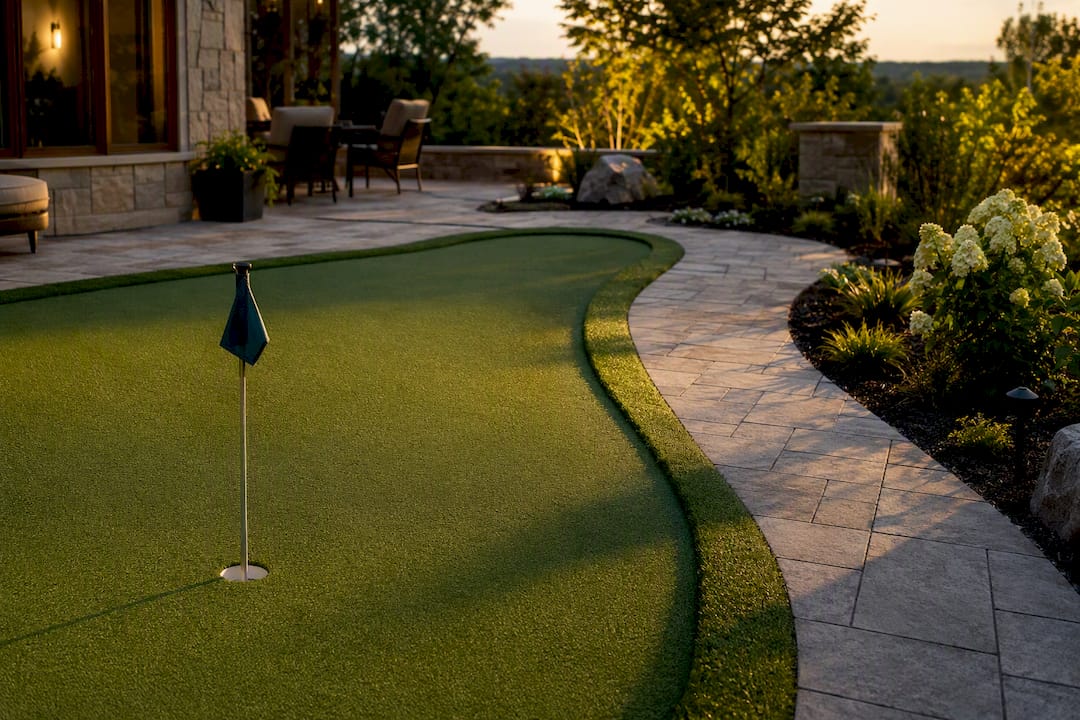
Golf-oriented buyers in markets with strong course culture tend to value greens the most. In neutral markets, a well-designed green rarely hurts resale and often becomes a selling point during showings, especially when paired with thoughtful hardscape and patio integration that makes the whole backyard feel cohesive.
How Village Precision Pros Scopes and Builds Your Green
We’ve spent years building outdoor spaces across Central Arkansas, and grading and drainage problems are where most putting green failures start, not the turf itself. Every estimate begins with a site visit to assess soil, slope, and drainage before we quote a single line item. You’ll receive an itemized quote covering base work, turf, drainage, and any additional features you’re considering, so there’s no guesswork about where your money goes.
What Homeowners Get Wrong About Putting Green Budgets
Most cost guides fixate on turf brand and per-square-foot averages, and that’s the wrong starting point. The real budgeting question is what your soil and drainage situation demands before turf ever gets discussed. A flat, well-draining lot in a subdivision and a sloped, clay-heavy lot near a creek can carry identical square footage and wildly different price tags, because the base work isn’t optional in either case, it just costs more in one of them.
The conventional advice to “get three quotes and compare per-square-foot pricing” misses this entirely. Two contractors quoting different rates might be pricing identical scope, or one might be skipping drainage work that shows up as a warranty claim two years later. Ask what’s included in the base and drainage line items before comparing bottom-line numbers.
If there’s one thing worth prioritizing first, it’s a real site visit before you accept any number as your budget. Everything else, cups, fringe, lighting, is negotiable. Drainage isn’t.
— Ty
How to Get an Accurate Estimate for Your Project
Itemized quotes are typically prepared before building the green, so you’ll know your estimated cost before committing, not after change orders start piling up. Have your yard’s rough dimensions, any known drainage issues, and a sense of desired features (cups, fringe, lighting) ready before your visit.

Professional estimates often break down turf, base preparation, drainage, labor, and any extras as separate line items, so you can see exactly where your budget goes and adjust before installation starts. We’ve applied the same grading and drainage discipline that shapes our hardscape and patio work to every putting green we’ve built, because a green that drains poorly fails the same way a patio with bad base compaction does. If you’re ready to see real numbers for your yard, schedule a landscaping consultation and get a site-specific, itemized quote.
Sources
- How Much Does It Cost to Install a Backyard Putting Green? | HomeAdvisor
- How Much Do Backyard Putting Greens Cost? Get 2026 Prices – Modern Yard Landscapes
- Are Backyard Putting Greens Worth It | Value & Cost Analysis | Bulger Brothers Landscape
- USGA: Putting green construction guidance
FAQ
How much does it cost to make a putting green in your backyard?
Most backyard putting greens cost between $3,500 and $20,000 total, with professional installation running $15 to $40 per square foot depending on size, turf quality, and site complexity.
How much is 1,000 square feet of turf?
A 1,000 square foot putting green typically costs tens of thousands of dollars depending on the per-square-foot price, with larger installations often costing less per square foot.
How much does a 400 square foot putting green cost?
A 400 square foot green generally costs several thousand dollars, depending on turf grade, number of cups, and grading or contouring requirements.
Does a putting green add value to a home?
A well-designed, properly integrated putting green can add appeal and support resale value, especially in markets with strong golf interest, though poor integration or shoddy construction can have the opposite effect.