


There’s no single best material for outdoor steps. If you want the longest lifespan, stone or concrete wins. If you want the least upkeep, composite is the smart pick. If budget and warmth matter most, wood works, and if you’re building near water or want a modern edge, aluminum or galvanized steel holds up well. Whatever you choose, building code limits on riser height and a solid foundation matter more than the surface finish.
TL;DR:
- Proper foundation and drainage are crucial to prevent settling and cracking, regardless of the surface material chosen.
- Concrete, natural stone, and composite materials offer the longest durability, often exceeding 25 to 50 years with proper maintenance.
- Maintenance requirements vary: concrete and stone need resealing every few years, while composite requires minimal upkeep, and wood needs annual sealing.
- Costs can be unpredictable; cheaper materials like wood may incur higher long-term expenses due to ongoing maintenance and replacements.
- Matching material choice to climate, style, and willingness for upkeep ensures better longevity and cohesion with existing property design.
Table of Contents
- Common Outdoor Steps Materials and Where They Fit
- Outdoor Steps Materials Compared: Durability, Cost, and Safety
- How to Choose the Right Material for Your Property
- What Really Determines Whether Outdoor Steps Last
- Maintenance Schedules and Realistic Lifespans
- Real Outdoor Steps Projects and What They Taught Us
- Environmental Impact and Sustainability of Outdoor Step Materials
- Matching Step Materials to Your Home’s Style
- A Practical Take on Outdoor Steps Materials
- Get a Professional Estimate for Your Outdoor Steps
- Sources
- FAQ
Common Outdoor Steps Materials and Where They Fit
Before comparing performance, it helps to know what you’re actually choosing between. Each material shows up in different settings for good reason.
- Poured concrete is cast on site, formed to match your slope, and finished smooth, broomed, or stamped to mimic stone. It’s the workhorse of front-entry steps.
- Precast concrete steps arrive as finished units and get set on a prepared base, cutting installation time on straightforward sites.
- Natural stone (flagstone, bluestone, granite) gets fitted piece by piece for a look that, as one design guide puts it, “grew out of the landscape” rather than being dropped onto it. Best for rustic or high-end traditional homes.
- Wood (pressure-treated pine, cedar, hardwood) suits deck-connected stairs and cottage-style properties. Pressure-treated lumber is the budget standard; cedar and hardwood cost more but resist rot longer.
- Composite decking mimics wood grain without the splinters or annual staining, common on modern builds and deck transitions.
- Metal (aluminum, galvanized steel) shows up on contemporary homes, industrial-style landscapes, and coastal properties where wood would rot fast.
- Brick and pavers work as interlocking units over a compacted base, giving a traditional, tightly patterned look that pairs well with matching walkways.
Concrete, wood, and pavers are the three most commonly DIY-attempted; stone and structural metal work almost always call for professional installation because of weight, cutting, and foundation demands.
Outdoor Steps Materials Compared: Durability, Cost, and Safety
Matching a material to your priorities starts with knowing what each one actually delivers over time, not just what it looks like on day one.
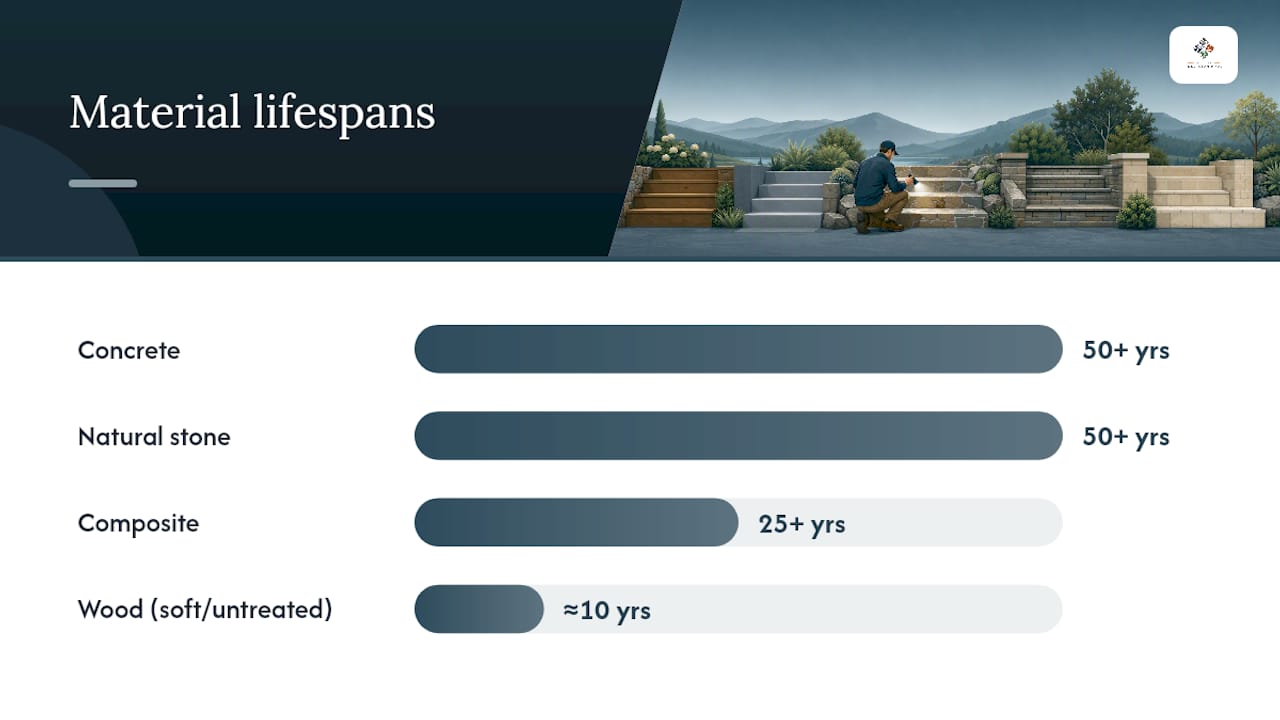
Durability and lifespan separate these materials fast. Concrete and natural stone typically last 50 years or longer with reasonable care, and composite products commonly carry warranties of 25 years or more. Wood sits at the other end. Even pressure-treated lumber needs consistent sealing to avoid rot, and untreated softwoods can show real deterioration within a decade in wet climates.
Cost tiers don’t always track with lifespan the way you’d expect. Wood is cheapest upfront but often costs more over a 20-year window once you add repeated staining, sealing, and eventual replacement. Stone typically carries the highest installation cost. Concrete tends to land in the middle, balancing durability against price better than almost anything else on this list.
Maintenance effort varies just as widely:
- Concrete and stone need resealing every few years, plus occasional joint or mortar touch-ups.
- Wood needs annual to biannual staining or sealing, with regular checks for soft spots and loose fasteners.
- Composite needs an annual wash and almost nothing else, no staining or sealing required.
- Metal needs inspection for coating chips or rust spots, since finish failures spread fast once they start.
- Pavers need occasional re-sanding of joints to keep them locked and stable.
Slip resistance comes down to finish, not base material. Broom-finished concrete, honed or textured stone, ribbed metal treads, and textured composite boards all cut wet-weather slip risk substantially, while polished stone or bare wet metal turns dangerous fast without treatment.
For best-use fit: concrete and pavers suit front entries and formal walkways, stone suits terraced slopes and natural landscaping, composite pairs naturally with existing deck boards, and aluminum or galvanized steel handles coastal exposure better than almost anything else because aluminum resists corrosion naturally while steel needs galvanizing and powder coating to hold up against salt air.
How to Choose the Right Material for Your Property
Run through this order before you fall in love with a look:
- Start with climate and exposure. Freeze-thaw cycles crack poorly sealed concrete and stone; salt air corrodes untreated steel; direct sun bleaches and dries wood faster than shaded spots.
- Weigh upfront cost against lifetime cost. A cheaper material with a shorter replacement cycle can cost more by year 15 than a pricier one that just sits there.
- Be honest about maintenance tolerance. If nobody in the house wants to reseal steps every spring, composite or metal will serve you better than wood.
- Plan for safety and accessibility now. Handrails, traction finishes, nosing, and lighting aren’t optional extras for anyone dealing with mobility limits or steep grades.
- Check permits and local code before you commit to a design. Your local building department can flag amendments to riser and tread rules that vary by jurisdiction.
- Decide hire versus DIY based on complexity. Heavy stone, foundation work, or drainage corrections are jobs for a professional crew, while a simple paver walkway upgrade is more forgiving for a confident DIYer.
Pro Tip: Sketch your riser and tread numbers on paper before anyone touches a shovel. Even a half-inch of variance between steps creates a trip hazard that’s expensive to fix once concrete has cured or stone is set.
What Really Determines Whether Outdoor Steps Last
The material you pick matters less than what’s underneath it. A firm, compacted subgrade and a proper landing prevent the settling that eventually cracks stone and concrete steps regardless of how good the surface material was. Bare soil or loose gravel under a landing is one of the most common causes of long-term step failure.
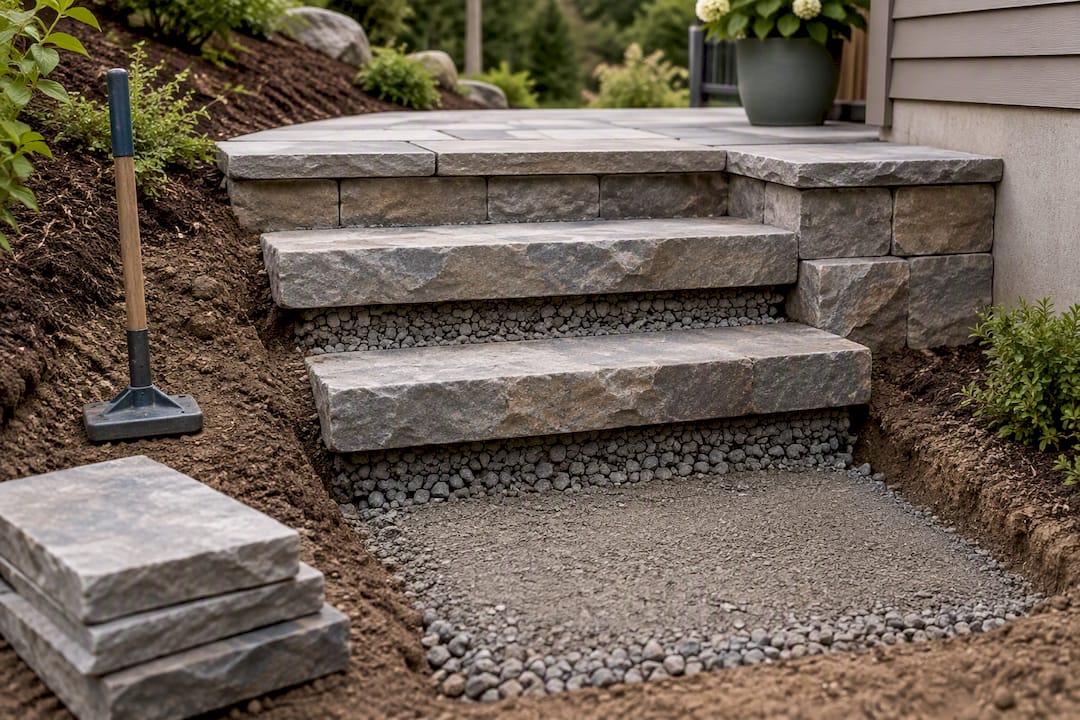
Drainage matters just as much, especially anywhere freeze-thaw cycles are a factor. Water that pools at the base of steps and freezes will heave and crack almost any surface over a few winters.
Code minimums exist for good reason. The IRC calls for a maximum riser of 7 and 3/4 inches, a minimum tread depth of 10 inches, and stair width of at least 36 inches, with handrails required on flights of four or more risers. Lighting at exterior landings is required in many jurisdictions and is a common item flagged during inspections.
Precast steps work fine for straightforward, level sites with modest rise, but they lose their advantage fast on sloped yards or uneven grade, where a custom-formed or built-in-place solution handles the terrain properly. Watch for these common failure signs: uneven riser heights, standing water at the base, a landing that shifts underfoot, or missing lighting near the top step.
Maintenance Schedules and Realistic Lifespans
Budgeting for upkeep now saves you from a surprise rebuild later. Seal concrete and natural stone every two to three years. Restain or reseal wood annually to every other year depending on sun exposure. Give composite a yearly wash and check hardware. Watch for settling, deep cracking, soft or rotting wood, rust bloom on metal, or any tread that rocks underfoot; those are your signals that repair time has arrived, not maintenance time.
Pro Tip: Water is the real enemy across every material on this list. Fix drainage before you fix the surface, or you’ll be redoing the work in a few years regardless of what you built it from.
Real Outdoor Steps Projects and What They Taught Us
Across more than 1,750 completed projects, our crews have seen the same patterns repeat: a drainage fix under a sunken landing that stopped seasonal cracking, stone set on a proper concrete pad that outlasted the original poured slab it replaced, and rotted timber stringers swapped for pressure-treated framing under composite treads. If you’re vetting a contractor for hardscape and stone masonry or deck stair work, ask for a written site-prep plan, references from similar jobs, and a clear warranty.
Environmental Impact and Sustainability of Outdoor Step Materials
Concrete carries a real environmental cost at production. Cement manufacturing is energy-intensive, and that upfront footprint is worth weighing against the material’s 50-plus-year service life, which spreads that impact over a long timeline. Natural stone requires quarrying and transport, but it needs no chemical sealers or coatings to function, and reclaimed or locally sourced stone cuts both cost and shipping impact.
Wood is renewable by nature, but pressure-treated lumber uses chemical preservatives that raise disposal concerns at the end of its life. Cedar and other naturally rot-resistant species avoid that issue but come at a higher price point. Composite decking often incorporates recycled plastic and wood fiber, diverting waste from landfills, though it isn’t biodegradable and can’t be recycled again once it’s removed.
Metal has one clear advantage here: aluminum and steel are both highly recyclable at end of life, and neither requires ongoing chemical treatments the way wood does. Pavers and brick, being modular, can often be lifted and reused elsewhere on the property if you ever redesign, which cuts waste compared to a poured slab that has to be broken up and hauled off.
If sustainability ranks high on your list, weigh total lifecycle impact rather than just the material’s origin. A long-lived stone or concrete step that never needs replacing can outperform a “green” material that wears out in half the time.
Matching Step Materials to Your Home’s Style
Steps should read as part of the property, not like an afterthought bolted onto the front porch. Designers consistently point out that material choice needs to balance aesthetic fit with climate and maintenance realities, not just curb appeal in isolation.
Formal, traditional homes tend to pair naturally with brick, cut bluestone, or smooth-finished concrete, especially when the walkway and steps share the same material for a unified entry. Craftsman and cottage-style properties lean toward wood or irregular flagstone, where the slight imperfection of natural stone actually reinforces the relaxed, built-by-hand feel of the architecture.
Modern and contemporary homes tend to favor clean-lined concrete, aluminum, or composite in neutral tones, materials that read as intentional rather than decorative. Rustic or wooded properties usually look best with natural stone or timber steps that blend into a sloped, terraced yard rather than standing out against it.
If your landscaping leans coastal or lakefront, galvanized steel or aluminum steps tend to fit both the salt-air durability requirement and the clean, low-profile look those properties usually go for. The safest approach is matching your new steps to whatever hardscape material already dominates your property, whether that’s a matching patio, retaining wall, or walkway, so the whole exterior reads as one connected design instead of a patchwork of materials.
A Practical Take on Outdoor Steps Materials
Get the foundation, drainage, and code compliance right first. The surface material you pick will look good on day one no matter what; whether it still looks good in year ten depends almost entirely on what’s underneath it. Pick the material that matches how much upkeep you’re actually willing to do, not the one that photographs best. For sloped yards or anything involving heavy stone, request a portfolio review or site visit before you commit to a design.
— Ty
Get a Professional Estimate for Your Outdoor Steps
Professional landscaping crews build outdoor steps and stone work designed to outlast the trends, backed by attention to foundation and drainage covered throughout this guide. Instead of guessing at subgrade depth or riser math on your own, crews can handle the site assessment, foundation plan, and permit guidance as part of estimates.

Whether you’re picturing a natural stone staircase into a terraced backyard or a deck connection that needs matching treads, our Hardscape & Stone Masonry and Decks & Patios services cover both from design through installation. Homeowners who want their steps to keep looking sharp for years can also ask about our annual maintenance plans, which cover sealing and inspection before small issues turn into rebuilds. Request a site visit through our hardscape services page to get a written estimate for your property.
Sources
Technical claims in this guide draw on the International Residential Code stair requirements and the Deck Stairs code guide. Always confirm amendments with your local building department.
- Choosing Exterior House Steps: Concrete, Stone, or Wood? Expert Guide to Durability, Cost, and Maintenance
- What is the 7-11 rule for stairs?
- Deck Stairs code guide
- Outdoor stair materials compared: steel, aluminum, stone, wood & concrete
FAQ
What Is the Best Material for Outdoor Steps?
There’s no universal winner. Concrete and natural stone offer the longest lifespans, often 50 years or more, while composite suits homeowners who want minimal upkeep and wood suits tighter budgets willing to trade upfront savings for ongoing maintenance.
What Is the Cheapest Way to Build Outdoor Stairs?
Pressure-treated wood carries the lowest installation cost of the common materials. Keep in mind that wood often costs more over 15 to 20 years once you factor in annual sealing, repairs, and eventual replacement.
Can You Buy Ready-Made Outdoor Steps?
Yes, precast concrete steps are widely available and work well for level sites with modest rise. They lose their advantage on sloped or uneven yards, where custom-built steps handle the grade and drainage needs more reliably.
What Is the 7-11 Rule for Stairs?
The 7-11 rule is a comfort guideline recommending a 7-inch riser paired with an 11-inch tread. That combination gives a 2R+T sum of 25 inches, widely considered the ideal comfort target for stairs people use every day.