

A sunken porch almost always comes down to one thing: the ground under it has moved. Water carried soil away, the fill compressed, or the base was never compacted well. The right repair depends on whether the slab is still sound and whether the problem underneath has been stopped. In Central Arkansas, where heavy rain and clay soil work against flatwork, the lasting fix is the one that deals with the cause as well as the slab. We design and build hardscapes and handle foundation leveling across the region, so that is how we approach every porch.
TL;DR
- A porch sinks because soil under it eroded, compressed or was poorly compacted. Water is the most common driver.
- If the slab is intact, lifting it is often possible. If it is cracked through, crumbling or tilting badly, replacement or a rebuild is the sounder choice.
- Fix the water source first, usually a downspout or grading problem, or the porch will settle again.
- Cost is driven by size, how far the slab dropped, access to the work area and the method, so a written assessment beats a guess.
- A porch that risks falls or structural damage is a job for a professional, not a weekend project.
Table of Contents
- Why a porch sinks
- Slab problem or structure problem?
- The main ways to repair a sunken porch
- Which repair fits your porch
- What drives the cost
- Fix the cause so the porch stays up
- A porch that is sinking and crumbling
- Can you do this yourself?
- Our perspective on sunken porches
- Get the porch assessed and repaired
- FAQ
- Sources
Why a porch sinks
A concrete porch slab is heavy, and it rests on soil or compacted fill. Anything that weakens that support lets the slab drop. Four causes account for most of what we see on porches and patios:
- Washout. Rain that has no clear path away from the house soaks the ground beside the porch. Moving water carries fine soil out from under the slab and leaves a void. Gutters that dump at the corner of a porch are a classic culprit.
- Poor compaction. When a porch is built over backfill that was not compacted in layers, the fill keeps settling for years after the concrete is poured.
- Soft or expansive soil. Clay swells when wet and shrinks when dry. Over seasons, that cycle leaves gaps and uneven support.
- Roots and utility trenches. Trees pull moisture out of the soil nearby, and old trenches that were backfilled loosely can slump.
Often two or three of these work together. That is why the same porch can look fine for a decade and then drop an inch in two wet springs.
Slab problem or structure problem?
Before choosing a repair, work out what is actually moving. Walk around the porch and check these signs:
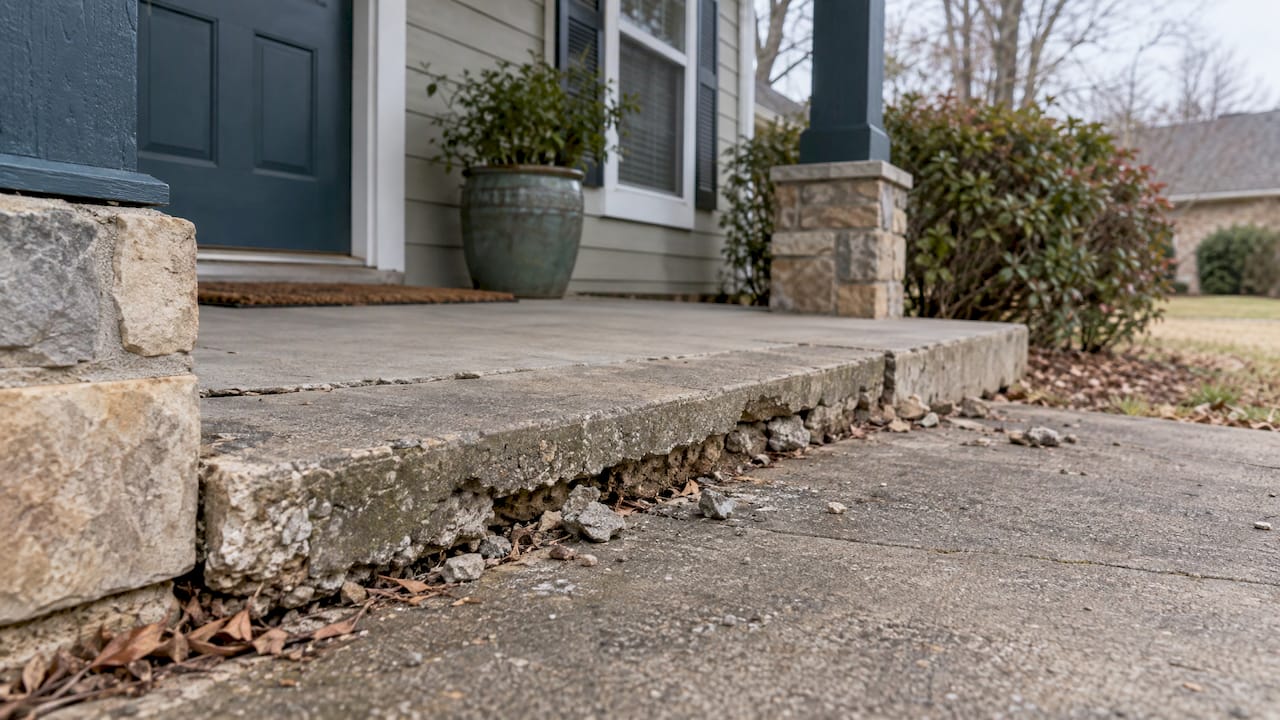
- A gap between the slab and the house wall. A gap that widens toward one end means the slab is tilting away. A uniform gap suggests the whole slab is settling.
- Steps that have separated or tilted. Steps usually sit on their own footing or fill, so they can move differently from the landing. Our guide to wobbly stone steps explains the causes and safe fixes.
- Cracks. Hairline cracks are common and usually cosmetic. A crack where one side is lower than the other means the base under that section has failed.
- Water pooling against the house. If the porch now slopes toward the foundation, the water problem is feeding itself.
- Door or threshold trouble. A door that rubs, or a gap under the threshold, tells you how much room exists to raise the slab. The height of the door sill limits how far a porch can be lifted, so the target level has to be set before any work begins.
- Crumbling surface. Flaking, pitted or crumbling concrete suggests the slab itself is failing, which changes the repair choice. More on that below.
If the porch is a brick or stone structure with a roof, with columns bearing on it, or if you see cracks in the brick or foundation wall above, treat that as a structural question. That is when to have the porch and the foundation assessed together. Our foundation leveling work and the Arkansas foundation repair guide for patios and slabs cover how those assessments go.
The main ways to repair a sunken porch
There are four realistic routes. Which one fits depends on slab condition, how far it dropped and what caused the drop.
Lifting the slab
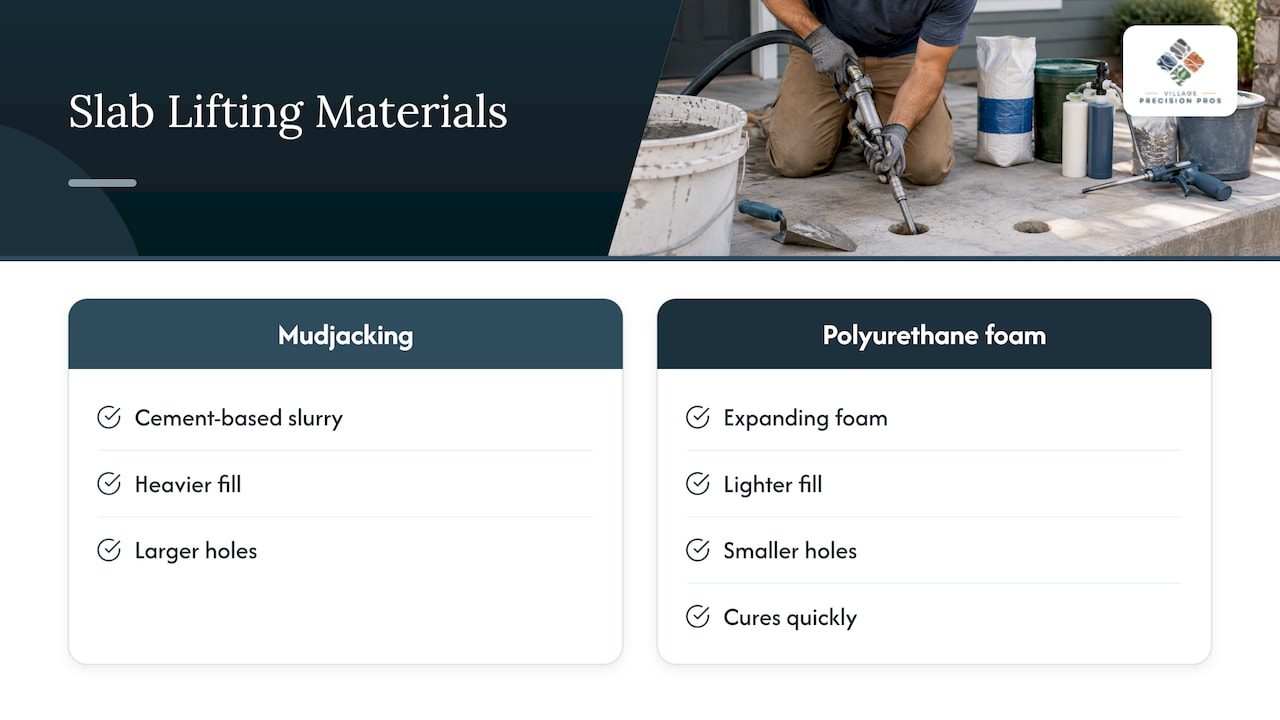
Lifting raises the existing concrete back to level by filling the void beneath it through small holes drilled in the surface. The two common materials are a cement-based slurry (mudjacking) and expanding polyurethane foam. Slurry is heavier and the holes are larger. Foam is lighter, the holes are smaller, and it cures quickly. We compare them in detail in mudjacking vs polyurethane foam.
Lifting suits a slab that is solid, uncracked or only lightly cracked, and that has dropped evenly or tilted a modest amount. It keeps the existing concrete, so there is no demolition and the porch is usable again quickly.
Lifting does nothing about the reason the ground failed. If water keeps eroding the soil, the fill will wash out again, so drainage correction belongs in the same plan.
Replacing the slab
When the concrete is broken into pieces, spalling, or has dropped unevenly in several directions, lifting just raises a failing slab. Replacement means removing it, rebuilding the base with compacted aggregate in layers, setting forms to the right slope and pouring new concrete with proper reinforcement and joints.
This is more work, but it resets the whole system. The base is rebuilt, the slope away from the house is corrected and the surface is new. It is also the moment to add drainage, a better edge detail or a different finish.
Rebuilding with pavers or stone
Some porches and landings are better rebuilt in a different material. Interlocking pavers and natural stone sit on a compacted aggregate base and can be lifted and reset if a small area settles later, rather than cracking as one piece. For a front stoop or entry landing, that flexibility is useful, and it looks more finished. If you already have a paver or flagstone porch that has settled, see sinking paver repair and flagstone patio repair, which explain why the fix starts at the downspout. Our Hardscape & Stone Masonry crews build these with a compacted aggregate base.
Fixing the structure under or around the porch
If the porch is tied to the house, such as a covered porch with posts, a raised porch with a foundation wall or a pier-and-beam structure, the settlement may be in the supports rather than in a slab on the ground. Then the repair is leveling, shimming or rebuilding piers and footings. Our overview of pier and beam leveling in Central Arkansas explains how that differs from slab work.
Which repair fits your porch
| Situation | Usually fits |
|---|---|
| Solid slab, even drop, void underneath | Lifting |
| Slab cracked through in several places or crumbling | Replacement |
| Settled steps or a stone or paver landing | Reset or rebuild on a new base |
| Covered porch with posts, cracks in brick or foundation wall | Structural assessment first |
| Porch slopes toward the house | Correct grading and drainage with any repair |
Use the table as a starting point. A porch can fall in two rows, for instance a slab that is solid but sits on a washed-out edge beside a downspout.
What drives the cost
We do not quote figures in an article, because every porch is different, and a number that fits one job misleads on the next. Here is what moves the total:
- Size of the area. Most lifting and replacement work scales with square footage, and professional cost guides list size, severity, access and location among the main factors.
- How far the slab dropped. A small, even settlement takes less material than a deep void or a heavy tilt.
- Method. Lifting, replacement and a stone rebuild involve very different labor and materials.
- Access. Tight side yards, steps, railings and landscaping that must be protected add time.
- Drainage work. Extending downspouts, regrading or adding drain lines is a separate scope, but it is what keeps the repair in place.
- Finish and extras. Stamped or broom finish, new steps, railings, lighting and a different surface all change the scope.
A small job and a large job can be priced very differently, and short visits to a property may carry a minimum charge. The practical way to compare is a written scope that states the method, the target level and the drainage work.
Fix the cause so the porch stays up
A repaired porch settles again when the original cause is still there. Four habits protect the work:
- Send roof water away. Downspouts should discharge several feet from the porch through solid pipe or a buried line, not onto the ground beside it. See our landscape drainage guide.
- Grade the soil away from the house. The ground beside the porch should slope down and away so rain does not collect at the edge.
- Keep soil moisture steady. Irrigation heads that spray the porch edge keep the soil saturated. Aiming them away helps, and our Landscape & Irrigation service handles it.
- Watch trees and roots. Large trees close to a porch pull moisture from the soil and can cause uneven shrinkage.
If you manage several properties, an annual maintenance plan puts these checks on a schedule, so a clogged gutter or a washed-out edge gets caught before a slab drops.
A porch that is sinking and crumbling
A porch that is both sunken and crumbling is telling you the concrete is at the end of its life, often from freeze-thaw cycles, de-icing salts or poor original mix. Lifting a crumbling slab raises weak concrete that can break while being raised, so replacement is generally the sounder choice. Resurfacing a surface that is only flaking can be an option, but not when the base has failed. The condition of the slab decides that, so have it assessed in person.
Can you do this yourself?
Light cosmetic work, such as sealing a hairline crack, is within most homeowners’ reach. Raising or rebuilding a porch is a different matter. A university extension checklist on do it yourself versus hiring a contractor advises leaning toward a professional when a mistake could cause falls or structural damage, and a porch that people stand on every day is exactly that. It also advises checking local codes and whether permits or inspections are required. In Arkansas, confirm with your city or county building office whether your project needs a permit. That step belongs to the local authority, and it is part of the process rather than an extra.
Here is what to settle with whoever does the work:
- The cause of the settlement, in plain language.
- The method and why it fits your slab.
- The finished height and how it meets the door threshold.
- What will be done about drainage.
- How the surface will be protected and cleaned up.
- Who handles permits when they apply.
Our seven quality checks before you hire lay out what to ask of any hardscape contractor.
Our perspective on sunken porches
We treat a sunken porch as a drainage and base problem first and a concrete problem second. Lifting a slab without finding where the water goes is like patching a roof without finding the leak. The slab comes back level for a season, then the soil washes out again.
That is why our work starts with how water moves around the house, then moves to the base, and only then to the surface. When the existing slab is sound, we look at leveling it. When it is failing, we rebuild on a compacted aggregate base, with the slope and edge detail corrected so the new porch sheds water away from your foundation.
Because we do hardscaping, stone masonry, drainage, irrigation and foundation leveling in one company, a porch repair does not get split among several trades who each see only their piece. Our crews handle the whole entry area, from the downspout to the last step, so the result looks like it belongs to the house.
With more than 2,000 projects completed across Central Arkansas since 2020, we know the clay soil and the heavy rain here, and we build for them.
Ty
Get the porch assessed and repaired
If your porch is sinking, tilting or pulling away from the house, we can look at the slab, the base and the water around it, then recommend the repair that fits. Our Decks & Patios and Hardscape & Stone Masonry teams serve homeowners, property managers and real estate agents who need an entry that is safe and looks right.

If you are preparing a property for sale or managing a building where a tilted entry is a liability, tell us the address and what you see. You can reach us through villageprecisionpros.com.
FAQ
What causes a concrete porch to sink?
Most often, soil under the slab has washed out, compressed or was never compacted properly. Roof water that drains beside the porch is the most common trigger, and expansive clay can add uneven movement. The result is a void or soft spot that the slab drops into.
Can a sunken porch be lifted instead of replaced?
Often yes, if the slab is solid and the drop is fairly even. Lifting fills the void under the concrete through small drilled holes and raises it back to level. If the slab is cracked through, crumbling or badly broken, replacement or a rebuild gives a longer-lasting result.
How do I know if the problem is the slab or the foundation?
A slab on the ground that has dropped away from the house is usually a base issue. Cracks in the brick or foundation wall, doors that stick or posts that lean point to the structure. In that case, have the porch and the foundation assessed together.
How do I keep a repaired porch from sinking again?
Control the water. Extend downspouts away from the porch, slope the soil away from the house, keep irrigation off the porch edge and watch for tree roots. A repair that solves the cause holds far longer than one that only raises the concrete.
How much does it cost to fix a sinking porch?
It depends on the size of the area, how far the slab dropped, the repair method, access and any drainage work. Industry cost guides name size, severity, access and location as the main factors. A written assessment of your porch gives you a scope you can compare.