

Outdoor kitchens span a wide range across Arkansas, and Little Rock-area calculator data shows a 12-foot mid-range build as the typical project. Size, appliance quality, and how far your gas and electrical lines have to travel drive most of that spread. We’ve bid enough of these across Central Arkansas to know that utility runs, not counters or grills, usually decide whether a project stays on budget.
TL;DR:
- Utility runs often add more to the project than countertops or appliances do, depending on how far each line travels from the house.
- Using weather-resistant materials like granite and 304-grade stainless steel extends the lifespan of outdoor kitchens, especially in Arkansas’s humid, freeze-thaw climate.
- Permits are required for built-in gas, plumbing, electrical, or roofed structures, with fees and inspection timing varying based on project scope and local regulations.
- Contractors should provide itemized bids separating utility, structure, and finish work; unreliable bids often lack clarity and face delays or inspection issues if unlicensed workers are involved.
Table of Contents
- Outdoor Kitchens in Arkansas by Size and Metro
- Where the Money Actually Goes: Cost by Component
- Materials That Hold Up to Arkansas Heat and Humidity
- Permits, Utilities, and Arkansas Code Requirements
- Budgeting and Financing Your Outdoor Kitchen Project
- Vetting a Local Arkansas Contractor Before You Sign
- What We See Most Often on Central Arkansas Job Sites
- Get a Real Arkansas Estimate, Not a Guess
- Sources
- FAQ
Outdoor Kitchens in Arkansas by Size and Metro
That statewide range breaks down more usefully once you look at scale. A compact build costs far less per foot than a full outdoor living wall, because framework, permitting, and appliance hookups scale differently than raw counter space.
Little Rock-area calculator data points to three common footprints:
- 6-foot kitchen (grill island only): often with no plumbing and minimal permitting.
- 12-foot kitchen (grill, sink, side burner, storage): the sweet spot most Central Arkansas families land on.
- 20-foot kitchen (full run with bar seating, refrigeration, pizza oven or smoker bay): the top of the range, especially with masonry veneer and a covered structure.
Arkansas tends to run a bit under national averages for labor, but material transport and metro adjustments narrow that gap fast in Little Rock, Hot Springs, and North Little Rock compared with rural counties. If you’re comparing this to a full patio project, our outdoor kitchen cost guide walks through more scenario math.
Where the Money Actually Goes: Cost by Component
Framework and appliances eat the biggest share of any budget, but the line item most homeowners underestimate is utilities.
Pro Tip: Ask for a bid broken into at least six categories, not one lump sum. If a contractor can’t itemize framework versus utilities, you can’t compare their number to anyone else’s.
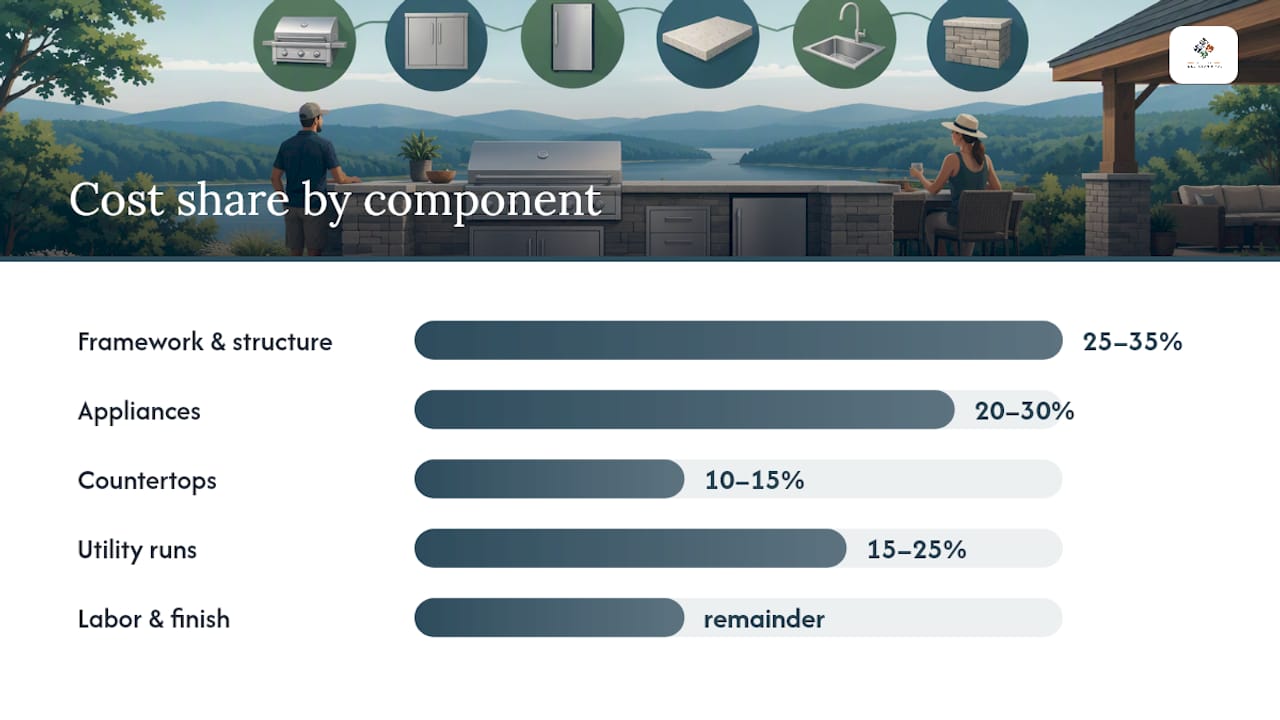
Typical cost shares on a mid-range Arkansas build:
- Framework and structure: 25 to 35 percent (prefab modular cabinets run far cheaper per linear foot than full masonry block with stone veneer).
- Appliances: 20 to 30 percent, ranging from a single basic grill to a full suite with a side burner, warming drawer, and refrigeration.
- Countertops: 10 to 15 percent, depending on material.
- Utility runs (gas, electrical, plumbing): 15 to 25 percent, and often the biggest surprise on the invoice.
- Labor and finish work: the remainder, varying with masonry complexity.
Regional models consistently flag utility runs as one of the highest single contributors to the final number, and each line adds more the farther you trench from the house. Framework choice matters just as much. A masonry block build with stone veneer costs multiples more than modular cabinetry, and that gap widens fast once you stack a premium appliance package on top.
Materials That Hold Up to Arkansas Heat and Humidity
Arkansas summers punish cheap materials fast, and freeze-thaw cycles in winter finish the job. What you choose upfront determines whether you’re repainting cabinet panels in three years or enjoying the space for two decades.
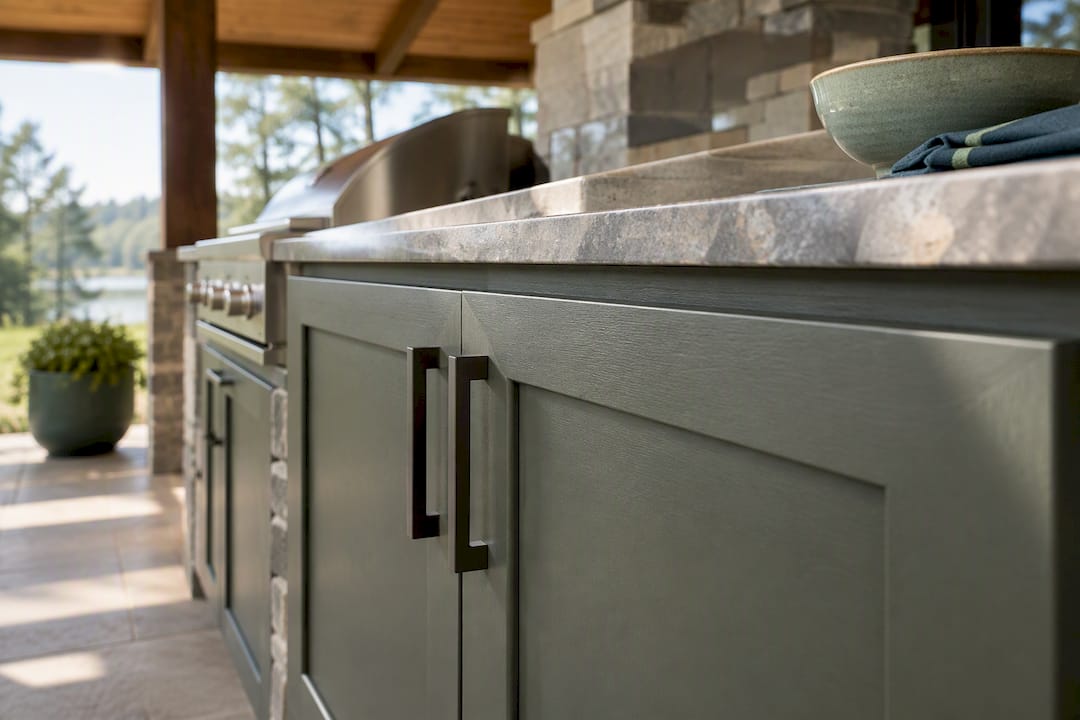
For appliances, insist on 304-grade stainless steel. Lower grades look identical on the showroom floor but rust and pit within a couple of humid seasons. For structure, weather-resistant stone veneer or CMU block shrugs off moisture and temperature swings far better than wood-framed cabinetry left exposed.
Countertop choices break down like this:
- Granite: highest upfront cost, but essentially maintenance-free and built for decades of Arkansas weather.
- Concrete: mid-range cost, customizable, but needs periodic resealing to resist staining.
- Tile: cheapest option, but grout lines trap moisture and often crack under freeze-thaw stress within a few years.
Lower-cost materials often cost more over a project’s lifespan once you factor in resealing, replacement, and repair labor.
Permits, Utilities, and Arkansas Code Requirements
Portable freestanding grills typically need no permit at all. Once you add built-in gas lines, a hard-plumbed sink, dedicated electrical service, or a roofed pavilion, city guidance in Little Rock requires permits and inspections for each of those trades.
Plumbing and fuel gas work in Arkansas falls under state health department licensing and inspection programs, which means an unlicensed installer isn’t just a liability risk. It can also trigger a failed inspection and force you to rip out and redo the work.
A few practical notes before you break ground:
- Residential permits in Little Rock typically scale with declared project valuation, so larger builds pay more.
- Timelines stretch when scope isn’t clearly itemized on the permit application.
- Skipping a required permit risks a stop-work order mid-project, which costs more in delay than the fee would have.
Budgeting and Financing Your Outdoor Kitchen Project
Getting to a realistic number takes a few deliberate steps rather than a single guess.
- Set a target budget and rank your must-have features. Decide now if a pizza oven matters more than a full refrigeration bay.
- Measure your linear feet and note site constraints like slope, drainage, and distance from the house’s utility panel.
- Collect three itemized bids from licensed local contractors, using the same scope for each.
- Add a 10 to 20 percent contingency on top of the highest bid to cover utility surprises and site prep.
For financing, most Arkansas homeowners choose between home equity loans, personal loans, or contractor-arranged financing. Home equity tends to carry the lowest rate for larger builds; contractor financing works well for smaller, faster projects.
Pro Tip: Walk your yard before you call anyone. If your gas meter or electrical panel sits 40 feet from your planned kitchen site, budget for that trench distance now, not after your first bid comes back higher than expected.
Vetting a Local Arkansas Contractor Before You Sign
A low bid that skips licensing verification usually costs more once inspection problems surface. Before signing anything, confirm the basics.
- Verify active license and insurance, not just a business card claim.
- Ask for references and photos from completed Arkansas projects, not stock photography.
- Confirm in writing who pulls the permits: you or the contractor.
- Request a line-item quote that separates utility work and site prep from framework and finish costs.
Watch for these red flags when comparing bids:
- No written scope of work, just a verbal estimate.
- Reluctance to name the licensed subcontractors handling gas, electrical, or plumbing.
- A vague or missing warranty on labor and materials.
When you finally line up quotes side by side, insist each one assumes identical materials, identical scope, and the same contingency percentage. Otherwise you’re comparing apples to a much cheaper set of oranges.
What We See Most Often on Central Arkansas Job Sites
Drainage and uneven grading show up on nearly every outdoor kitchen site we bid, and both add cost if discovered after the framework goes in rather than before. Utility distance is the other repeat surprise. With many completed projects across Central Arkansas, our crews have learned to flag these issues during the first site walk, not the second. If you want an honest number before you commit, schedule an on-site estimate and we’ll walk the grading and utility routes with you.
Ty
Get a Real Arkansas Estimate, Not a Guess
Outdoor kitchens are built with the framework, drainage, and utility routing solved before the first block goes down, so you’re not paying twice for problems a quick site walk would have caught. That matters more here than in a lot of markets, because Arkansas clay soil and freeze-thaw cycles punish shortcuts that a lower bid often hides.

If you’re weighing a grill island against a full 20-foot masonry build, our crews can walk your yard, flag the grading and utility issues before they become change orders, and hand you an itemized quote you can actually compare against other bids. Our hardscape and stone masonry services cover the framework and veneer work that makes up the bulk of most outdoor kitchen budgets, and we’ll pair it with patio or deck work through our decks and patios service if you’re building the whole outdoor living space at once. Request a personalized on-site estimate and find out what your specific lot, soil, and utility distance actually mean for your number.
Sources
- Outdoor Kitchen Cost in Little Rock, AR (2026): Free Calculator | HomeCostCalc
- Plumbing & fuel gas codes and licensing resources | Arkansas Department of Health
- 2025 remodeling impact report: National Association of Realtors (NAR)
FAQ
How much should I budget for an outdoor kitchen in Arkansas?
Plan on a wide range across the state, with a mid-range 12-foot build as the typical project. Your final number depends most on framework material, appliance package, and how far utilities need to travel.
Do I need a building permit for an outdoor kitchen in Arkansas?
Portable freestanding grills generally don’t require a permit, but built-in gas lines, hard-plumbed sinks, electrical service, and roofed structures do in Little Rock and most Central Arkansas municipalities. Always confirm with your local building department before construction starts, since fees and timelines vary by declared project valuation.
Are outdoor kitchens worth the money in Arkansas?
Homeowner enjoyment from outdoor kitchens runs high, but resale cost recovery varies widely by market and build quality. Quality materials like 304 stainless and durable masonry improve your odds of recovering more value at resale than a budget build with cheaper finishes.
Does an outdoor kitchen increase property value in Arkansas?
It can influence buyer interest, though the National Association of Realtors notes the percentage of cost recovered at resale is inconsistent across markets. A well-built kitchen with weather-resistant materials tends to hold value better than a quick DIY install with plywood cabinetry and a basic grill.
How much does Village Precision Pros charge for an outdoor kitchen?
Pricing depends on your specific scope, materials, and site conditions, so current estimates come from a personalized on-site visit. You can request a quote directly through our hardscape and stone masonry service page.