


Most Arkansas homeowners book a professional fall cleanup per visit or as one full job on a typical lot. Your yard size, tree count, and how much debris has accumulated determine where your job falls. Before you sign anything, get two written quotes from local crews so you can compare scope and price side by side.
TL;DR:
- Most homeowners book a crew per visit or for one full fall cleanup, and debris volume and yard complexity set the total.
- Heavy storm debris or multiple mature trees raise the total significantly, especially on large or heavily wooded properties.
- A standard fall cleanup includes leaf blowing, bagging, debris hauling, bed tidying, and light pruning, with optional add-ons such as gutter cleaning and stump removal raising the price.
- Getting accurate quotes requires detailed information about yard size, tree count, debris conditions, and access constraints, as vague requests often lead to vague estimates.
- Early booking, proper preparation, and an on-site estimate help homeowners avoid hidden costs and ensure the scope and price match their yard’s needs.
Table of Contents
- Common billing models in Arkansas
- What a fall yard cleanup typically includes
- Primary cost drivers that change your quote
- Three example quotes for Arkansas properties
- DIY vs hiring a pro: cost, time, and hidden risks
- Arkansas rules, UAEX guidance, and seasonal best practices
- How to get accurate local quotes
- A local view on timing and hidden debris
- How Village Precision Pros handles fall cleanup in Central Arkansas
- Sources
- FAQ
Common billing models in Arkansas
Fall cleanup pricing in Arkansas usually follows one of three formats: per visit, flat job, or hourly. Little Rock crews typically charge by the visit for a mid-size lawn, and crew and market conditions move the rate, according to ProMatcher’s Arkansas report.
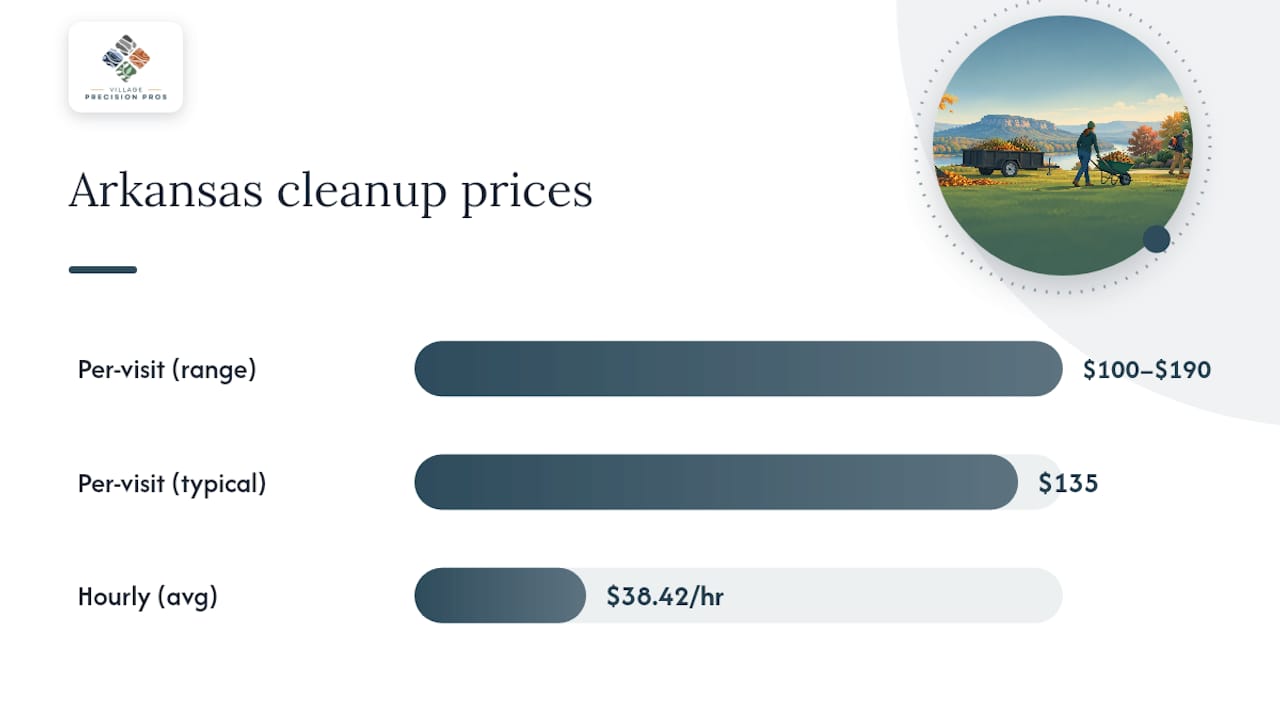
For a complete one-time fall cleanup, national calculator data sets a standard quarter-acre job as the baseline, and heavy brush or storm-related debris pushes the total well above it. Editorial guides report a national average for the same job.
Expect these general shapes when quotes come in:
- Per-visit pricing fits homeowners who want cleanups every few weeks through leaf season.
- Flat-job pricing suits a single, complete fall cleanup with a defined scope.
- Hourly pricing applies when a crew needs to assess debris volume before committing to a fixed number.
Most contractors set a minimum charge regardless of yard size, so a tiny lot rarely costs less than a mid-size one.
What a fall yard cleanup typically includes
A standard fall cleanup covers more ground than most homeowners expect, but the scope should always be spelled out in writing before a crew starts.
- Leaf blowing and raking of lawns, beds, and hardscape areas.
- Bagging or hauling collected debris off the property.
- Bed tidy-up, including clearing dead annuals and light weeding.
- Light pruning of shrubs and low branches that shed into the yard.
- Gutter clearing, often offered as an add-on rather than a default line item.
Beyond the core scope, several add-ons commonly raise the total: stump or fallen-branch removal, heavy brush clearing, and mulch application in beds. A clear written estimate lists each of these separately rather than folding everything into one number, which is what lets you compare two quotes fairly. Our overview of a typical fall cleanup service breaks scope down the same way for Central Arkansas properties.
Primary cost drivers that change your quote
Five variables move the price more than anything else, and disclosing them upfront gets you a tighter, more accurate quote.
- Yard size and tree count: more square footage and more mature trees mean more leaf volume to clear.
- Access and terrain: narrow gates, sloped lots, or fenced sections that block equipment slow a crew down.
- Debris condition: wet, matted leaves take longer to bag than dry ones, and mixed woody material needs separate handling.
- Disposal and collection fees: whether the crew hauls waste to a landfill or your municipality provides curbside pickup changes the cost.
- Regional labor rates and demand: prices climb during peak leaf-drop weeks when every crew in Central Arkansas is booked solid.
A quarter-acre lot with heavy leaf cover can run into the higher range when brush and post-storm debris enter the picture, according to national calculator data. That gap between a routine cleanup and a heavy one is almost always explained by debris volume and access, not by the crew’s hourly rate.
Three example quotes for Arkansas properties
These scenarios assume a mid-fall visit with moderate to heavy leaf cover, no open-burning permit involved, and disposal handled by the contractor rather than municipal pickup.
- Scenario A, small city lot (quarter acre, a few small trees): two crew members for about 1.5 hours, bagging and one haul trip, at the low end of Little Rock per-visit rates.
- Scenario B, medium suburban lot (half acre, five to eight mature trees, some bed cleanup): a three-person crew for 2 to 3 hours plus a dedicated haul charge and light pruning add-on, in the middle of national one-time cleanup averages.
- Scenario C, large or heavily wooded lot: extended crew hours, multiple haul trips, and premium items like stump grinding or heavy brush removal push the total to the upper end of national heavy-cleanup ranges.
Your own quote will land somewhere on this spectrum depending on how closely your lot matches one of these profiles. Our Arkansas landscaping cost guide walks through similar project-level ranges if you’re budgeting for cleanup alongside other seasonal work.
DIY vs hiring a pro: cost, time, and hidden risks
Renting a leaf blower and hauling bags yourself sounds cheaper until you count the hours. A quarter-acre DIY cleanup typically takes 4 to 6 hours once you factor in raking, bagging, and driving debris to a disposal site, plus rental fuel and bag costs that add up fast.
- DIY costs include equipment rental, fuel, bags, and your own time, often 4 to 6 hours for a modest lot.
- Hidden DIY costs show up in multiple disposal trips, no contractor disposal discount, and the physical strain of raking wet leaves.
- Hiring a pro makes more sense when you have mature trees, heavy woody debris, or simply don’t have a weekend to spare.
Pro Tip: If your lot has more than five mature trees or any storm debris mixed in, get a professional quote before renting equipment. The labor savings rarely offset the extra trips.
Arkansas rules, UAEX guidance, and seasonal best practices
Before you burn a pile of leaves in the backyard, know that Arkansas regulates open burning closely. Under state open-burning authorization rules, the Department of Environmental Quality issues authorizations only after a homeowner demonstrates no practicable alternative, and local ordinances often add their own permit requirements on top of that.
The University of Arkansas System Division of Agriculture recommends a more measured approach than stripping every leaf from the yard. Mulching leaves in place or composting them supports soil biology and beneficial insects, while excessive removal can work against the ecosystem you’re trying to maintain.
- Mulch what you can rather than bagging every leaf for disposal.
- Time your cleanup to peak leaf-drop weeks in October and November for the best value.
- Check local burn permits before considering any on-site disposal.
Booking early in the season, before the rush, tends to get you better scheduling and sometimes a better rate than waiting until every yard on the block needs attention at once.
How to get accurate local quotes
A vague request gets a vague quote. Come prepared and you’ll get numbers you can actually compare.
- Share photos of your yard, including problem areas with heavy leaf buildup or fallen branches.
- State your lot size and rough tree count so the crew can estimate volume before arriving.
- Note access constraints, like narrow gates, locked fences, or steep grades.
- Ask about crew size, hours, and disposal method so you know exactly what’s included.
- Confirm insurance and any guarantee the company offers on the work.
Watch for red flags: a quote with no disposal plan, scope described in one vague sentence, or a price far below the typical Arkansas range usually means corners will get cut. Our guide to landscaping and lawn care services in Arkansas covers the same cost factors in more depth if you’re comparing multiple types of yard work at once.
A local view on timing and hidden debris
We’ve seen homeowners rake too early and end up paying for a second visit once the oaks finally drop in November. Hidden debris under groundcover or along fence lines often gets missed in a quick walkthrough, which is why we always recommend an on-site estimate before locking in a number.
Ty
How Village Precision Pros handles fall cleanup in Central Arkansas
Fall cleanup fits naturally into a broader maintenance rhythm, and that’s where our General Maintenance service and annual maintenance plans come in. Rather than booking a one-off crew every season, homeowners on a maintenance plan get consistent scheduling and pricing they can count on year after year.

- Local crews familiar with regional leaf-drop patterns and lot layouts.
- Transparent written estimates that break down labor, disposal, and add-ons before work starts.
- Attention to detail and quality workmanship carried over from hardscape and landscape work, so bed cleanup and pruning are handled carefully.
If your yard needs more than a rake and a few trash bags this fall, request an on-site estimate through our annual maintenance plans page and we’ll scope the job before you commit to anything.
Sources
For homeowners who want to check local rules or read further:
- Raking leaves (University of Arkansas System Division of Agriculture)
- Yard Cleanup Cost Calculator: Free 2026 Spring & Fall Estimate
- Lawn Care Cost in Little Rock, AR (2026 Prices)
Check with your local public works department for curbside yard waste collection rules, since bagging and weight limits vary by municipality.
FAQ
How much should yard cleanup cost?
A typical professional fall cleanup in Arkansas is quoted per visit for a mid-size lawn, or as one complete job. Larger lots with heavy brush or storm debris push the total higher.
What does a fall cleanup include?
A standard fall cleanup covers leaf blowing, raking, bagging, hauling debris off the property, bed tidy-up, and light pruning. Gutter clearing, stump removal, and mulch application are common add-ons that increase the total beyond the core scope.
How do I clean up a yard for fall?
Start by mulching leaves where possible rather than bagging everything, since University of Arkansas Extension guidance notes that excessive removal can harm soil biology and beneficial insects. Clear beds, prune low branches, and haul remaining debris, timing the work for peak leaf-drop weeks in October and November for the best results.