


What are the best landscaping and lawn care services in Arkansas?
Four providers stand out for Arkansas homeowners in 2026, each covering a distinct slice of the market from weekly mowing to full hardscape construction.
| Provider | Location | Services Offered | Specializations | Certifications & Licensing | Best For | Rating |
|---|---|---|---|---|---|---|
| Augusta Lawn Care of Saline | Saline County | Lawn care, landscaping, property cleanups | Residential lawn maintenance, property upkeep | Not publicly listed | Consistent residential maintenance | 4.9★ (100 reviews) |
| Elite Grounds Lawn & Landscaping | Little Rock | Mowing, mulch installation, landscaping rock, tree services | Transparent pricing, comprehensive yard services | Licensed and insured | Transparent pricing, no hidden fees | 5★ (86 reviews) |
| Cunningham Lawn Care, LLC | Conway | Weekly mowing, fertilization, weed control, mosquito control, leaf removal | Custom fertilization programs, eco-friendly mosquito control | Authorized In2Care Mosquito System Provider | Flexible payment and certified pest control | 5★ (67 reviews) |
| Village Precision Pros | Central Arkansas | Hardscapes, stone masonry, artificial turf, shoreline construction, outdoor lighting | Hardscape design, drainage correction, foundation leveling | Not publicly listed | Hardscape design paired with landscaping | 5★ (24 reviews) |
Augusta Lawn Care of Saline covers the full residential maintenance cycle: mowing, landscaping, and property cleanups across Saline County. It suits homeowners who want one reliable crew handling routine outdoor upkeep without juggling multiple vendors.
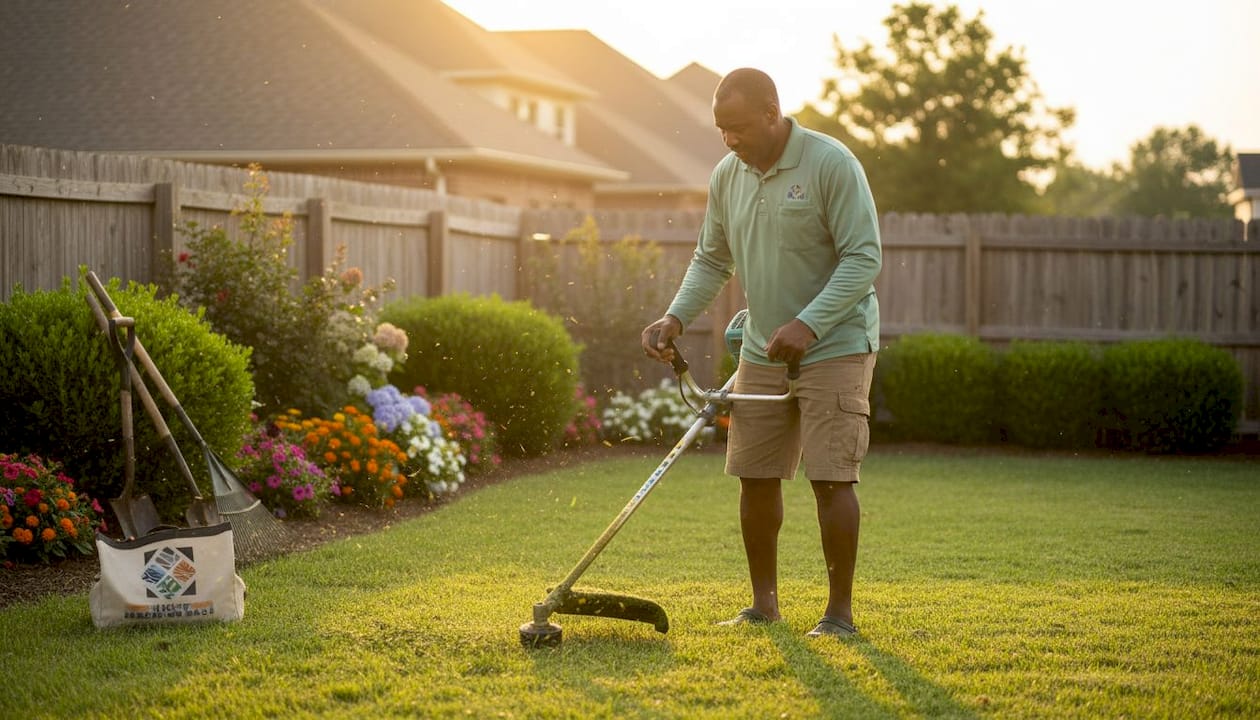
Elite Grounds Lawn & Landscaping operates in Little Rock as a licensed and insured provider with transparent, no-surprise pricing and free quotes. Their tree service capability sets them apart from pure mowing operations.
Cunningham Lawn Care, LLC is the strongest option in Conway for homeowners who want a certified pest control program alongside their lawn treatments. Their In2Care Mosquito System certification is a concrete, verifiable credential, and their payment structure gives real flexibility: pay-as-you-go, monthly billing, or a 5% discount on annual prepay.
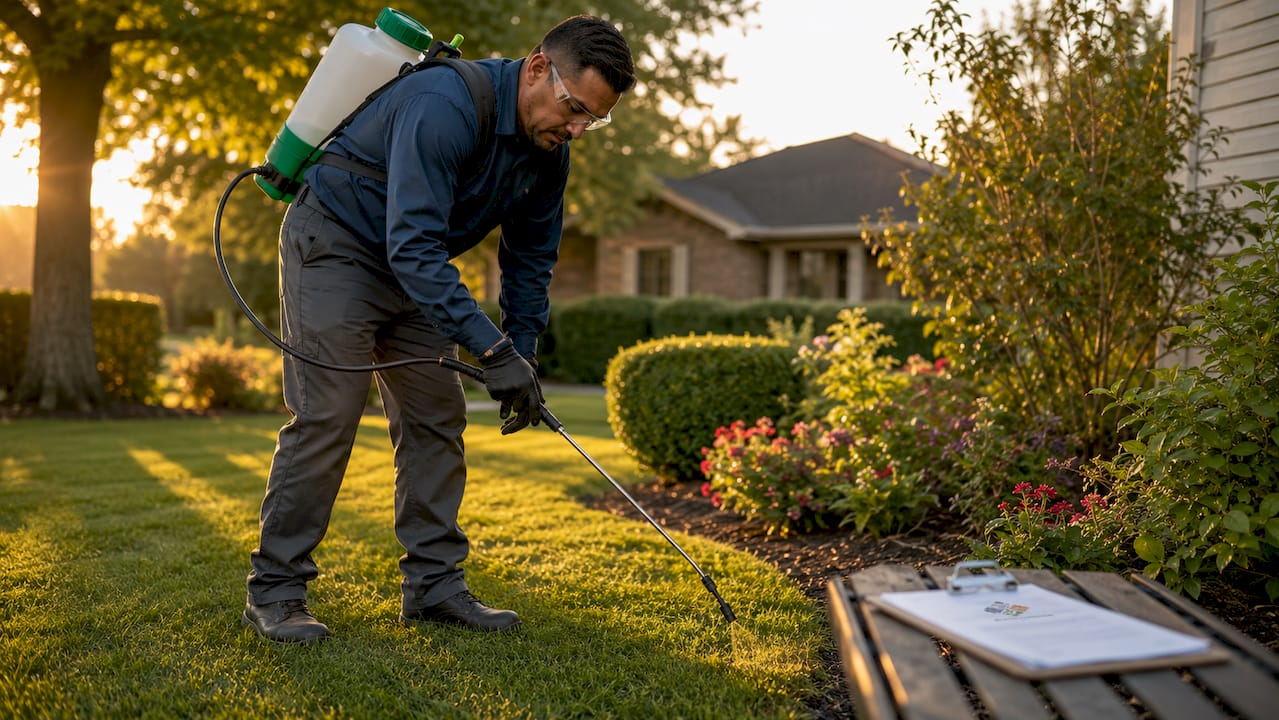
Villageprecisionpros occupies a different tier entirely. Rather than recurring mowing, our crews focus on hardscape and stone masonry projects that permanently change how a property looks and functions. For homeowners ready to invest in patios, retaining walls, or drainage corrections, Villageprecisionpros is the strongest fit in Central Arkansas.
When evaluating any provider, ask:
- Are you licensed and insured in Arkansas?
- Do you offer a written estimate before work begins?
- What is your cancellation or pause policy?
- Do you use certified products for fertilization or pest control?
Red flags include verbal-only quotes, no proof of insurance, and pressure to sign a long-term contract before seeing any work.
What does lawn care typically cost in Arkansas?
Pricing for lawn and garden care services in Arkansas follows national patterns with some regional variation. Here is a practical reference for common services:
| Service | Typical Frequency | Estimated Price Range |
|---|---|---|
| Lawn mowing (average residential lot) | Weekly or biweekly | $35–$75 per visit |
| Fertilization program | 4 applications per year | $50–$100 per application |
| Weed control treatment | 4 times per year | $45–$100 per treatment |
| Mulch installation | Once or twice per year | $75–$150 per yard installed |
| Mosquito control | Monthly (April–October) | $60–$100 per treatment |
| Leaf removal | Seasonal (fall) | $100–$250 per cleanup |
Pricing note: These ranges reflect typical residential pricing in Arkansas markets. Always request a written quote specific to your lot size and service needs.
Hourly labor rates for professional landscaping work run $75–$100 per hour for a legitimate business. That figure covers far more than wages. It absorbs fuel, equipment maintenance, insurance, payroll taxes, and non-billable time between jobs. A rate below $50 per hour often signals missing insurance or unlicensed operation.
Common add-on services to budget for:
- Aeration and overseeding (fall, for fescue lawns)
- Edging and bed maintenance
- Irrigation system checks and adjustments
- Seasonal color plantings
- Tree trimming and shrub shaping
Most providers offer package pricing that bundles mowing with fertilization and weed control, which typically costs less per service than booking each separately.
Your month-by-month Arkansas lawn care calendar
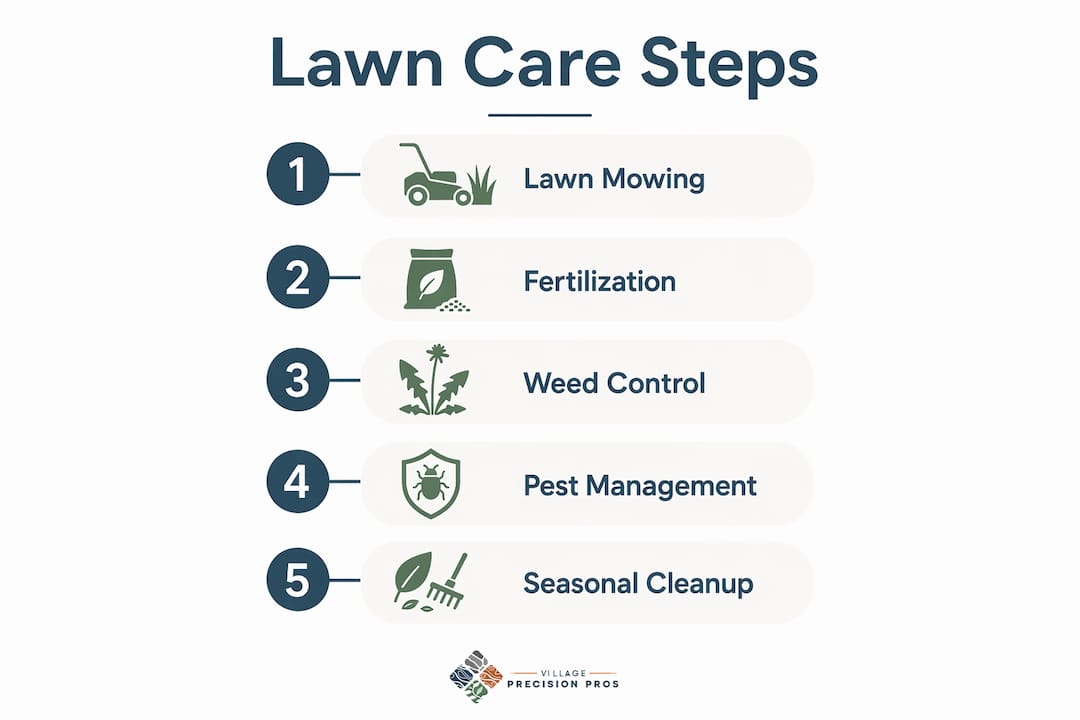
Arkansas lawns split into two camps: warm-season grasses like Bermudagrass, Zoysiagrass, and St. Augustinegrass dominate most of the state, while tall fescue holds ground in shadier, cooler spots. The University of Arkansas Extension is the authoritative local resource for grass-specific timing.
The one-third rule applies year-round. Never remove more than one-third of the grass blade in a single mowing session. Cutting deeper exposes the crown, kills photosynthetic leaf area, and weakens the root system. If you fall behind and the grass gets tall, step the height down gradually over two or three mowings rather than scalping it in one pass.
Monthly priorities by season:
- January–February: Dormant season. No mowing needed for warm-season grasses. Sharpen blades, service equipment, and plan any hardscape or drainage projects for spring installation.
- March: Fescue resumes growth; begin mowing when blades reach 4.5 inches (target height: 3 inches). Hold off on warm-season fertilization until soil temperatures hit 65°F.
- April: Warm-season grasses break dormancy. Apply pre-emergent weed control before soil temps exceed 55°F. Begin mosquito control programs.
- May–June: Peak mowing season. Bermudagrass may need mowing twice per week during flush growth. Water deeply but infrequently, targeting 1 inch per week including rainfall.
- July–August: Heat stress is real for fescue. Raise mowing height slightly to shade roots. Warm-season grasses thrive; maintain fertilization on schedule.
- September–October: Prime time to overseed fescue and apply fall fertilizer. Warm-season grasses slow down; reduce mowing frequency.
- November–December: Final leaf removal before dormancy. Aerate compacted areas. Avoid fertilizing warm-season grasses after they go dormant.
Pro Tip: Set your mowing schedule by actual grass height, not by the calendar. During spring flush, Bermudagrass can push two inches of growth in a week. During a dry August, you may not need to mow at all.
Expert landscaping insights: function first, then beauty
Lawn care and landscaping are genuinely different disciplines. Lawn care is biological maintenance: mowing, feeding, and treating living turf. Landscaping involves structural changes, grading, hardscape installation, and planting design that reshape how a property works. Confusing the two leads to hiring the wrong contractor for the job.
The single most common mistake we see in Central Arkansas is homeowners adding a patio or planting bed before fixing drainage. Poor drainage and improper grading will crack a patio, flood a bed, and undermine a retaining wall within a few seasons. Correct the site first. The aesthetic upgrades last far longer when the ground beneath them is stable.
What to look for when evaluating a landscaping bid:
- Does the contractor assess drainage and grading before quoting?
- Are material costs and labor costs itemized separately?
- Does the scope include a compacted aggregate base for any hardscape?
- Is the contractor pulling permits where Arkansas law requires them?
Villageprecisionpros has completed over 1,750 projects in Central Arkansas since 2020, covering everything from stone pathways to shoreline construction. Our process always starts with a site assessment, because a beautiful outdoor space built on a drainage problem is a liability, not an asset.
How long does hiring a lawn care provider actually take?
Plan on two to three weeks from first contact to first service for most residential lawn care providers in Arkansas. The typical sequence runs like this:
- Week 1: Request quotes from two or three providers. Most reputable companies offer free on-site estimates. Cunningham Lawn Care and Elite Grounds both advertise free quotes.
- Week 1–2: Compare written estimates. Verify licensing and insurance directly, not just from the company’s website.
- Week 2: Sign a service agreement and confirm your start date. Some providers schedule new clients two to four weeks out during peak spring season.
- First service: Expect a walkthrough or property assessment before the crew begins, especially for fertilization or pest control programs.
For hardscape or landscaping projects, the timeline extends. Design consultation, material ordering, and permit processing can add four to eight weeks before ground breaks.
What to know about contracts and cancellation policies
Service agreements vary widely among Arkansas lawn care providers. Cunningham Lawn Care offers a 12-month agreement with a 5% discount on annual prepay, alongside pay-as-you-go and monthly billing options. That flexibility is worth asking about with any provider you consider.
Before signing, confirm three things: the notice period required to cancel, whether there is a fee for early termination, and what happens if a scheduled visit is missed due to weather. Reputable providers put all of this in writing. A company that resists providing a written agreement is a provider worth skipping.
For one-time landscaping projects, a detailed written contract should specify the full scope, materials, payment schedule, and a completion timeline. Never pay more than 30–50% upfront on a large project.
Specialized services worth asking about
Beyond routine mowing and fertilization, many Arkansas providers offer services that can meaningfully extend the life and value of your outdoor space:
- Irrigation system installation and seasonal adjustments keep turf healthy without overwatering, which is a common driver of fungal disease in Arkansas summers. Villageprecisionpros offers landscape irrigation services tailored to Central Arkansas conditions.
- Artificial turf installation eliminates mowing and irrigation costs in high-traffic or shaded areas where natural grass struggles. Our artificial turf cost guide for Arkansas breaks down what to expect.
- Seasonal cleanups (spring and fall) remove debris, prep beds, and set the lawn up for the next growth cycle.
- Landscape design consultations are valuable before any major planting or hardscape project. A design session catches site problems early and prevents expensive rework.
- Outdoor kitchens and living spaces are among the highest-return additions for Arkansas properties, particularly when combined with a well-drained patio base.
For yard cleanup and seasonal prep, some homeowners use specialized services to handle the heavy lifting between major landscaping projects.
Villageprecisionpros: hardscape and design for Central Arkansas homeowners
If your property needs more than a mowing schedule, Villageprecisionpros offers a different kind of solution. Our crews design and build the outdoor structures that give your lawn a framework worth maintaining: patios, stone pathways, retaining walls, outdoor lighting, and drainage systems that protect everything you invest in above ground.
We serve residential and commercial properties across Central Arkansas, and every project starts with a site assessment, not a sales pitch. You can schedule a landscaping consultation to walk through your property with our team, identify any drainage or grading issues, and get a clear picture of what your outdoor space can become. Over 1,750 completed projects since 2020 back that process.
Key Takeaways
The strongest landscaping and lawn care outcomes in Arkansas come from matching the right provider to the right scope: recurring maintenance to a licensed lawn care company, and structural improvements to a hardscape specialist.
| Point | Details |
|---|---|
| Match provider to scope | Hire lawn care companies for mowing and treatments; hire hardscape specialists for patios, drainage, and structural work. |
| Labor rates reflect real costs | Professional landscaping rates cover insurance, equipment, and overhead, not just wages, reflecting the full cost of running a landscaping business. |
| Follow the one-third rule | Never remove more than one-third of the grass blade per mowing session to protect root health and crown integrity. |
| Fix drainage before aesthetics | Correcting grading and drainage before installing hardscapes prevents cracking, flooding, and costly repairs later. |
| Villageprecisionpros for hardscape | For patios, stone masonry, and drainage solutions in Central Arkansas, Villageprecisionpros combines design with functional site correction. |
FAQ
What is the going rate for yard care in Arkansas?
Residential lawn mowing in Arkansas typically runs $35–$75 per visit depending on lot size, with full-service packages (mowing, fertilization, and weed control) priced higher per season. Always get a written quote based on your specific property.
What is the difference between landscaping and lawn care services?
Lawn care covers ongoing biological maintenance like mowing, fertilization, and weed control, while landscaping involves structural changes such as grading, hardscape installation, and planting design. Most providers specialize in one or the other.
Is $100 an hour too much for landscape work?
No. A loaded hourly rate of $75–$100 is standard for a legitimate landscaping business once insurance, fuel, equipment maintenance, and taxes are factored in. Rates well below that range often signal missing coverage.
What is the one-third rule for lawn care?
The one-third rule states you should never cut more than one-third of the grass blade’s current height in a single mowing session. Cutting deeper removes too much photosynthetic leaf area and exposes the crown, slowing recovery and increasing weed risk.