

The right screen for pool equipment is a slatted or louvered hard screen, a partial masonry wall, or a planted buffer sized to keep the clearances your pump, filter, or heat pump manufacturer requires. Ventilation and service access decide feasibility before style ever enters the conversation. Most homeowners can handle a prefabricated kit themselves, but heat pumps, electrical bonding, and masonry work call for a licensed installer.
TL;DR:
- Proper clearance is essential, with heat pumps requiring 12 to 24 inches on sides and up to 72 inches overhead for optimal airflow and efficiency.
- Material choices should prioritize maintenance needs; aluminum offers minimal upkeep, while masonry provides durability but requires built-in access and proper drainage.
- Design plans must include removable panels or hinged access to ensure serviceability without compromising clearance or ventilation.
- Homeowners should always verify manufacturer-specific clearance guidelines and avoid fully sealing equipment to prevent reduced airflow and warranty issues.
- Contractors start with an equipment inventory and manual review to design screening that balances airflow, access, and aesthetic integration into existing hardscape.
Table of Contents
- Practical screening options by material and style
- Why ventilation and manufacturer clearances limit screening choices
- Material pros, cons and maintenance trade-offs
- Getting the installation right without blocking service access
- How a contractor plans equipment screening into the whole yard
- What the pool equipment screening conversation gets wrong
- How Village Precision Pros builds screening into your outdoor space
- Primary sources for equipment clearance and installation guidance
- Sources
- FAQ
Practical screening options by material and style
Once clearances are confirmed, the choice comes down to how much upkeep you want and how the screen should sit alongside your patio or garden beds.
Slatted wood and composite screens give you the most flexibility. You can space the boards to control airflow while still blocking sightlines, and the warmth of the material tends to fit naturally against a wood deck or pergola. Powder-coated aluminum louvers and metal panels solve the same problem with almost no upkeep, and when the louver angle is designed with enough open area, they work well around heat pumps that need continuous airflow across the coil. Vinyl prefab kits are the fastest route to a finished look: order the panels, set the posts, done in a weekend, though customization is limited to whatever sizes the manufacturer offers.
Masonry half-walls and pergola-style partial enclosures bring the most durability and integrate cleanly with existing hardscape, but they need a designed access panel or gate built in from the start, not added later. Plant-based screens and trellises give you the softest look. A row of clumping bamboo or a dense hedge can hide equipment almost completely, but the species matters: pick low-debris plants and keep roots and foliage clear of the service envelope.
- Slatted wood or composite: warm look, tunable airflow through slat spacing.
- Aluminum louvers or metal panels: low upkeep, strong choice for heat pump airflow.
- Vinyl kits: fast install, limited sizing options.
- Masonry half-walls or partial pergolas: durable and integrated, but need built-in access.
- Plant screens and trellises: natural look, require low-debris species and clearance discipline.
Why ventilation and manufacturer clearances limit screening choices
Every equipment manufacturer publishes minimum clearances, and those numbers, not personal taste, set the outer limits of your design. Heat pumps in particular need open space on multiple sides: Hayward’s HeatPro installation guidance calls for 12 to 24 inches of side clearance and up to 72 inches overhead when the unit sits under an overhang, and warns against fully enclosing the unit at all. Pentair’s own installation manual for the UltraTemp heat pump specifies 24 inches of front access and 12 inches on other sides for many models, with at least five feet of top clearance under some overhangs.
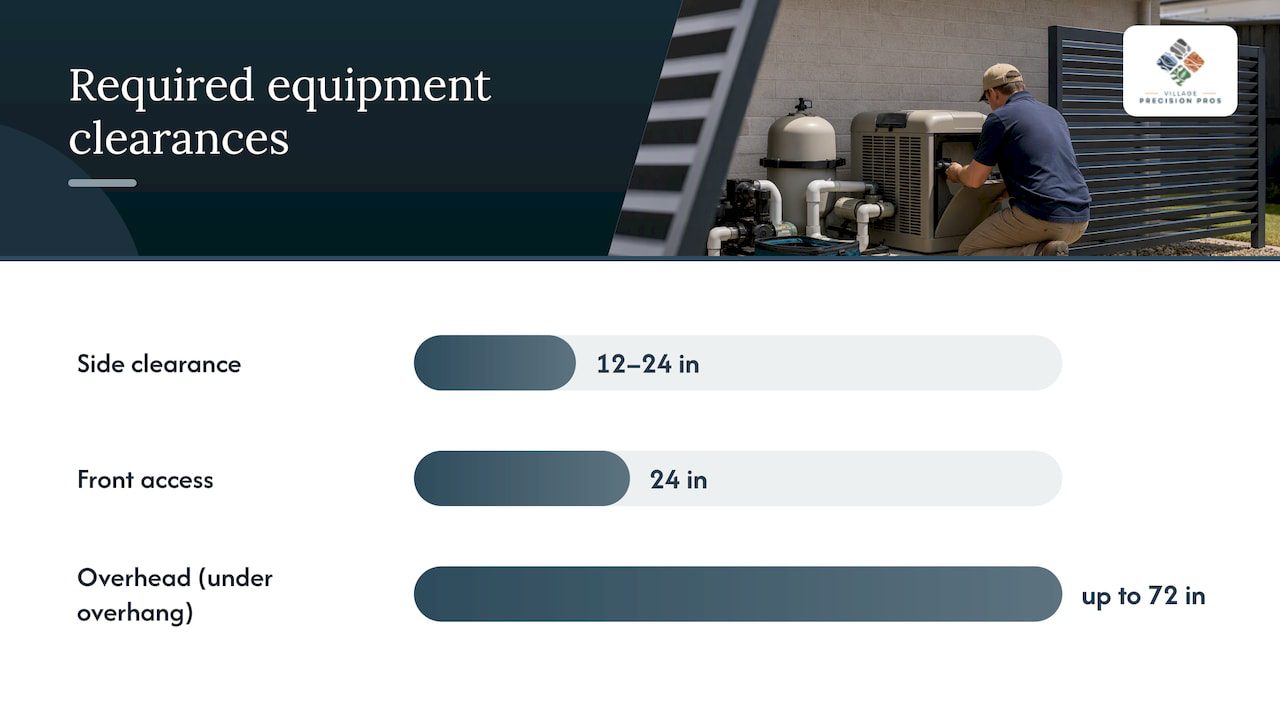
A heat pump commonly needs 12 to 24 inches of side clearance and up to 72 inches overhead when installed under an overhang, per Hayward’s HeatPro guide, and that space exists because the unit pulls ambient air across its coil to move heat. Crowd that airflow with a solid, sealed enclosure and the exhaust recirculates, the unit works harder to hit temperature, and efficiency drops. Some manufacturers treat a fully enclosed installation as a warranty violation outright.
Before you design anything, pull the equipment manual for your specific model and confirm its side, front, and top clearances. Build in a removable panel or hinged access door sized to that envelope so a technician can service the unit without dismantling the screen.
Material pros, cons and maintenance trade-offs
Material choice is really a maintenance decision dressed up as an aesthetic one. Wood looks the part next to a pool deck, but it needs periodic sealing and a yearly check for rot at the base, especially where sprinklers or splashout keep it damp. Composite trades a bit of that natural texture for consistent color and far less rot risk over the life of the screen. Aluminum asks almost nothing of you: no sealing, no fading to speak of, and its open-louver designs are the easiest match for equipment that needs steady airflow.
Vinyl kits are simple to install but can warp or fade with years of direct sun, particularly in a south-facing yard. Masonry is the most durable option on this list and the heaviest investment, both in material cost and in planning: it needs a properly drained pad underneath and a designed access panel, since you cannot easily cut into a finished wall later. Plant screens carry their own upkeep profile: seasonal leaf or pod drop near the equipment, and root systems that need to stay clear of drainage lines and the pad itself.
- Wood: attractive, but needs sealing and rot checks.
- Composite: low rot risk, steady color, higher material cost up front.
- Aluminum: minimal upkeep, best for airflow-focused designs.
- Vinyl: easy kits, can warp or fade in strong sun.
- Masonry: most durable, heaviest and costliest, needs a drained pad and built-in access.
- Plant screens: natural look, but manage debris and keep roots off the pad.
Pro Tip: Whatever material you choose, mock up the access panel size with cardboard before you build anything permanent, then check that a technician’s toolbox actually fits through the opening.
Getting the installation right without blocking service access
A screen only works long term if it survives the yard it sits in and never fights the technician who has to service it.
- Start with the pad: it needs to be level, stable, and pitched slightly so water drains away rather than pooling under the unit.
- Check the distance from pool water and confirm electrical bonding and GFCI protection meet local code before any screen goes up around a powered unit.
- Decide DIY versus pro based on complexity: a vinyl kit around a pump is a reasonable weekend project, but heat pump work, bonded electrical connections, or masonry call for a licensed installer.
- Build in the access details last: removable panels, a hinged gate, or a swing-out section sized to the clearance measurements you pulled from the equipment manual.
Getting the drainage grade right matters as much as the screen itself. Our guide to patio drainage design covers the same grading principles that keep an equipment pad dry.
How a contractor plans equipment screening into the whole yard
Our crews start every equipment screening project the same way: inventory what is actually out there, pull the manual for each unit, and confirm the manufacturer clearances before a single post goes in the ground. We check existing drainage and grade around the pad, since standing water near a pump or heat pump causes problems long before the screen does.
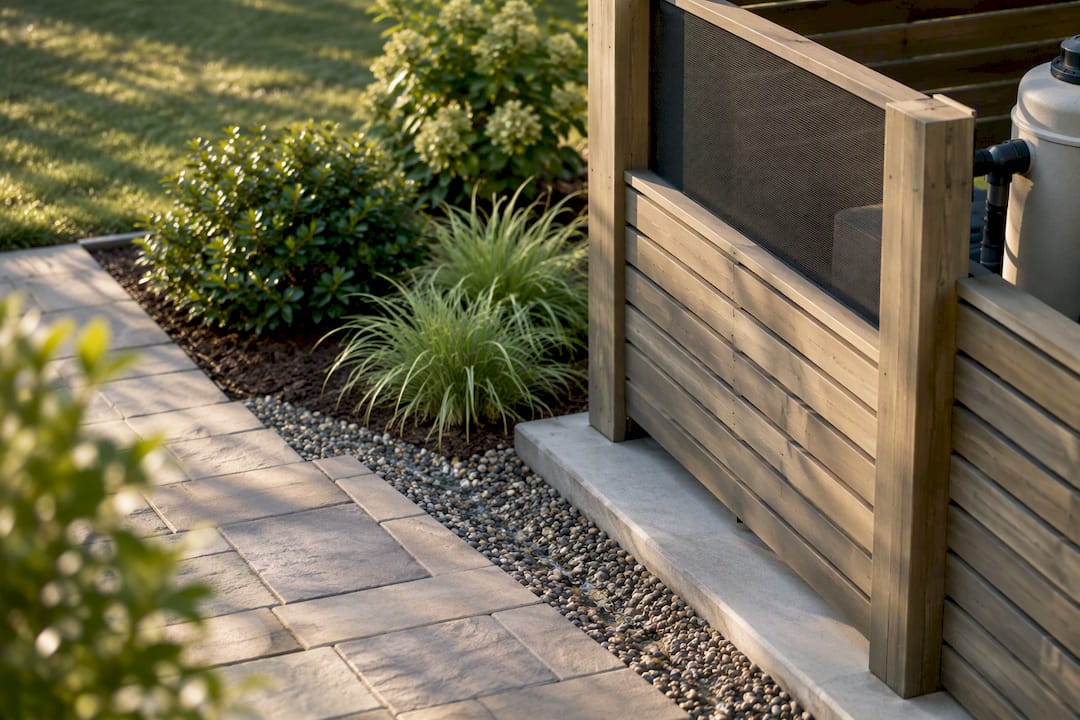
From there, design priorities stack in order: airflow first, service access second, then material choice that matches the patio or hardscape already on site, with a maintenance plan attached so the screen and the plantings around it stay functional for years. When you brief a contractor, hand over the equipment manuals and ask directly how they will preserve clearance and access. Equipment screening is often part of a larger patio or hardscape plan in Central Arkansas.
What the pool equipment screening conversation gets wrong
Most advice on this topic treats screening as a purely visual problem: pick a fence style, hide the pump, done. That framing skips the part that actually determines whether the screen survives, which is whether the equipment can breathe and whether anyone can reach it in five years when the pump needs a new seal.
The overrated idea is the fully enclosed box. It looks tidy in a photo, but it is the design most likely to trap heat, void a warranty, or force someone to cut into a finished structure just to change a filter cartridge. The underrated fix is boring: pull the manual, measure the clearance, and design the access panel before you pick a material.
If you take one thing from this, prioritize the clearance and drainage plan first and let the material follow. A beautiful screen that traps heat or blocks a service panel is not a design win, it is a callback waiting to happen.
Ty
How Village Precision Pros builds screening into your outdoor space

We build pool equipment screening as part of a wider outdoor plan, not as a standalone fence. Our Hardscape & Stone Masonry work integrates half-walls and access panels directly into the patio hardscape, and our Decks & Patios projects can carry a matching screen straight into the deck design. A site visit starts with the same clearance check described above, then a quote that accounts for drainage prep, materials, and access hardware. Our annual maintenance plans keep the screen, the plantings, and the equipment area functioning well after installation. Reach out for a site visit and quote through Villageprecisionpros.
Primary sources for equipment clearance and installation guidance
For heat pump clearance and pad requirements, consult the BSESC air-source heat pump installation guide or your unit’s own manufacturer manual, since specs vary by model. For enclosure cost drivers and permitting notes, see BobVila’s pool screen enclosure cost breakdown. Always confirm the exact clearance figures against the manual for your specific pump, filter, or heat pump model before finalizing a design.
Sources
- How to install a Hayward HeatPro heat pump, Inyopools
- UltraTemp heat pump installation and user’s guide, Pentair
- Pool screen enclosure cost, BobVila
- Guide to installing air-source heat pumps in cold climates, BSESC
FAQ
What are some ideas for a pool equipment screen?
Slatted wood or composite fencing, powder-coated aluminum louvers, vinyl prefab kits, masonry half-walls, and dense low-debris plantings all work as screens. The right choice depends on how much airflow your equipment needs and how much maintenance you want to take on.
What is the best outdoor privacy screen for pool equipment?
There is no single best option: aluminum louvers suit heat pumps that need steady airflow, while masonry half-walls suit homeowners who want a screen that matches existing hardscape. Match the material to your equipment’s clearance needs first, then to your yard’s style.
What is the average cost to screen in a pool?
Cost depends mainly on materials, labor, permits, and whether the work involves custom masonry versus a prefabricated kit, according to BobVila’s cost breakdown. A simple kit installation involves far less labor and permitting complexity than a custom masonry enclosure.
Should I enclose my pool equipment?
A fully sealed enclosure is generally discouraged because it can trap heat and reduce airflow that heat pumps and pumps need to run efficiently. A screen with proper clearance and a removable access panel gives you the visual coverage without the ventilation risk.