

If the deck lip is under half an inch and the pool shell shows no cracking, a temporary patch will usually hold you over. Larger shifts, especially anything approaching an inch or more, point to soil movement or bond beam failure and call for structural repair: a bond beam rebuild, slab lifting, or partial replacement. Limit foot traffic on the affected area and measure the slope before you decide what to do next.
TL;DR:
- Movement approaching or exceeding one inch near the bond beam suggests the need for structural repair, not just a temporary patch.
- Cracks wider than a fingernail or visible shifting of the pool wall indicate potential structural issues requiring professional evaluation before further use.
- Slab lifting using foam or mudjacking is appropriate for sound slabs that have settled due to soil erosion, while extensive cracks need bond beam repairs or replacement.
- Temporary fixes such as grinding down lips or resetting pavers can buy time but do not address underlying soil or structural problems.
- A professional assessment should include soil evaluation, drainage analysis, and detailed documentation to determine the proper repair method.
Table of Contents
- How to inspect the deck and measure how unlevel it is
- Temporary, reversible fixes to remove hazards and fix drainage now
- Permanent repair options explained: bond beam rebuild, slab lifting, pours, and replacement
- When to call a pro and the exact questions to ask on-site
- How Village Precision Pros diagnoses and fixes pool deck settling
- What actually causes an uneven pool deck
- Author perspective: staged repairs, safety, and maintenance
- Contact Village Precision Pros for site assessment and repair
- Building-code guidance and publisher reference pages
- Sources
- FAQ
How to inspect the deck and measure how unlevel it is
Before calling anyone, walk the perimeter and look for the signs that separate a cosmetic nuisance from a structural problem. Cracking that runs through the coping, separation where the deck meets the pool wall, and slabs that bulge or dip all tell a different story than a simple hairline crack in a control joint.
A 4-foot level or a taut string line across the affected slabs will show you how much the surface has dropped. Hold the level flat, note the gap under the low end in inches, and photograph it next to a tape measure so a contractor can see the exact number later.
- Note whether cracks are hairline (cosmetic) or wide enough to catch a fingernail (a sign of movement)
- Measure gaps at the pool coping and at any slab-to-slab joints, recording the largest number you find
- Check for bulging, sunken corners, or rocking pavers when you step on them
- Flag any spot where the pool wall itself seems to have shifted, not just the deck
Deviations of a fraction of an inch across a few feet are typical settling and rarely urgent. Multiple inches of displacement, or movement concentrated near the bond beam, suggests the pool shell itself may be affected and needs a professional inspection before you do anything else.
Temporary, reversible fixes to remove hazards and fix drainage now
Once you know the scope, you can decide whether a stopgap is safe or whether you are only delaying a bigger job. These fixes buy time. They do not correct the underlying settling.
- Grind down a raised lip with a diamond grinder to remove the trip hazard, which works for offsets under about a quarter inch.
- Reset a handful of loose pavers or flagstones on fresh bedding sand if the shift is isolated to a small section.
- Apply a thin bonded overlay across a shallow lip to restore a flush surface for foot traffic.
- Add a scupper or small drain, clear nearby downspouts, and regrade a low spot so water stops pooling against the deck.
Pro Tip: Never wedge shims or loose material under a slab near the pool coping. It can shift under load and create a sharper, more dangerous edge than the one you started with.
Skip the shim-and-hope approach anywhere close to the bond beam. If the deck keeps moving after a patch, that is your signal the problem is structural, not cosmetic.
Permanent repair options explained: bond beam rebuild, slab lifting, pours, and replacement
Once movement is confirmed as structural, the repair method depends on what moved and why. A bond-beam rebuild or cantilever concrete pour addresses cases where the coping or the ties anchoring the deck to the pool wall have failed. This is structural concrete work, often involving new rebar and dowels tied into the existing wall, because the deck is literally hanging off the pool shell in that section.
Slab lifting is the go-to option when the slab itself is sound but has sunk due to soil compaction or erosion underneath. Mudjacking pumps a cement-based slurry beneath the slab to raise it, while polyurethane foam injection uses a lighter, faster-curing foam that expands to fill voids and lift the surface. Foam intrudes less on the surrounding soil and cures within hours, while mudjacking tends to cost less per square foot but takes longer to cure and adds significant weight underground.
- Bond-beam rebuild: needed when coping or wall ties have failed, not just the slab
- Slab lifting (mudjacking or foam): best for sound slabs sitting on settled or eroded soil
- Partial replacement: appropriate when only one or two sections have failed beyond repair
- Full deck replacement: the right call when multiple sections show cracking, uneven settling, or repeated failures
Building codes typically call for pool deck slopes between 1/8 inch and 1/2 inch per foot to keep water moving away from the pool. Any permanent repair should restore that range, not just flatten the surface.
Soil type, nearby tree roots, and a high water table all influence which method makes sense: expansive clay soils tend to need deeper structural fixes, while sandy soil that has simply eroded often responds well to slab lifting. Heavy structural work near the pool also carries some risk to tile, coping, and the shell itself, so a contractor experienced with pools should manage that phase carefully.
When to call a pro and the exact questions to ask on-site
Some situations do not leave room for a wait-and-see approach. More than an inch of vertical movement, cracking that runs into the bond beam, or any sign the pool wall itself has shifted all warrant a professional assessment before you use the pool again.
When you bring someone out, ask direct questions and expect direct answers:
- Have they handled bond beam repairs and slab lifting on pool decks specifically, not just driveways or sidewalks?
- Can they show examples of past pool deck projects, including how they protected the pool shell during the work?
- What permits does the job require, and will they pull them?
- Are they licensed and insured for structural work in your area?
Before the visit, gather your photos, your level readings in inches, and a rough timeline of when you first noticed the problem. A solid repair plan should include a soil evaluation, a drainage plan if regrading is needed, a written scope of work, and a realistic timeline, not a verbal estimate scratched on a business card.
How Village Precision Pros diagnoses and fixes pool deck settling
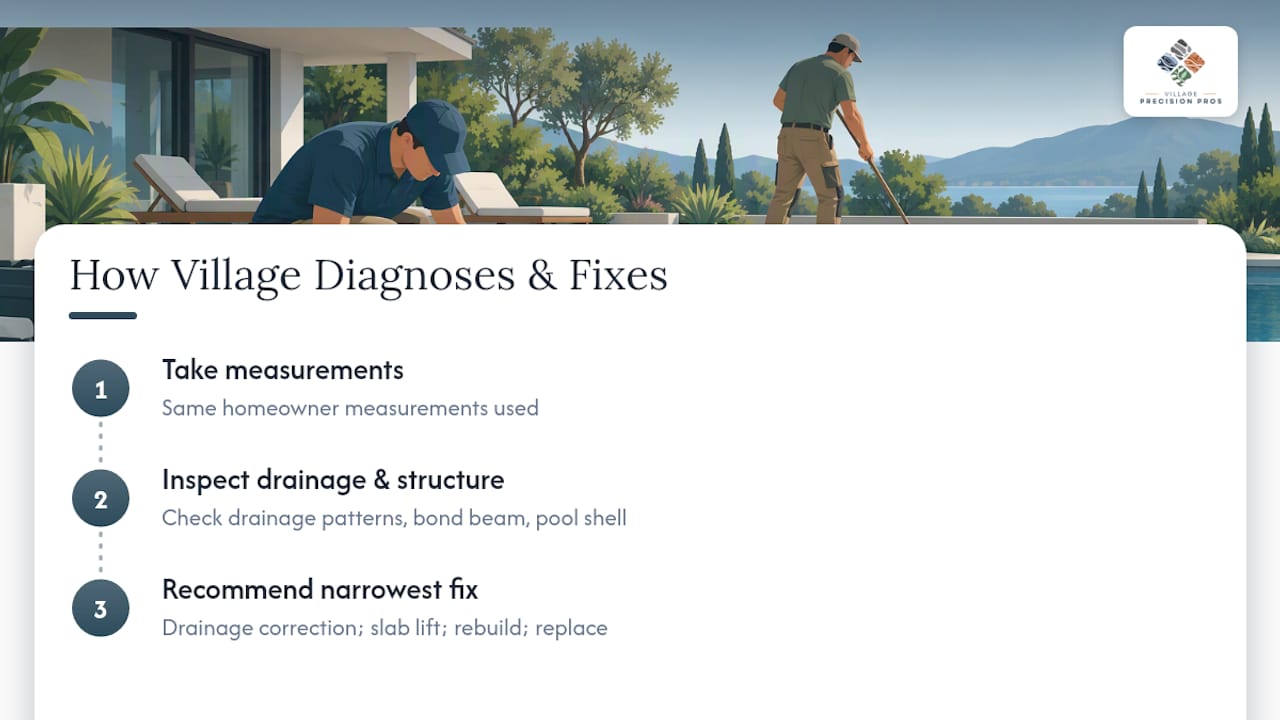
Village Precision Pros has completed more than 2,000 landscaping and hardscape projects across Central Arkansas, including foundation leveling work on residential slabs. Our crews start with the same measurements a homeowner would take, then check drainage patterns and inspect the bond beam and pool shell for signs of movement. From there, we recommend the narrowest fix that solves the problem: drainage correction, slab lifting, bond beam rebuild, or replacement of the affected section.
What actually causes an uneven pool deck
Most pool deck settling traces back to what happened underground before the concrete was ever poured. Soil that was not compacted properly during construction settles unevenly over the years as it adjusts under the weight of the slab, especially in the first several seasons after installation.
Expansive clay soil, common in much of the region, swells when wet and shrinks when dry, which pulls slabs down at different rates depending on moisture exposure. Tree roots compound the problem: a root growing under one corner of a slab can lift that section while the surrounding soil continues to settle, creating the uneven, tilted look homeowners often describe.
Bond beam failure is a more serious cause. The bond beam is the reinforced concrete band that caps the pool wall and anchors the deck’s edge. When that connection cracks or separates, the deck section tied to it can drop or tilt independently of the rest of the slab, which is why coping separation is treated as a bigger warning sign than a crack in the middle of a paver field.
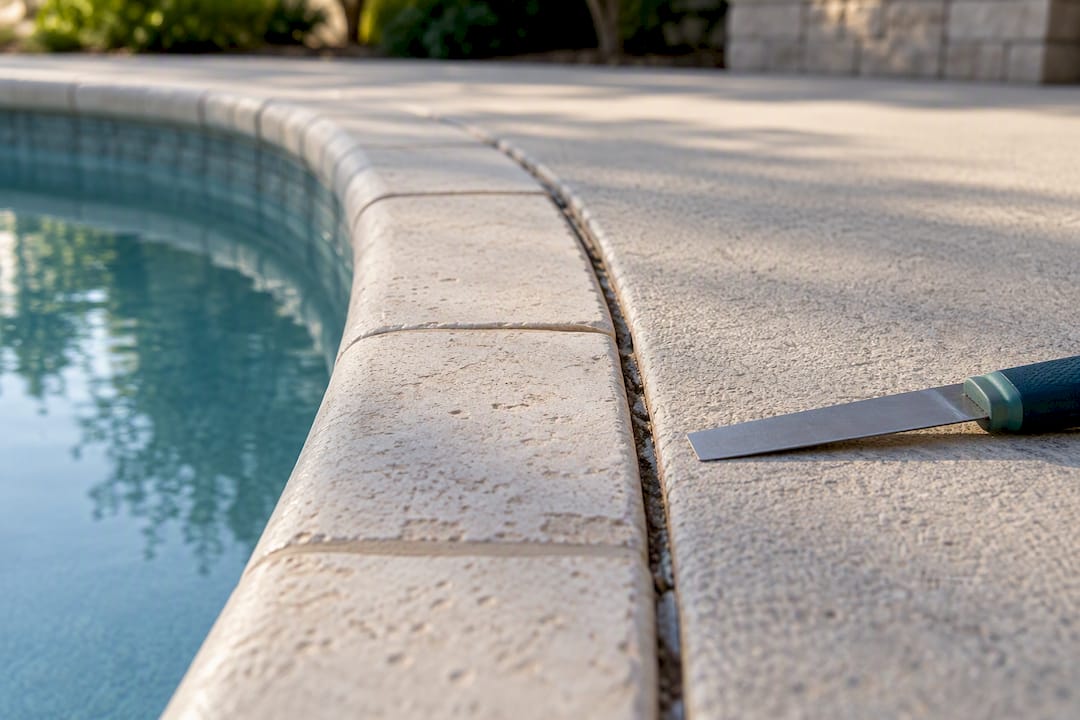
Poor compaction during the original build, erosion from a leaking irrigation line, and water table shifts after heavy rain round out the common causes. Each points to a different repair, which is why an accurate diagnosis matters more than guessing at a fix.
Author perspective: staged repairs, safety, and maintenance
Fixing the trip hazard first while you plan the structural repair is reasonable, not a shortcut. A grind or a reset paver buys time without pretending the underlying issue is solved. Structural concrete work, whether it is a bond beam rebuild or a slab lift, holds up better when it is done in dry weather, since wet soil shifts more during excavation and curing. Long term, the maintenance that prevents a repeat is unglamorous: fix leaking irrigation lines near the deck, keep runoff moving away from the pool, and stay ahead of tree roots before they reach the slab.
Ty
Contact Village Precision Pros for site assessment and repair
If your pool deck has moved enough to need more than a patch, a proper site assessment tells you exactly what you are dealing with before any concrete gets poured. Our crews measure the slope, document the damage with photos, and check for the drainage and soil issues that caused the settling in the first place.

Depending on what we find, an assessment can lead to any of the following:
- Structural leveling for slabs that have sunk due to soil settling or erosion
- Hardscape and stone masonry repair for coping, pavers, or flagstone sections
- Decks and patios work for partial or full replacement of failed sections
- Drainage correction to restore proper slope and stop water pooling near the pool
You will leave the visit with measurements, a photo record, a written scope, and a set of repair options instead of a guess. Reach out through our decks and patios service page to schedule an assessment.
Building-code guidance and publisher reference pages
For drainage requirements, see the International Swimming Pool and Spa Code on deck slope. For method comparisons, see our guide to mudjacking versus polyurethane foam and our overview of patio drainage design.
FAQ
How many inches can a pool deck be unlevel?
A deviation of a fraction of an inch across a few feet is usually normal settling and rarely urgent. Movement approaching or exceeding an inch, especially near the pool coping, is a common signal that the issue is structural rather than cosmetic.
How much does it cost to have a pool deck leveled?
Cost depends on the scope of the repair, the soil conditions found underground, site accessibility, whether permits are required, and whether the pool shell or bond beam needs work. A contractor can only give an accurate figure after inspecting the site and confirming which repair method applies.
How can I fix an unlevel pool deck without draining the pool?
Slab lifting methods like mudjacking and polyurethane foam injection raise sunken sections from below without draining the pool, as long as the pool shell itself is sound. Bond beam repairs or full replacement, by contrast, often require more extensive work near the wall and may affect pool operation temporarily.
Does a pool deck have to be perfectly level?
No, and it should not be. Building code guidance commonly calls for a slight slope, typically between 1/8 inch and 1/2 inch per foot, so water drains away from the pool instead of pooling on a perfectly flat surface.