

A French drain fits a site where water can move away by gravity, and a sump pump steps in when there’s no gravity outlet and water has to be lifted out. In practice, we install them together more often than not: the drain collects and channels the water, and the pump gives it somewhere to go when the yard itself won’t cooperate.
TL;DR:
- A properly installed French drain relies on slope and gravity, making it a more reliable and low-maintenance option for surface runoff and away-from-foundation drainage.
- Sump pumps are necessary when water enters below the grade level or high water tables cause basement seepage, but they depend on mechanical parts that require regular testing and backup power.
- Exterior work like regrading is usually more cost-effective and less invasive than interior drainage solutions, but interior systems become essential once water breaches the slab or walls.
- Routine maintenance includes seasonal inspections of the French drain outlet and monthly testing of the sump pump, especially with a battery backup for reliability during power outages.
- Combining a French drain with a sump pump effectively manages persistent basement moisture, but site assessment and proper grading are critical to choosing the best system.
Table of Contents
- Pros, Cons, and a Quick Checklist for Your Property
- How a French Drain and Sump Pump Actually Work
- How to Decide Which System Your Home Needs
- When You Need Both Systems Working Together
- Keeping Both Systems Working When You Need Them Most
- What to Expect During Installation or a Retrofit
- Our Take After Years of Drainage Retrofits
- Get a Site Assessment Before You Guess at a Fix
- Where We Got Our Information
- Sources
- FAQ
Pros, Cons, and a Quick Checklist for Your Property
A French drain is passive. It relies on slope and gravity, so there’s nothing to break, nothing to plug in, and nothing that stops working the moment the power flickers during a storm. A sump pump is active. It depends on a float switch and a motor, which means more moving parts and more that can fail, but it solves a problem gravity simply cannot: getting water out of a basement that sits below the natural drainage grade.
Each tool shows up for a different job. Uphill runoff and surface pooling usually call for a French drain. A high water table or persistent interior seepage usually calls for a sump pump, sometimes paired with interior drainage that feeds it.
Before you decide, walk your property and answer these:
- Does water pool against the foundation after rain, or does it run off and disappear?
- Is there a slope away from the house that could carry water to daylight?
- Does water show up on the basement floor itself, not just along the walls?
- Have you noticed musty odors or staining that suggest a high water table nearby?
How a French Drain and Sump Pump Actually Work
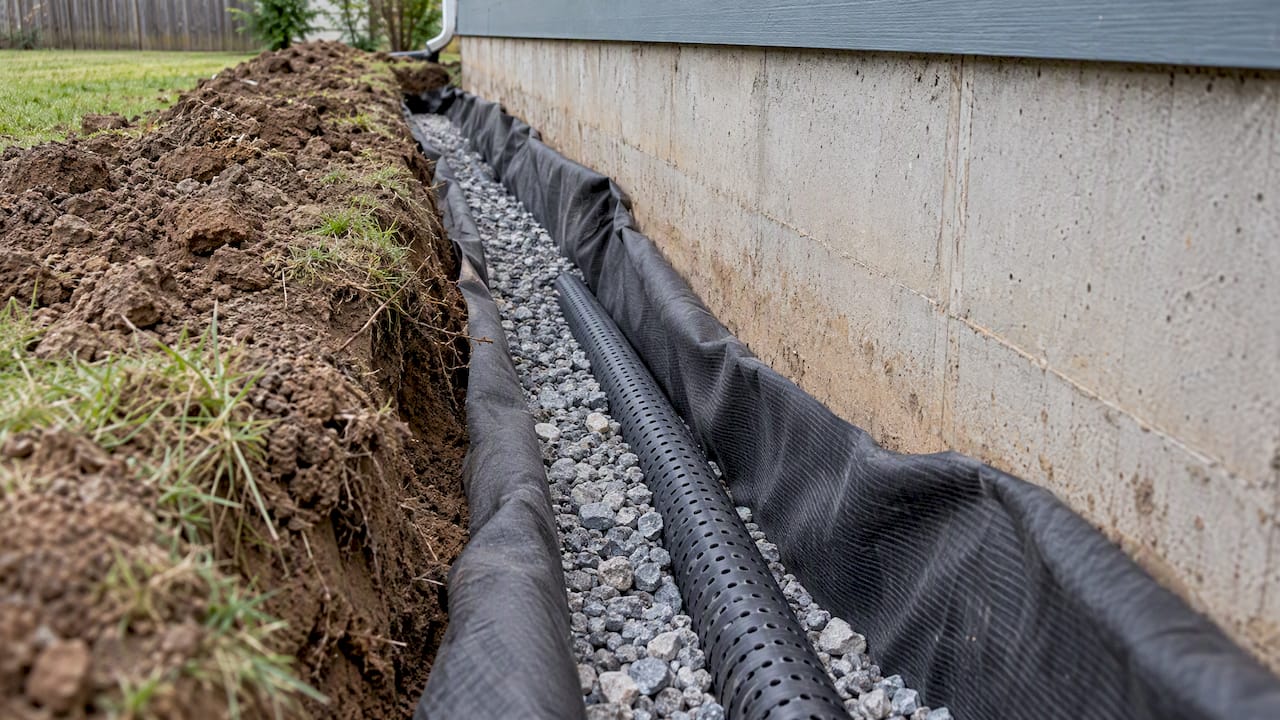
A French drain is a perforated pipe buried in gravel and wrapped in fabric that keeps soil from clogging the slots. Water seeps through the gravel, enters the pipe, and travels by gravity to a safe discharge point, whether that’s daylight downhill or a tie in to a sump. Fairfax County guidance describes this setup as a reliable way to intercept and redirect runoff before it reaches the foundation, and notes that downspouts or catch basins are often tied into the same line.
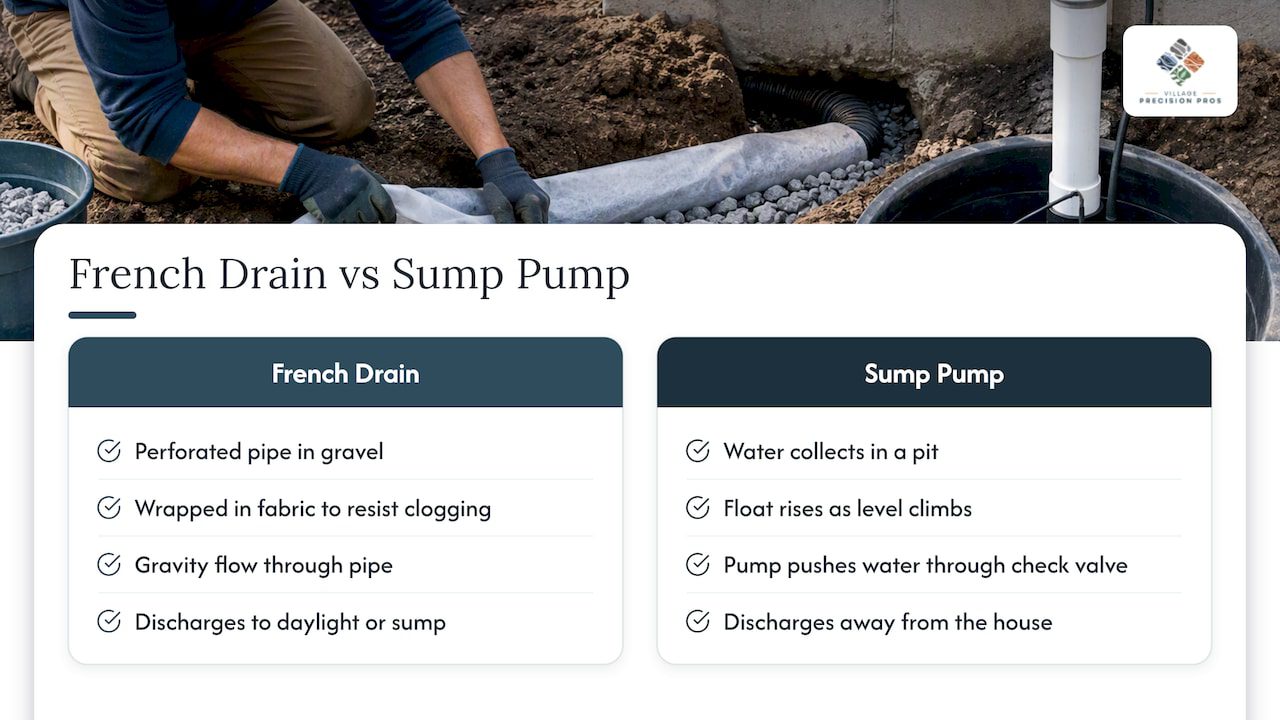
A sump pump works differently. Water collects in a pit, a float rises as the level climbs, and the pump kicks on to push water through a check valve and out a discharge pipe, usually well away from the house. Building America describes interior perimeter drains and sub-slab piping that route directly into that pit, which is the usual path for water that has nowhere else to go.
How to Decide Which System Your Home Needs
Start outside, not inside. Check your grading, gutters, and downspouts before you assume you need a mechanical fix. A surprising number of wet basements trace back to a downspout dumping water two feet from the foundation, something yard drainage fixes resolve before any drain or pump gets involved.
- Walk the perimeter and note where water pools or where soil has settled toward the house.
- Identify the source: surface runoff from rain, uphill flow from a neighboring slope, a high water table, or a crack letting groundwater in.
- Check whether a gravity outlet exists, meaning a spot downhill where water can exit without being pumped.
- If a gravity outlet exists, plan on a French drain. If it doesn’t, plan on a sump and a pumped discharge line.
Kansas State University points out that gravity drainage is more reliable than pumping because it doesn’t depend on mechanical power, so it’s always worth checking for an outlet before you commit to a pump.
Pro Tip: If water appears on the basement floor within a day of heavy rain, that’s a strong sign you’re dealing with a high water table, not just surface runoff, and a sump is likely part of the fix.
Red flags that mean it’s time to call a professional: standing water that returns within hours of pumping it out, cracks in the foundation wall wider than a pencil, or efflorescence (that white chalky residue) spreading across block walls.
When You Need Both Systems Working Together
Interior seepage is the classic case for combining the two. An interior perimeter drain collects water along the inside edge of the basement floor and carries it to a sump pit, which then lifts it out, a configuration University of Minnesota Extension describes in detail for homes with no other practical outlet.
An exterior French drain can discharge straight to daylight if your lot slopes enough, or it can tie into the same sump if the elevation doesn’t allow a clean gravity path. The tradeoff comes down to disruption: exterior work means excavation and possibly permits, while interior work means cutting the slab edge, which is faster but more invasive inside a finished space. Landscape drainage adjustments at the yard level often reduce how much water ever reaches either system.
Keeping Both Systems Working When You Need Them Most
A French drain needs a seasonal check, not constant attention. Walk the discharge point a few times a year to confirm water is actually exiting, and clear leaves or sediment from any visible inlet. A sump pump needs more hands-on care: test it monthly by pouring a bucket of water into the pit and watching the float trigger the pump, a method FEMA recommends as a simple way to confirm the system works before a storm hits.
- Pour a bucket of water into the sump pit monthly to confirm the float and pump activate correctly.
- Inspect the check valve annually to make sure water isn’t flowing back into the pit after each cycle.
- Clear debris from French drain inlets and discharge points each spring and fall.
- Install a battery backup or alarm system for the sump, since pumps often fail during the exact storms that need them most.
Backup power matters more than most homeowners expect. NDSU Extension notes that power outages during heavy storms are common, and a battery backup or alarm system is the simplest way to avoid a flooded basement while the grid is down.
A French drain usually fails from sediment buildup inside the pipe or a crushed section from settling soil, both of which call for cleaning or partial replacement rather than a full redo. Keep the pump area GFCI protected, use a childproof pit cover, and route discharge well clear of the foundation and any walkway where it could refreeze. Our French drain maintenance guide covers the full seasonal checklist in more detail.
What to Expect During Installation or a Retrofit
A French drain installation typically means digging a trench along the problem area, whether that’s the yard perimeter or an interior slab edge, laying perforated pipe in gravel, wrapping it in filter fabric, and routing it to an outlet. Exterior work disturbs landscaping and may require a permit depending on where the discharge lands. Interior work means cutting a strip of slab along the foundation wall, which is noisier and dustier but doesn’t touch the yard.
A sump pump installation adds a pit, a liner, the pump itself, a check valve, and discharge piping that has to exit the house without dumping water back toward the foundation. Grading and slope design matter here too, which is why patio drainage design principles, like maintaining a 2% slope away from structures, apply just as much to drainage discharge points as they do to hardscape.
Before work starts, get the scope in writing: where water enters, where it exits, which components are included, and who handles any required permitting for gutter replacement workflows for the discharge location.
Our Take After Years of Drainage Retrofits
Most wet basement calls we see start outside, not inside. Grading that slopes toward the house, downspouts that dump three feet from the foundation, and clogged gutters cause more flooding than any failed French drain or burned-out pump. We fix the exterior first, every time, because it’s cheaper to regrade a yard than to tear into a finished basement.
That said, once water is already entering through the slab or walls, no amount of yard work solves it alone. That’s when interior drainage tied to a sump earns its place.
Ty
Get a Site Assessment Before You Guess at a Fix
Every property drains differently, and the right answer here depends on your slope, soil, and where water actually enters your home. We walk the site, trace the water’s path, and build a proposal that spells out the work, the materials, and the discharge routing before anything gets dug up.

If drainage issues are tied to a patio, retaining wall, or regrading project, our hardscape and stone masonry team handles the grading and outlet construction as part of the same scope, so water management and the finished look work together instead of fighting each other. Reach out to schedule a walkthrough and get a written plan for your yard.
Where We Got Our Information
These are the technical references we leaned on while putting this guide together:
- Building America Solution Center covers when drains or sump pumps belong in a basement or crawlspace retrofit.
- University of Minnesota Extension explains interior perimeter drainage and common causes of basement moisture.
- Kansas State University Research and Extension and NDSU Extension cover gravity drainage reliability and backup pump planning.
Sources
- Drain or Sump Pump Installed in Basements or Crawlspaces | Building America Solution Center
- Moisture in basements: causes and solutions | UMN Extension
- Dry Basements and Crawl Spaces | Kansas State University Research and Extension
- Electric backup sump pumps for houses | NDSU Extension
- Drainage problem control runoff | Fairfax County
FAQ
What are the disadvantages of a French drain?
A French drain depends on gravity, so it only works where the site has a usable slope or outlet, and it can clog over time with sediment or root intrusion. It also requires excavation, which disturbs landscaping and can be disruptive if installed along an existing foundation.
What is the average cost for a French drain?
Published pricing varies widely by region, soil type, and whether the work is exterior excavation or interior slab cutting, and none of our sources list a reliable per-foot figure. Request a written estimate from a local contractor, since trench depth, pipe material, and outlet distance all affect the total.
My French drain is full of dirt. How can I clear it?
Sediment buildup is one of the most common French drain failure points, usually caused by a damaged fabric wrap or a crushed section of pipe. A contractor can flush the line or, if sediment has packed the gravel bed, excavate and replace the affected section rather than attempt a full clean.
Why don’t older homes have sump pumps?
Many older homes were built with basements set above the local water table or relied on exterior gravity drainage that worked for the site conditions at the time. Changes in grading, nearby construction, or heavier storm patterns can shift groundwater behavior, which is why some older homes need a sump pump added decades after construction.