

Landscaping does increase resale value, but only when it targets curb appeal and low-maintenance upkeep rather than personal flair. The projects that consistently return the most money are entry walkways and plantings, healthy lawns, outdoor lighting, mature trees, and right-sized patios or decks. Costly, highly customized features (elaborate ponds, oversized pools, novelty gardens) tend to recover far less of what homeowners spend on them.
TL;DR:
- Front walkway replacements, healthy lawns, and outdoor lighting provide the highest resale return because they create strong first impressions and signal maintenance.
- Large, customized water features or oversized hardscapes often result in low recovery because they increase ongoing costs and appear as overbuilding in modest neighborhoods.
- Prioritize fixing visible defects, curb appeal, and low-maintenance plantings before investing in backyard features to maximize resale value efficiently.
- Landscape projects timed for early spring or fall tend to establish better, while installing new sod or plantings close to listing can undermine curb appeal.
- Professional installation is advisable for structural and drainage projects to avoid costly repairs and protect resale value, especially in regions with freeze-thaw cycles.
Table of Contents
- Which Landscaping Projects Deliver the Best Resale ROI?
- What Do Landscaping Projects Actually Cost, and What Do They Recover?
- How Should You Prioritize Landscaping Spending Before Selling?
- Which Landscaping Features Hurt Resale Value?
- How Village Precision Pros Applies ROI-First Project Selection
- When Is the Best Time of Year to Landscape for Resale Value?
- Do Regional and Climate Factors Change Landscaping ROI?
- Does Eco-Friendly Landscaping Improve Resale Value?
- Should You DIY Your Landscaping or Hire a Professional?
- What Do Real Before-and-After Landscaping Upgrades Look Like?
- Should You Landscape for Joy or for Resale Value?
- How Village Precision Pros Turns This Into a Plan for Your Yard
- Sources
- FAQ
Which Landscaping Projects Deliver the Best Resale ROI?
We’ve walked hundreds of Central Arkansas properties before they hit the market, and the pattern is remarkably consistent: the projects buyers notice first are the ones that pay back the most. That’s not a coincidence. It’s psychology backed by data.
The National Association of REALTORS® Remodeling Impact Report found that 92% of REALTORS® recommend improving curb appeal before listing a home, and 97% say it directly helps attract buyers. That statistic alone should reorder most homeowners’ project lists.
Here’s why the top performers work so well:
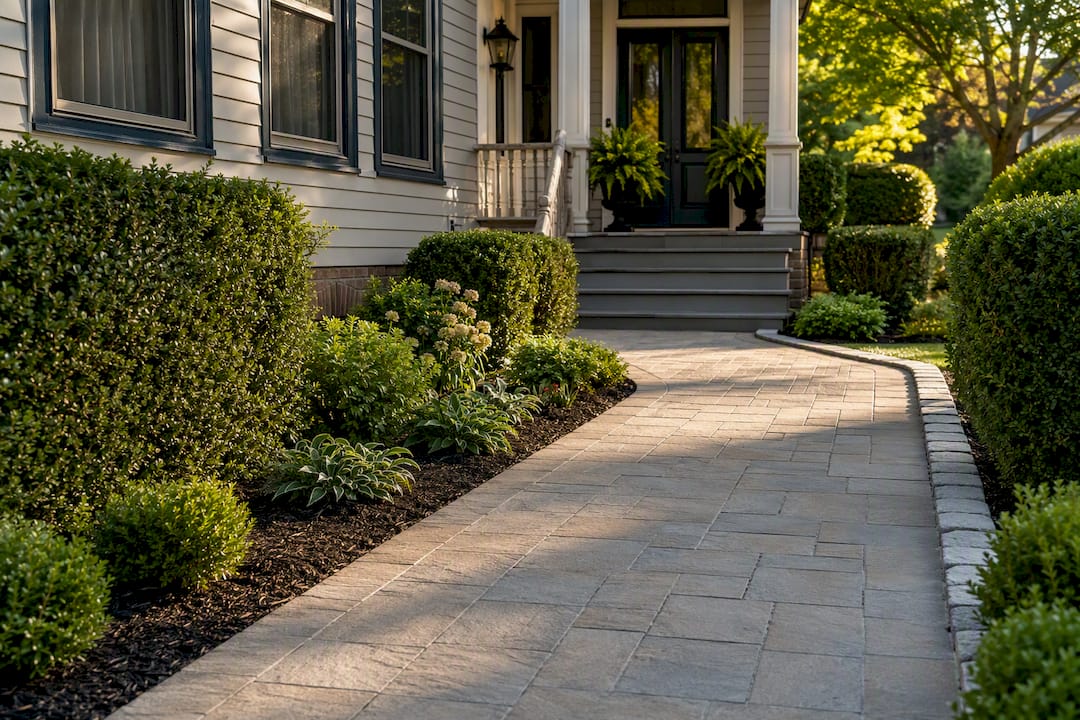
- Front walkway and entry plantings. A cracked or narrow walkway is one of the first flaws a buyer registers, often before they reach the front door. Replacing it with a clean paver or stone path, framed by simple, low-maintenance plantings, resets that first impression at relatively low cost.
- Lawn health and routine maintenance. A thick, even lawn signals that a property has been cared for. Buyers read a patchy, weed-choked yard as a warning sign about what might be neglected inside the house, too.
- Outdoor lighting. Path lights and accent fixtures extend the hours a home looks presentable and make a property feel safer during evening showings, which matters more than most sellers assume.
- Mature trees and foundation plantings. Trees add scale, shade, and seasonal color that a newly sodded yard simply can’t fake. Energy also notes that well-placed shade trees and windbreaks cut energy costs, a secondary selling point buyers appreciate on top of the visual payoff.
- Right-sized patios or decks. A modest patio that fits the lot and the house extends usable outdoor living without reading as overbuilt for the neighborhood.
Opendoor’s analysis of landscaping’s effect on home value backs this up: simple, front-facing improvements consistently outperform elaborate backyard investments when it comes to buyer perception.
Pro Tip: Walk your front yard from the curb, not your porch. Buyers form their first opinion from the street, and that’s the vantage point that should drive your project list.
What Do Landscaping Projects Actually Cost, and What Do They Recover?
Cost-recovery numbers vary by market, but the pattern reported by NAR’s Remodeling Impact Report is consistent: smaller, curb-facing projects recover a larger share of their cost than large, backyard-focused ones.
NAR’s data shows landscape upgrades and front walkway replacements are consistently ranked among the top-recovering outdoor projects, a pattern realtors report holding across price points, from starter homes to move-up markets.
These numbers shift based on three factors that matter more than the project itself. Neighborhood price band sets buyer expectations. A $30,000 outdoor kitchen in a $200,000 neighborhood rarely returns proportionally, because it exceeds what buyers in that price range expect to pay for. Scale relative to the house matters too. A patio that dwarfs the home’s footprint reads as a mismatch rather than an upgrade. Ongoing maintenance cost is the third variable and the most overlooked. A feature that a buyer perceives as a future chore, rather than a benefit, gets discounted in their offer even when it looks great during the showing.
How Should You Prioritize Landscaping Spending Before Selling?
Prioritizing landscaping for resale isn’t about spending the most. It’s about spending where buyers actually look and worrying least about spending where they won’t.
- Fix visible defects first. Dead patches, broken pavers, drainage pooling near the foundation. These read as neglect and cost credibility with every buyer who walks the lot.
- Invest in curb appeal before backyard upgrades. Realtor guidance consistently ranks front-facing improvements above backyard entertainment features for resale impact.
- Get multiple bids and hold a contingency. Landscaping quotes can vary widely for the same scope. A 10 to 15% contingency covers the drainage or grading surprises that show up once digging starts.
- Compare installed cost against expected recovery before committing. A project with lower upfront cost and high buyer visibility usually beats an expensive one that only you will appreciate.
When you’re staging for a sale, order matters: fix structural and drainage issues first, then lawn and plantings, then lighting, then hardscape upgrades if budget allows. When interviewing a contractor, ask directly about drainage handling, warranty terms, and what maintenance the finished project will require. If a bid skips grading and drainage entirely, treat that as a red flag, not a shortcut.
Pro Tip: Ask every landscaping bid for a written maintenance expectation. If a contractor can’t tell you how many hours a month a project will need, they probably haven’t sized it correctly for your lot.
Which Landscaping Features Hurt Resale Value?
Some projects that feel like luxury upgrades to homeowners read as liabilities to buyers, and the reasons are consistent across markets.
- Swimming pools. Realtor sources note that pools narrow the buyer pool to those who specifically want one, while everyone else sees insurance costs, safety concerns, and upkeep.
- Large or custom water features. Koi ponds and elaborate fountains rank among the projects least likely to recover their cost, largely because they read as a maintenance obligation rather than an amenity.
- Elaborate themed gardens. Highly personalized plant collections or hardscape themes appeal to their creator far more than to the next owner.
- Artificial turf, especially in front yards. Industry analysis finds synthetic turf works fine for a shaded problem area or a dog run, but often reads as a negative when it replaces a full front lawn.
- Oversized hardscaping. A patio or retaining wall system that overwhelms a modest lot signals overbuilding rather than improvement, per Gardening Know How’s realtor-sourced examples.
The mechanism behind all five is the same: maintenance burden and removal cost get priced into a buyer’s offer, whether or not they say so out loud. A modest water feature, a small dedicated turf patch, or a properly scaled patio delivers the enjoyment without the resale penalty.
How Village Precision Pros Applies ROI-First Project Selection
Many landscaping projects that hold their value share a common trait: they are sized and built for the property, not for a magazine spread.
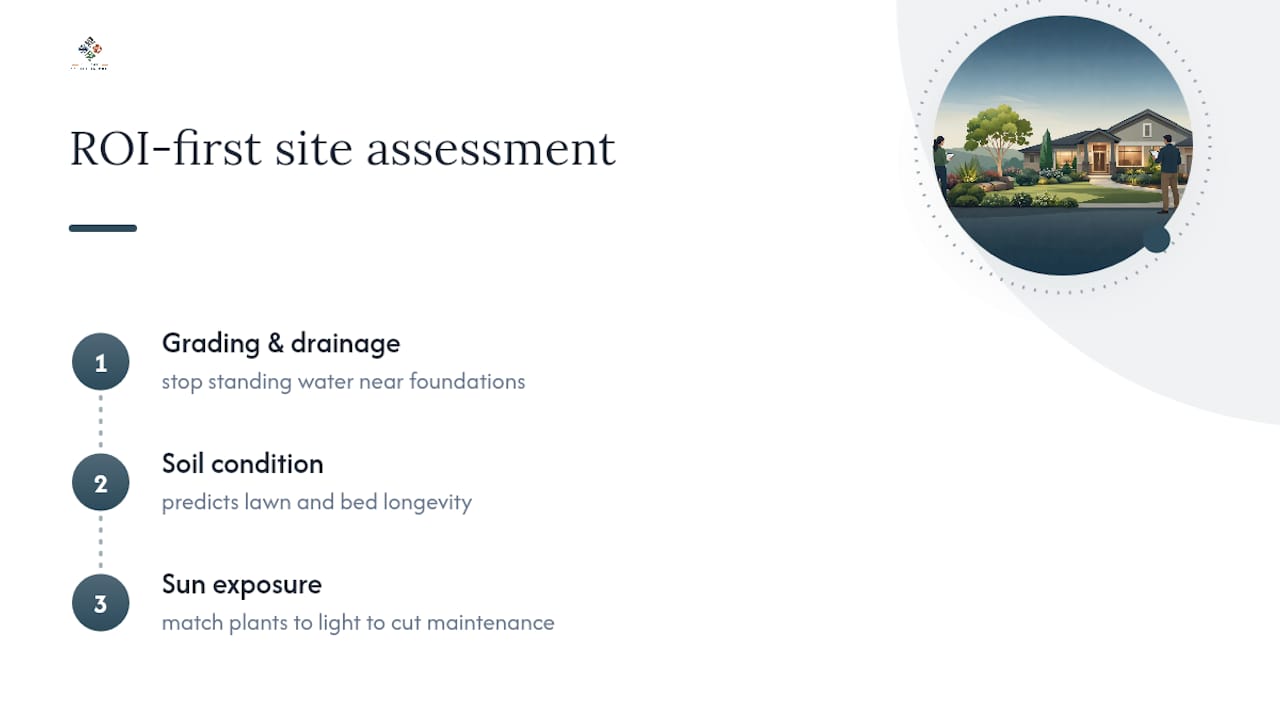
Every assessment we run starts with the same three checks, because they determine which project will actually pay off. Grading and drainage come first. Standing water near a foundation or patio kills resale value faster than almost anything else, and it’s often invisible until a heavy rain hits during a showing. Soil condition comes second, since it determines whether a lawn or planting bed will thrive or need constant replacement. Sun exposure comes third, because a shade-loving plant in full sun (or the reverse) becomes a maintenance problem within a season.
That inspection sequence is why we push back on oversized features and steer clients toward right-sized hardscapes and durable materials instead. A patio built on a compacted aggregate base with proper drainage shrugs off freeze-thaw cycles for decades. One built without it cracks within a few winters, and that’s a cost the next buyer’s inspector will find.
When Is the Best Time of Year to Landscape for Resale Value?
Timing changes both the cost and the visual payoff of a landscaping project, and getting it wrong can waste a season of value before a house ever hits the market.
Spring and early fall are generally the strongest windows for planting trees, shrubs, and lawns, since moderate temperatures and regular rainfall give root systems time to establish before summer heat or winter cold stresses them. A lawn seeded in early fall, for instance, has months to root in before it needs to look photo-ready for spring listings.
Hardscape work (patios, walkways, retaining walls) has more flexibility, since it doesn’t depend on a growing season. Late fall and winter often bring lower contractor demand and faster scheduling, which can mean better pricing for homeowners planning ahead of a spring listing.
The mistake we see most often is homeowners installing new sod or fresh plantings just weeks before listing. Immature landscaping looks thin, uneven, and obviously new, which can undercut the very impression it’s meant to create. Buyers respond better to an established, settled-in look than to a yard that clearly went in last month. If you’re planning to sell within a year, the smartest move is planting at least one full season ahead of your target listing date, so the greenery has time to fill in and look permanent rather than staged.
Do Regional and Climate Factors Change Landscaping ROI?
Landscaping ROI isn’t uniform across the country, because what reads as “well maintained” depends heavily on local climate norms and water costs.
In drought-prone regions, an expansive, thirsty lawn can actually work against resale value, since buyers increasingly factor in water bills and local restrictions. In those markets, drought-tolerant native plantings often outperform traditional turf on both cost and buyer appeal. In humid, high-rainfall regions like much of Arkansas, drainage and grading matter more than plant selection, since standing water and erosion cause far more resale damage than a slightly patchy lawn ever would.
Freeze-thaw cycles are another regional variable that changes which hardscape materials make sense. Pavers and stone set on a properly compacted base handle freeze-thaw stress far better than poured concrete without adequate base preparation, which can crack and heave within a few winters in colder climates. Homeowners comparing bids should ask specifically how a contractor accounts for their region’s freeze-thaw pattern, not just the finished look.
Sun exposure and regional plant hardiness also shift which trees and shrubs qualify as “low maintenance.” A plant that thrives with minimal care in one region can require constant watering and pruning in another, turning a supposed low-upkeep investment into a recurring cost that erodes ROI over time.
Does Eco-Friendly Landscaping Improve Resale Value?
Sustainable landscaping choices are increasingly showing up as a genuine selling point, not just an environmental preference.
Native plant selections, recommended by the American Society of Landscape Architects, require less water and fewer chemical inputs than exotic ornamentals, which lowers the buyer’s expected maintenance cost. That matters directly to resale, since perceived future upkeep gets factored into offers whether or not a buyer says so explicitly.
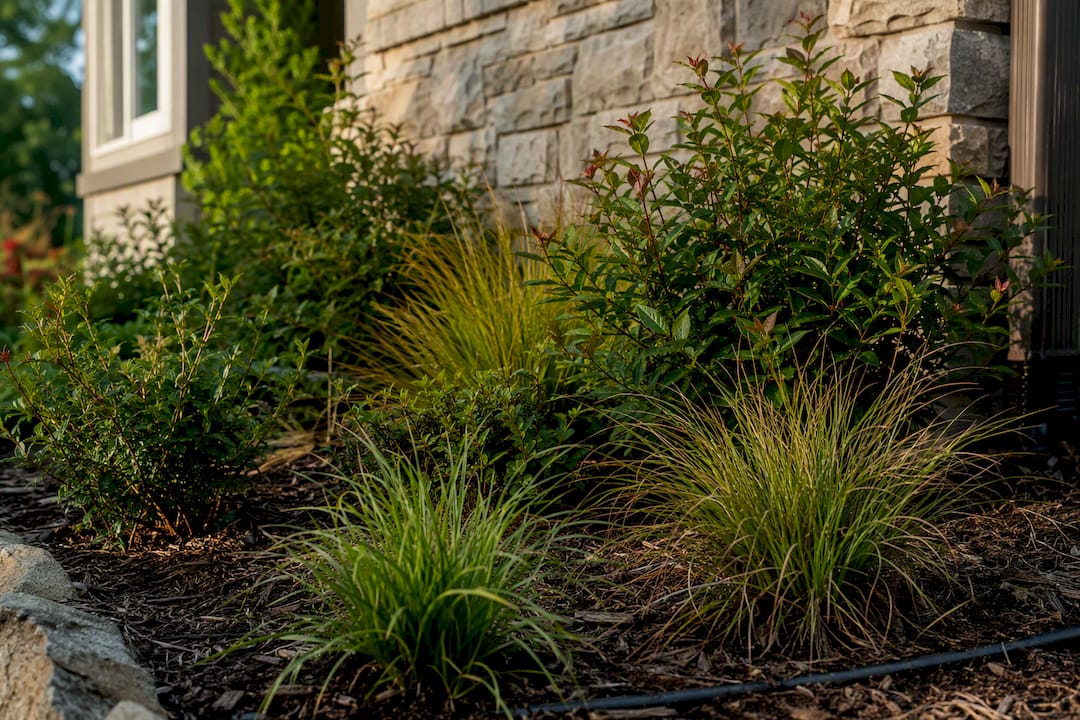
Strategic tree placement for shade and windbreaks does double duty. It contributes to the mature, established look that drives curb appeal, and according to Energy.gov’s landscaping guidance, it can meaningfully reduce a home’s energy costs, a detail that resonates with cost-conscious buyers during a walkthrough.
Efficient irrigation is the other piece of the sustainability equation. A properly zoned irrigation system that waters lawn areas and planting beds separately avoids the wasted water and overgrown, patchy look that comes from a one-size-fits-all sprinkler setup. It also signals to a buyer that the landscaping was designed thoughtfully rather than installed and forgotten.
None of this requires an eco-themed makeover. It just means choosing plants and systems suited to the actual site conditions instead of defaulting to whatever looks lush in a catalog.
Should You DIY Your Landscaping or Hire a Professional?
The honest answer depends on the project type, not just the budget.
Simple, low-risk tasks (seasonal planting, mulching, routine lawn care) are reasonable DIY territory for a motivated homeowner with time and basic tools. The ROI risk here is low, because mistakes are cheap to fix and rarely affect the property’s structure.
Projects involving grading, drainage, or structural hardscape are a different story. A DIY patio without a properly compacted aggregate base looks fine for a season, then heaves, settles, or cracks once freeze-thaw cycles or heavy rain hit it. At that point, the “savings” from skipping a contractor turn into a repair bill, plus a resale liability if the flaw shows up during a home inspection. Drainage mistakes are even less forgiving: water that isn’t redirected properly during installation can undermine a foundation over several seasons, a problem invisible at closing but expensive to trace back later.
The realistic dividing line is scope and consequence. Cosmetic, reversible projects tolerate amateur execution. Structural and water-management work generally doesn’t, because the failure mode isn’t “it looks a little off.” It’s a repair bill that erases whatever the project was supposed to add in resale value.
What Do Real Before-and-After Landscaping Upgrades Look Like?
The clearest way to understand landscaping ROI is to see how the same underlying problems show up differently depending on the fix.
A dated front entry with an overgrown hedge line and a cracked concrete walkway is a common scenario in older neighborhoods. Replacing the walkway with pavers, trimming or removing overgrown shrubs, and adding foundation plantings sized appropriately for the space typically transforms the entry’s first impression without requiring a large budget, since the walkway itself falls into the highest-recovery category NAR tracks.
A yard with poor drainage and a patchy lawn presents a different kind of case. The visible symptom (bare, muddy patches) is usually a grading problem, not a lawn problem. Regrading the slope away from the foundation and reseeding afterward fixes both the eyesore and the underlying water issue that would otherwise show up on a home inspection report and potentially cost the seller a price reduction.
An oversized custom patio built without regard to the lot’s scale illustrates the opposite lesson. Even when it’s well built, a patio that consumes most of the backyard and doesn’t match the home’s size can make a lot feel smaller and more cramped rather than more usable, which works against resale even though the individual materials and workmanship are solid.
The common thread across all three: the fix that recovers value is almost always the one that restores proportion and function, not the one that adds the most visible flash.
Should You Landscape for Joy or for Resale Value?
Homeowners often ask us to settle a real tension: personal enjoyment versus resale recovery. Both are legitimate goals, but they call for different playbooks.
If you’re selling within the next year or two, prioritize curb appeal and low-maintenance investments. The lawn, the walkway, the lighting. These recover well and appeal broadly. If you’re staying put for the foreseeable future, a larger personal project (an outdoor kitchen, an elaborate garden) can be worth the cost purely for the enjoyment it delivers, even if its resale recovery is modest.
The smartest middle ground is often modular. A smaller-scale outdoor kitchen, a patio with room to expand later, or flexible hardscape zones that can serve multiple purposes let you enjoy the space now without locking in a niche feature that limits your buyer pool later.
— Ty
How Village Precision Pros Turns This Into a Plan for Your Yard
Village Precision Pros builds the projects this article ranks highest for ROI: right-sized hardscape and stone masonry, patios and decks, and landscape and irrigation systems built to establish the healthy lawns and plantings buyers respond to.

Where we differ from a general contractor is the ROI-first assessment that comes before any design gets drawn up. Every consultation starts with a site walk covering drainage, grading, soil, and sun exposure, the same variables that determine whether a project holds its value or becomes a repair bill in three years. From there, we scope the work to your lot size and neighborhood price band, not to a generic template, and we offer annual maintenance plans so the investment keeps paying off instead of drifting back into neglect. If you’re weighing a walkway refresh, a patio upgrade, or a full front-yard reset ahead of a sale, schedule a landscaping consultation and we’ll walk your property with resale recovery in mind from the first conversation. Pairing solid landscaping with strong curb-side presentation matters at listing time too, and Yardsigns makes a similar point: first impressions from the street close deals.
Sources
- 2023 Remodeling Impact Report: Outdoor Features (NAR)
- Does landscaping increase home value? (Opendoor)
- Landscaping projects that aren’t worth the cost (The Spruce)
FAQ
What Is the Rule of Three in Landscaping?
The rule of three refers to grouping plants, colors, or hardscape elements in sets of three (or other odd numbers) because the human eye finds odd-numbered groupings more visually balanced than even ones. It’s a design principle for arranging plantings and features, not a resale metric, though it does support the polished look that boosts curb appeal.
How Can Landscaping Increase Home Value by $50,000?
No single landscaping project reliably adds a fixed dollar figure; recovery depends on the home’s price band, the project’s scale, and local buyer expectations. Combining several high-recovery projects (walkway, lawn, lighting, mature trees, a right-sized patio) stacks smaller gains into a much stronger overall first impression than any one upgrade alone.
Is It Worth Investing in Landscaping Before Selling?
Yes, when the spending targets curb appeal and low-maintenance fixes rather than elaborate personalization. NAR’s data shows the highest-recovering projects, like walkway replacements and lawn care, cost relatively little and consistently influence buyer perception during showings.
What Landscaping Increases Property Value the Most?
Front walkway replacement, healthy lawn maintenance, outdoor lighting, mature tree placement, and right-sized patios or decks are the categories most consistently linked to strong resale recovery. Costly, highly customized features like large water features or oversized hardscape tend to underperform by comparison, according to realtor-sourced project analysis.
Should I Hire a Professional for Landscaping ROI Projects?
For structural or drainage-related work (patios, retaining walls, grading), professional installation protects your ROI far more reliably than a DIY attempt, since mistakes in a compacted base or drainage plan often surface only after a few seasons. Village Precision Pros’ hardscape and stone masonry service builds these features to hold up through freeze-thaw cycles and resale inspections alike.