

A typical front-yard landscaping project scales with scope. Cosmetic refreshes (mulch, edging, entry plantings) land at the low end. Mid-level upgrades that add a walkway, foundation plantings, and basic lighting run in the middle. Full redesigns with hardscape, irrigation, and mature trees push to the top of the range on larger lots.
The spread comes down to three things: how much of the yard you’re touching, what materials you choose, and whether the site needs correction (drainage, grading, soil) before anything gets planted.
Before you call a contractor or price out materials yourself, here’s what to nail down first:
- Measure your front yard in square feet, including bed depth along the foundation and driveway edges.
- Rank your priorities by what you see first from the street versus what’s purely functional.
- Collect 2 to 3 quotes so you can compare scope, not just the bottom-line number.
Key Takeaways
Front yard landscaping ranges from a cosmetic refresh to a full redesign, with lawn care and entry plantings delivering the strongest return per dollar spent.
| Point | Details |
|---|---|
| Three budget tiers | Plan for a refresh, an upgrade, or a full redesign. |
| Lawn care wins on ROI | Basic lawn care can return over 200% of its cost at resale, outperforming most isolated hardscape spends. |
| Site conditions drive surprises | Drainage, grading, and soil remediation are the most common unbudgeted costs on front-yard projects. |
| Sequence spending by visibility | Fix the lawn and entry beds before investing in patios or retaining walls. |
| Villageprecisionpros scopes before pricing | Our tiered, itemized bids start with a drainage and grade assessment across more than 2,000 completed Central Arkansas projects. |
Table of Contents
- How Much Does Front Yard Landscaping Cost by Project Type?
- How Much Does It Cost to Landscape by Yard Size?
- What Factors Affect Front Yard Landscaping Cost the Most?
- Where Should You Spend First for the Best ROI?
- What Hidden Costs Should You Budget For?
- How Do Professionals Scope and Price a Front Yard Project?
- What the Cost Data Actually Tells Homeowners
- Get a Precise Estimate for Your Front Yard Project
- Sources
- FAQ
How Much Does Front Yard Landscaping Cost by Project Type?
Front yard landscaping cost breaks down fastest when you look at it line by line instead of as one lump figure. Contractors price by the task, and each task has its own range shaped by materials, labor intensity, and site access.
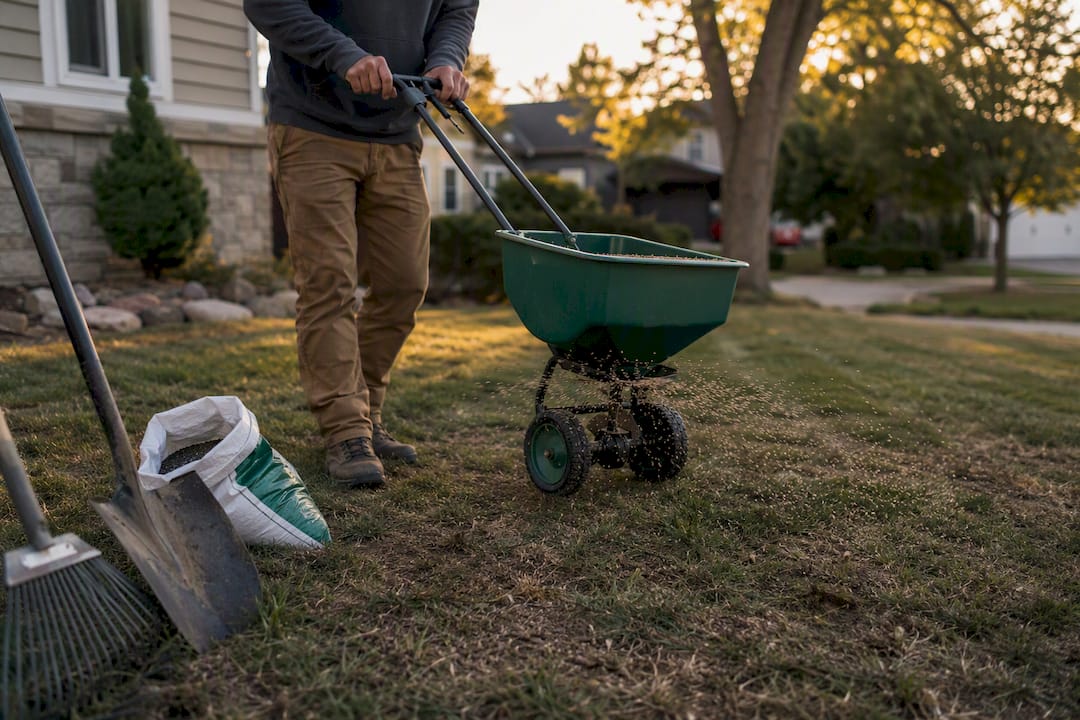
Lawn work is usually the cheapest entry point. Overseeding an existing lawn runs modestly per visit, while full sod installation for a small front lawn scales with square footage and soil prep. If your grass is patchy but the soil underneath is healthy, overseeding beats a full tear-out on cost every time.
Planting beds scale with plant size. Annuals and small perennials sit at the low end, and installed shrubs run higher. Small specimen trees run higher still, depending on species and root ball size. A cluster of three foundation shrubs plus a border of perennials is a realistic line item for a modest bed.
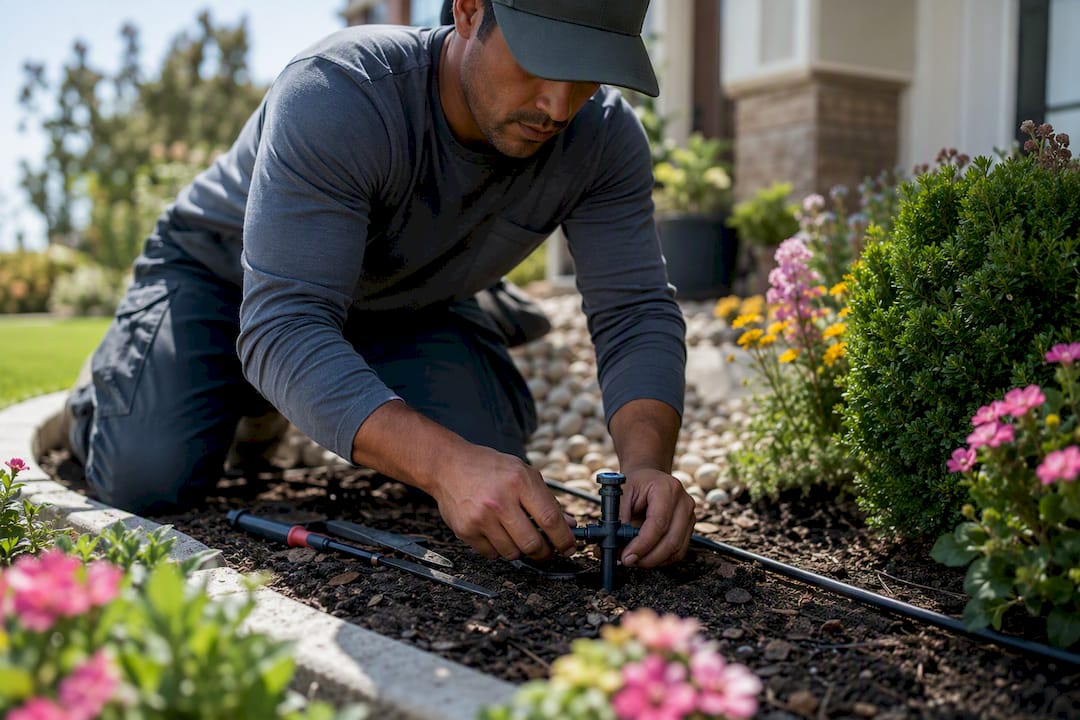
Irrigation systems for a front yard typically start with a basic in-ground sprinkler setup, and smart controllers add to the total. Irrigation pays off fastest on properties with larger turf areas where hand watering isn’t realistic.
Landscape lighting scales with the fixture count, and most front yards need four to eight fixtures for a walkway and entry accent. Professional lighting design tends to place fixtures more strategically than a DIY string of solar stakes, which shows in both durability and visual impact. Our detailed outdoor lighting cost guide breaks this down fixture by fixture.
Hardscape items carry the widest range and the biggest labor share.
Materials drive most of that swing. Natural stone and quality pavers cost more upfront than stamped concrete but hold up better through freeze-thaw cycles, which matters if you’re planning to keep the house for more than a few years.
How Much Does It Cost to Landscape by Yard Size?
Per-square-foot estimates are the fastest way to sanity-check a quote once you know your yard’s footprint. Basic to moderate landscaping work runs by the square foot, with the low end covering lawn and simple plantings and the high end reflecting hardscape-heavy scopes.
Here’s how that plays out across three common front-yard sizes:
| Yard Size | Scope |
|---|---|
| 200 sq ft | Refresh: mulch, edging, entry planting |
| 500 sq ft | Moderate upgrade: walkway, foundation beds, lighting |
| Full redesign: hardscape, irrigation, small trees |
A few things skew the total in practice:
- House frontage matters more than lot size. A wide, shallow front yard needs more linear edging and walkway than a narrow, deep one of the same square footage.
- Bed depth compounds fast. Extending foundation beds from 3 feet to 6 feet roughly doubles the plant material and mulch needed along that run.
- Slope adds hidden area. A sloped front yard often needs retaining or terracing that a flat lot of the same footprint never requires.
What Factors Affect Front Yard Landscaping Cost the Most?
Site conditions usually swing a budget more than style choices do. Landscape contractors point to four main cost drivers: inherited site conditions, property scale, material and finish choices, and the specific list of features you want.
Soil, slope, and drainage sit at the top of that list because they’re the least visible until work starts. A yard with poor drainage might need a French drain or regrading before a single paver goes down, adding cost you won’t see quoted until the crew is on site with a shovel.
Material choice is the lever you actually control. Compare a few common categories:
- Mulch is the cheapest ground cover, needs annual refresh, and offers no structural value.
- Concrete pavers cost less than natural stone, install faster, and hold up well against freeze-thaw cycling.
- Natural stone costs the most upfront but ages better and rarely needs replacement.
- Poured concrete is budget-friendly for walkways but cracks over time without a properly compacted aggregate base.
Labor rates vary by region and specialty. Retaining walls, grading, and drainage work often require licensed trades, and larger hardscape projects may trigger a permit or inspection requirement depending on your municipality’s setback and drainage rules.
Timing shifts pricing too. Spring and early summer are peak season for landscapers, which means higher rates and longer lead times. Scheduling in late fall or winter often means better contractor availability and softer pricing, since demand drops off.
Pro Tip: Get your soil and drainage assessed before you finalize a design. That evaluation can prevent mid-project surprises once excavation starts.
Where Should You Spend First for the Best ROI?
Not every dollar in a front-yard budget returns the same value at resale. Some upgrades consistently outperform others, and knowing which ones lets you sequence spending instead of trying to do everything at once.
- Basic lawn care first. A healthy, well-edged lawn is the cheapest fix with the biggest visual payoff, and industry data suggests lawn care can return over 200% of its cost at resale in many markets.
- Entry plantings and mulch second. Fresh mulch and a few well-placed shrubs around the front door cost little and read as “maintained” to anyone driving by.
- Walkway repair or replacement third. A cracked or uneven walkway is one of the first things a buyer notices, and updated paver or stone walkways often recover close to their full installed cost.
- Hardscape additions last. A paver patio or retaining wall is a legitimate investment, but it only makes sense once the basics are solid and the addition matches your home’s scale and your neighborhood’s norms.
Design sophistication and plant size measurably affect perceived home value, with controlled research showing landscape upgrades can add roughly 5.5% to 12.7% to perceived value depending on the market and starting condition. That’s a meaningful range, but it also means an over-scaled project in a modest neighborhood won’t necessarily earn back what it cost.
A workable rule of thumb: budget 1% to 3% of your home’s value for front-yard landscaping, and weigh ongoing maintenance labor into any decision between a low-upkeep gravel bed and a high-upkeep flower border.
What Hidden Costs Should You Budget For?
The line items nobody quotes upfront are usually the ones that blow past the original estimate. Drainage correction, grading, and soil remediation show up in enough projects that industry reporting flags them as the most common budget adders, especially on older properties where the original grading never accounted for modern gutter or downspout placement.
Watch for these before you sign a contract:
- Soil remediation or amendment, needed when existing soil is compacted clay or construction fill.
- Tree removal or stump grinding, which adds to the job per tree depending on size.
- Permits and inspections, which some municipalities require for retaining walls over a certain height or for work near utility lines.
- Plant and material lead times, since specimen trees and custom pavers can take weeks to arrive during peak season.
Build in a contingency of 10% to 20% on top of your working budget, and ask your contractor to structure payments in phases tied to milestones rather than a large deposit upfront.
How Do Professionals Scope and Price a Front Yard Project?
At Villageprecisionpros, we’ve priced and built more than 2,000 outdoor projects across Central Arkansas since 2020, and the pattern holds steady: the projects that stay on budget are the ones scoped carefully before a shovel touches dirt.
Our process starts with a site visit focused on drainage and grade, since those two issues cause more mid-project cost creep than any material choice. From there, we build a measured scope and typically present options in tiers, basic, mid-level, and premium, so homeowners can see exactly what changes between a refresh and a redesign.
The projects that come in on budget are the ones where drainage and grading get solved before design decisions get made, not after.
We prioritize structural fixes and high-visibility elements (walkways, entry beds, lighting) before layering in premium hardscape. If you want a second opinion before hiring anyone, our questions to ask landscapers checklist covers what to ask about scope, materials, and timeline.
What the Cost Data Actually Tells Homeowners
Most front-yard budgeting advice treats every dollar as equal, and that’s the part I’d push back on. A lawn and lighting refresh and a patio addition for the same money are not interchangeable investments. One touches the entire visible frontage; the other improves a fraction of it dramatically. The research backs the cheaper, broader move: lawn care and entry plantings consistently outperform isolated hardscape on ROI per dollar.
The conventional advice to “get three quotes and pick the middle one” also misses something important. The real variable isn’t the price, it’s what’s included in the scope. A low bid that skips soil correction or uses thinner base material isn’t actually cheaper once you account for what breaks down in three years.
If you take one thing from this, prioritize sequencing over scale. Fix drainage and grading first, even if it eats into the budget you had earmarked for a patio. A beautiful paver patio built on unstable soil is a five-year problem waiting to surface, and no amount of design sophistication changes that math.
Ty
Get a Precise Estimate for Your Front Yard Project
Villageprecisionpros gives you something most quotes don’t: a scoped, tiered estimate built around your actual soil and drainage conditions, not a generic per-square-foot number pulled from a national average. Since 2020, our crews have handled the exact cost drivers this article covers, grading, drainage correction, hardscape integration, on more than 2,000 Central Arkansas properties.

Whether you’re planning a basic lawn and lighting refresh or a full front-yard redesign with a paver walkway and retaining wall, we build itemized options so you can see where your money goes before committing to anything. Our hardscape and stone masonry team handles the trickier structural work in-house, which keeps subcontractor markups out of your bid.
Ready to see real numbers for your property? Schedule a landscaping consultation and get a scoped estimate built around your yard’s actual conditions, not a national average.
Sources
- Landscaping Costs in 2026, Plus 8 Ways to Save: NerdWallet
- How Much Does Landscaping Cost? 2026 Data: Angi
- Virginia Tech Extension: landscaping value and perceived home-value research
- Landscape Cost Factors: Landscaping Network
- Does landscaping increase home value? Opendoor
FAQ
How much does it typically cost to landscape a front yard?
Most front-yard projects range from a cosmetic refresh at the low end to a full redesign with hardscape and irrigation at the high end.
Is a high hourly rate too much for landscape work?
Not necessarily. The hourly rate for skilled labor in specialty trades like masonry or drainage work depends on your region. A rate that looks high can still fall within a normal range for experienced crews.
Does front yard landscaping increase home value?
Yes. Research shows landscape upgrades can add roughly 5.5% to 12.7% to perceived home value, and lawn care alone can return over 200% of its cost at resale.
What is the most expensive part of landscaping?
Hardscape features like retaining walls, paver patios, and stone walkways are typically the most expensive line items, since they combine material costs with intensive site prep and specialized labor.