

For most rentals, prioritize hardscape anchors, a low-maintenance perennial and native plant palette, and automated drip irrigation. That combination cuts vendor calls, survives tenant neglect, and photographs well for faster lease-ups. Three moves to make first:
- Install a small patio or paver pad in the main sight line from the street or front door.
- Convert narrow, hard-to-mow turf strips to gravel or decomposed granite.
- Add drip irrigation on a timer to every planted bed, even a small one.
Do those three things and you’ll see fewer maintenance tickets, stronger listing photos, and less vacancy exposure between tenants.
Key Takeaways
Low-maintenance rental landscaping works best when hardscape, drought-tolerant plants, and automated irrigation replace anything that requires tenant attention.
| Point | Details |
|---|---|
| Lead with hardscape | Patios and paver pads remove square footage from mowing and hold up to tenant use. |
| Automate irrigation | Drip systems on tamper-resistant timers keep plants alive without tenant involvement. |
| Budget realistically | Plan for recurring maintenance every year on a single-family rental. |
| Write lease clauses now | Spell out watering, reporting, and pet-zone rules before move-in, not after damage occurs. |
| Work with a landlord-focused pro | Village Precision Pros builds turnover-ready packages and maintenance agreements across Central Arkansas. |
Table of Contents
- What Questions Should You Answer Before Any Rental Landscaping Project?
- Which Low-Maintenance Landscape Elements Actually Hold Up in Rentals?
- Should You Choose Drip or Spray Irrigation for a Rental?
- How Do You Choose Landscaping for Different Climates and Sites?
- What Lease Language Protects Your Landscaping Investment?
- What Do Rental Landscaping Costs and ROI Actually Look Like?
- How Should You Structure Landscaping Maintenance Operations?
- How Has Village Precision Pros Helped Landlords Cut Landscaping Costs?
- Get a Landlord-Focused Landscaping Quote
- Sources
- FAQ
What Questions Should You Answer Before Any Rental Landscaping Project?
Before you spend a dollar, define the actual job. Are you trying to cut mowing calls, justify a higher rent, or give tenants an amenity that helps you compete for applicants? Each goal points to a different project.
- What’s the job? Reducing maintenance calls, raising achievable rent, or adding a tenant amenity each call for different investments.
- What constraints exist? Check POA rules, local ordinances on turf removal or xeriscaping, drainage patterns, and side-yard access for equipment.
- Who’s responsible for what? Decide before installation whether you or the tenant handles watering, mowing, or bed weeding, and write it into the lease.
- What’s your trigger point? Set a simple rule, such as: any bed needing more than one service call a month gets converted to hardscape or gravel instead of re-planted.
Which Low-Maintenance Landscape Elements Actually Hold Up in Rentals?
The rental yard that survives years of tenant turnover isn’t the prettiest one on move-in day. It’s the one built from materials that don’t need a green thumb to maintain.
Hardscape should anchor the design. A paver patio or a simple concrete pad, typically 10 by 12 feet minimum for a usable seating area, gives tenants a defined outdoor space and removes square footage from the mowing rotation entirely. Compacted aggregate base under any paver installation prevents the heaving and shifting that turns a nice patio into a tripping hazard within two winters.
Turf alternatives cut the single biggest recurring maintenance line item: mowing.
- Artificial turf eliminates mowing and watering entirely but carries a higher upfront cost and can retain heat in full sun.
- Clover and low-growing groundcover mixes need mowing only a few times a season and tolerate light foot traffic.
- Gravel or decomposed granite works for narrow strips and parking-adjacent areas where grass never thrived anyway.
Plants should be perennials, natives, and ornamental grasses that come back on their own and tolerate a missed watering or two. For foundation planting, dwarf yaupon holly or compact junipers hold their shape without regular pruning. For privacy screening, native switchgrass or ornamental miscanthus fills in fast and needs one cutback a year. For low borders, daylilies and coneflower shrug off drought and neglect alike. Always check regional invasive species lists before finalizing a plant palette. Some fast, forgiving groundcovers are aggressive spreaders that cause problems two properties down the road.
Mulch and edging round out the low-touch approach. A 3 inch layer of shredded hardwood mulch suppresses weeds for most of a season, while steel or paver edging keeps beds from blurring into turf and cuts trimming time at every visit.
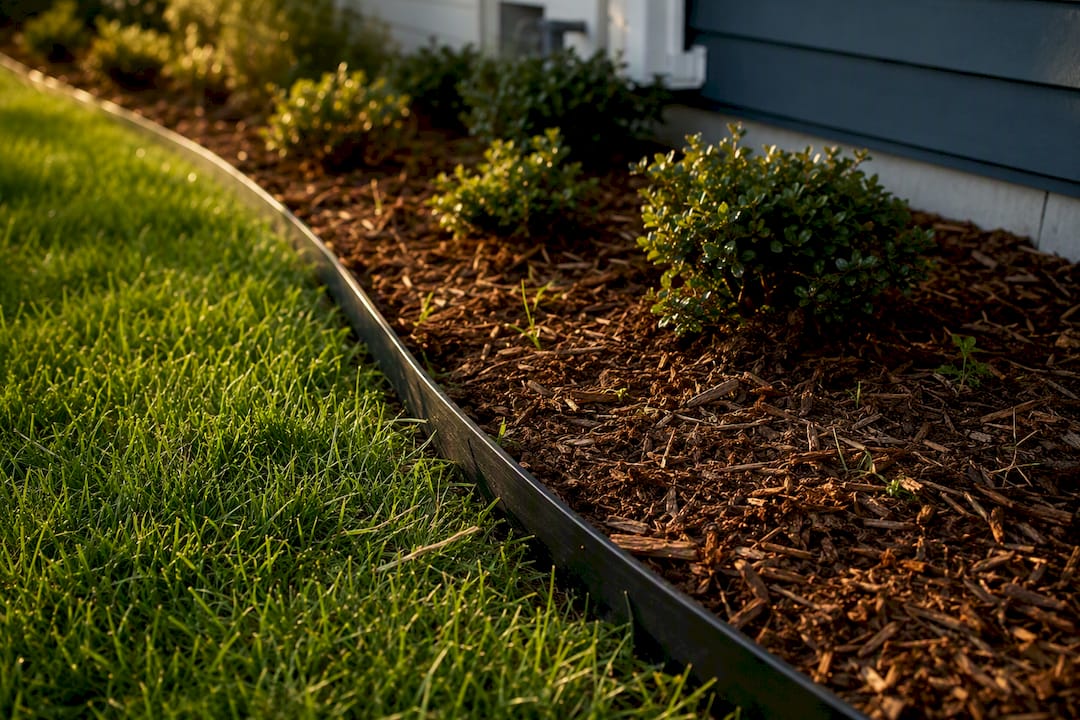
Pro Tip: Design every rental bed as if the tenant will never water it. Native and drought-tolerant species paired with decomposed granite paths and drip irrigation on a timer will still look intentional a year after move-in, even with zero tenant involvement, as landscaping consultants at Breasy note.
Should You Choose Drip or Spray Irrigation for a Rental?
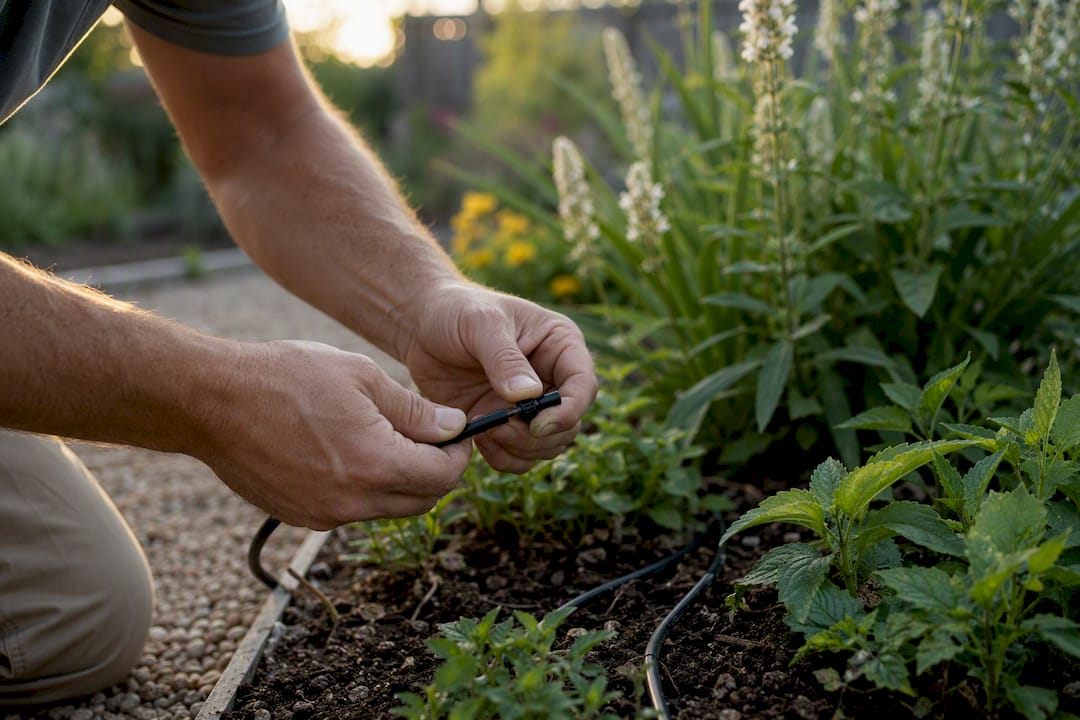
Drip irrigation is the better default for planted beds because it delivers water directly to root zones and wastes little to evaporation or overspray onto sidewalks and siding. Spray heads still make sense for turf areas but need more frequent inspection since a single broken head can flood a yard or drain your water bill for days before anyone notices.
The real advantage for landlords is automation you don’t have to trust to a tenant.
- Smart timers set and forget the watering schedule for the season, adjusting for rain when paired with a rain sensor.
- Tamper-resistant valve boxes and locking timer covers prevent tenants from cranking up watering (or shutting it off entirely) without your knowledge.
- Annual checks should cover emitter clogs, timer battery replacement, and a pressure test after freeze season.
Designing the system around drip lines and timers is the single most reliable way to keep plants alive without a single tenant phone call. Some municipal water utilities also offer rebates for smart controllers or turf replacement, worth a quick check before you budget the full cost yourself.
How Do You Choose Landscaping for Different Climates and Sites?
Plant selection starts with your USDA Plant Hardiness Zone, which tells you which perennials and shrubs will actually survive winter in your area rather than needing replacement every spring.
Beyond zone, climate shapes the whole strategy:
- In arid and sun-belt regions, lean into xeriscape principles: gravel, decomposed granite, and minimal turf reduce both water bills and mowing.
- In humid Southeast climates, drainage-first design matters more than plant choice. Standing water breeds mosquitoes and rots root systems fast.
- In cold climates, prioritize winter-tough perennials and salt-tolerant plants near walkways where deicer runoff is inevitable.
Before finalizing any plan, walk the site for slope and drainage, test soil pH if you’re unsure, map shade patterns through the day, and note where pets or parked cars will wear down turf fastest. If you’re seeing standing water or erosion after rain, that’s a grading or drainage problem worth solving before you plant anything, not after.
What Lease Language Protects Your Landscaping Investment?
A clear lease clause does more to protect your landscaping than any plant choice. Spell out who waters, who mows, and who reports irrigation problems, and put it in writing before move-in, not after the beds go brown.
- Require tenants to report broken sprinkler heads or timer malfunctions within a set number of days.
- Prohibit removal or relocation of installed plants and hardscape features without written approval.
- If tenants have pets, designate a specific pet relief zone with wear-resistant mulch or gravel rather than letting the whole yard take the wear.
- For chargebacks, document pre-existing condition with photos at move-in so any dispute over dead plants or damaged pavers has a clear before-and-after record.
For larger portfolios, bundling landscaping into a maintenance service included in rent often beats leaving it to tenants entirely. It’s one less point of failure per property.
What Do Rental Landscaping Costs and ROI Actually Look Like?
Split the plan into recurring upkeep and one-time installs. Recurring maintenance for a single-family rental typically covers routine mowing, edging, and seasonal cleanup each year. One-time installs vary more: a modest paver patio often runs highest, drip irrigation retrofits run far lower, and full turf-to-gravel conversions fall somewhere in between depending on square footage.
Tax treatment matters here. Routine maintenance, mowing, mulch refresh, and cleanup are typically deductible operating expenses in the year you pay them. Larger capital improvements like a new patio or irrigation system usually get depreciated over time. Talk to your accountant about how your specific projects classify.
For ROI, run simple math: rent premium plus avoided vacancy days versus project cost. Turf-to-gravel and similar conversions commonly pay for themselves in three to five years once you factor in reduced water use and fewer service calls. One caveat: resale curb appeal ROI figures don’t translate directly to rental economics. A rental cares about vacancy days and vendor calls, not buyer emotion at an open house. Don’t over-invest in custom hardscape on a lower-value property. Match the spend to what the rent can realistically support.
How Should You Structure Landscaping Maintenance Operations?
Treat landscaping as an operations line item, not a one-off project. An annual service agreement, especially across multiple properties, typically beats paying per-visit rates and gives you one point of contact instead of juggling vendors property by property.
- Build a turnover-ready checklist: mowing, bed refresh, debris removal, and pressure washing walkways before every new tenant photo shoot or showing.
- Require job-completion photos from your vendor after every visit so you have a record without driving out yourself.
- Set a seasonal outreach rhythm: spring cleanup, a late-summer check, and pre-winter prep catches small problems before they become tenant complaints.
- Track two simple KPIs: reactive work orders per year and time-to-ready after a vacancy. Both numbers should trend down as your system matures.
Pro Tip: If your landscaper isn’t sending photos after every visit, you’re flying blind between site checks. Ask for them as a standard part of any contract.
How Has Village Precision Pros Helped Landlords Cut Landscaping Costs?
Village Precision Pros has completed more than 2,000 projects across Central Arkansas since 2020, a good share of them for landlords and property managers who wanted yards that survive tenant turnover without constant attention. Our crews build hardscape first, drainage second, and plant palette third, which is the same sequence this guide walks through.
One recurring pattern across landlord clients: converting a high-maintenance turf strip into a paver walkway or gravel bed, paired with a small drip system, consistently drops the number of reactive service calls a property generates between tenants.
Our landlord packages include turnover-ready cleanup, ongoing maintenance agreements, and multi-property scheduling. If you’re vetting any landscaper, our list of questions to ask before hiring is a useful gut check either way. You can browse completed hardscape and drainage work in our project portfolio.
A note from Ty at Village Precision Pros
We’ve built our landscaping practice around Central Arkansas landlords since 2020, across more than 2,000 completed projects. The approach in this guide isn’t theoretical: hardscape first, low-maintenance plants second, automated water last, in that order, is what actually holds up between tenants. If you want a quick read on your own property, a short consultation beats guessing.
Get a Landlord-Focused Landscaping Quote
Village Precision Pros is the alternative to guessing your way through a rental landscape one tenant complaint at a time. Landlords hire us most often for patio pads that survive foot traffic, drip irrigation that runs without tenant babysitting, artificial turf where mowing calls have gotten out of hand, and standing maintenance agreements that keep a property turnover-ready year-round.

We also offer multi-property discounts for landlords managing several rentals across Central Arkansas, so your maintenance contract scales the way your portfolio does. If you’re weighing a patio versus a full hardscape rebuild, or you’re ready to talk drip irrigation and timers for a property you can’t visit weekly, our irrigation and care services page covers what’s involved. The most direct next step: schedule a landscaping consultation and get a property-specific quote before your next lease turnover.
Sources
- USDA Plant Hardiness Zone Map
- Breasy: Low maintenance landscaping for rental properties
- VerticalRent: Landscaping for rental properties: what independent landlords actually want
FAQ
Is It Worth Landscaping a Rental Property?
Yes, when the goal is fewer maintenance calls and faster lease-ups rather than resale value. Hardscape and drought-tolerant plants typically pay back through reduced vacancy days and lower vendor costs within a few years.
What Is the 2% Rule in Rentals?
The 2% rule is a rental income screening guideline stating monthly rent should equal about 2% of the purchase price. It’s a property acquisition metric, not a landscaping budget rule, though tighter margins under this rule are exactly why low-maintenance landscaping choices matter for cost control.
What Is the Cheapest Landscaping Option for a Rental?
Gravel or decomposed granite paired with drought-tolerant native perennials is typically the lowest-cost combination, since it eliminates mowing and minimizes water use. Converting an existing turf strip to gravel is usually far cheaper than a new hardscape installation.
What Is the 50% Rule in Rental Property?
The 50% rule estimates that operating expenses, including maintenance and landscaping, will consume about half of gross rental income over time. It’s a planning shortcut, not a hard figure, but it underscores why choosing low-touch landscaping keeps your actual costs closer to that estimate than a high-maintenance yard would.