

A flagstone patio delivers a natural, handcrafted look with strong traction and long-term durability that few materials match. It’s the right pick if you want organic texture and can budget for higher material and labor costs; skip it if you need a perfectly flat, budget-friendly surface. The details on styles, stone selection, installation, and upkeep follow below.
TL;DR:
- Proper base preparation and drainage are critical to prevent shifting and heaving of flagstone over time, especially in freeze-thaw climates.
- Budget-friendly, fully flat surfaces are unlikely with natural flagstone, which tends to be uneven and more costly than concrete or pavers.
- Heavy, irregular flagstones require professional installation for correct grading, base work, and drainage to ensure long-term stability.
- Costs of flagstone patios are generally middle to high compared to other materials due to skilled fitting and irregular shapes; site-specific estimates are necessary.
- Regular maintenance includes sweeping, hosing, weed control, and joint topping, but repairs often involve resetting or replacing shifted or cracked stones.
Table of Contents
- Flagstone Patio Ideas Worth Stealing for Your Yard
- Matching a Design Style to Your Yard
- Choosing the Right Flagstone: Types, Finishes, and Thickness
- Dry-Laid, Mortared, or Mortar-Over-Slab: Which Installation Fits?
- What to Put Between Flagstone Joints
- What a Flagstone Patio Costs, and What You Get for It
- Flagstone Patio Maintenance Tips and Common Repairs
- When a Professional Installation Makes the Difference
- Our Take: Skip the Pinterest Trap, Plan the Ground First
- Ready to Plan Your Flagstone Patio?
- Sources
- FAQ
Flagstone Patio Ideas Worth Stealing for Your Yard
The best flagstone patio designs start with a layout that suits how you actually use the space, not just what looks good in a photo. Here are nine approaches we see work again and again.
- Irregular field flagstone. Random, puzzle-piece shapes create the classic “grew out of the landscape” effect. Best for informal, wooded, or cottage-style yards where you want movement over symmetry.
- Coursed rectangular flagstone. Cut stones laid in straight rows give a cleaner, more architectural feel. Great for modern homes and for anyone who wants furniture to sit level without shimming.
- Gravel-infill joints. Wide gaps filled with pea gravel let water drain fast and soften the look. Works well on sloped sites but needs occasional top-offs.
- Planted joints. Creeping thyme or Irish moss between stones adds fragrance and color. Best in partial shade with reliable irrigation; skip it in high-traffic zones.
- Fire-pit hub. A circular flagstone gathering area anchored by a fire pit extends outdoor use into fall. Leave at least 3 feet of clearance around the pit for seating and safety.
- Pool-friendly flagstone. Tighter joints and a honed or thermal finish reduce slipping around wet decks. Avoid polished stone here entirely.
- Raised or terraced patios. Flagstone-faced retaining walls step a sloped yard into usable, level zones. This calls for engineered drainage behind each wall.
- Mixed-material borders. Edging flagstone with brick or steel defines the space and stops stones from creeping into lawn areas.
- Two-tone stone mixing. Blending warm and cool-toned flagstone in the same field adds depth without looking chaotic, especially in larger patios over 300 square feet.
For inspiration on how these patterns look in finished projects, galleries on Houzz and Landscaping Network show hundreds of real installations worth studying before you commit to a layout.
Matching a Design Style to Your Yard
Stone size and joint width do most of the heavy lifting when it comes to style. Large, irregular pieces with wide, planted joints read as rustic. Smaller cut stones set in tight, mortared joints read as formal or modern. Warm-toned sandstone suits farmhouse and cottage aesthetics; gray-blue bluestone or slate leans contemporary.
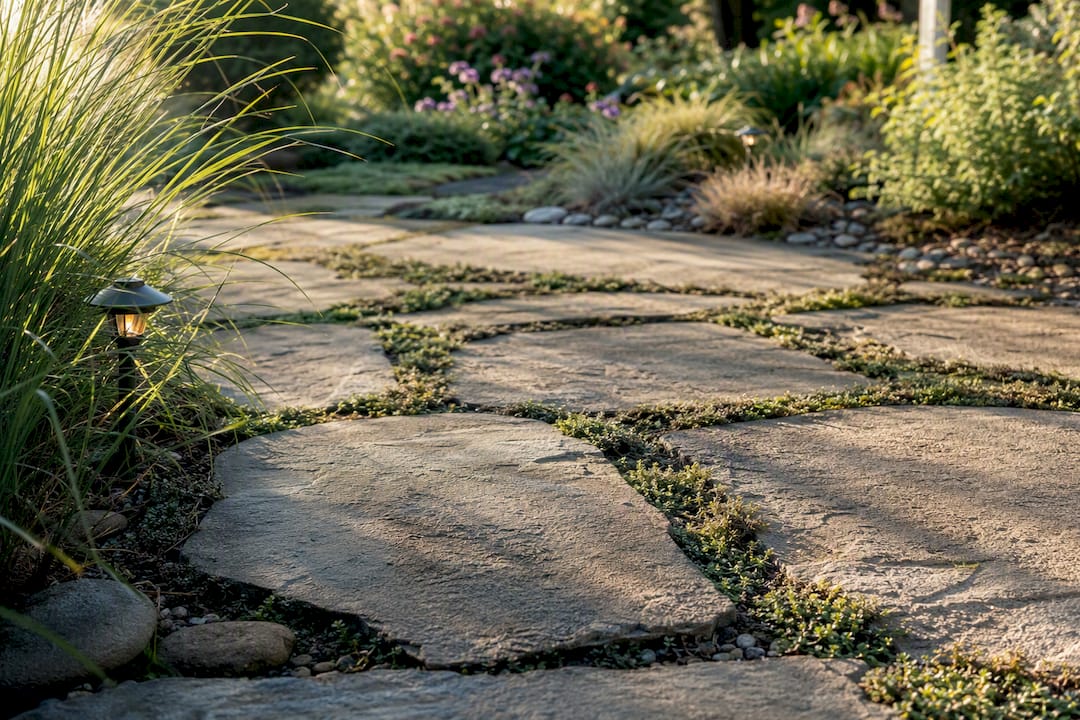
Lighting and planting should follow the same logic: low path lights and native perennials for rustic layouts, linear step lighting and structured hedges for formal ones. If patio furniture with slim metal legs is part of the plan, coursed layouts or mortared joints prevent the wobble that irregular fieldstone can cause.
Choosing the Right Flagstone: Types, Finishes, and Thickness
Sandstone offers warm color range and good grip but can flake in freeze-thaw climates if it’s low density. Bluestone is dense, hard, and holds up well outdoors, making it a common choice for northern regions. Slate brings a dramatic, layered texture but can be slippery when wet. Quartzite resists scratching and fading better than most options, though it costs more. Limestone is workable and attractive but softens over time with acid rain exposure.
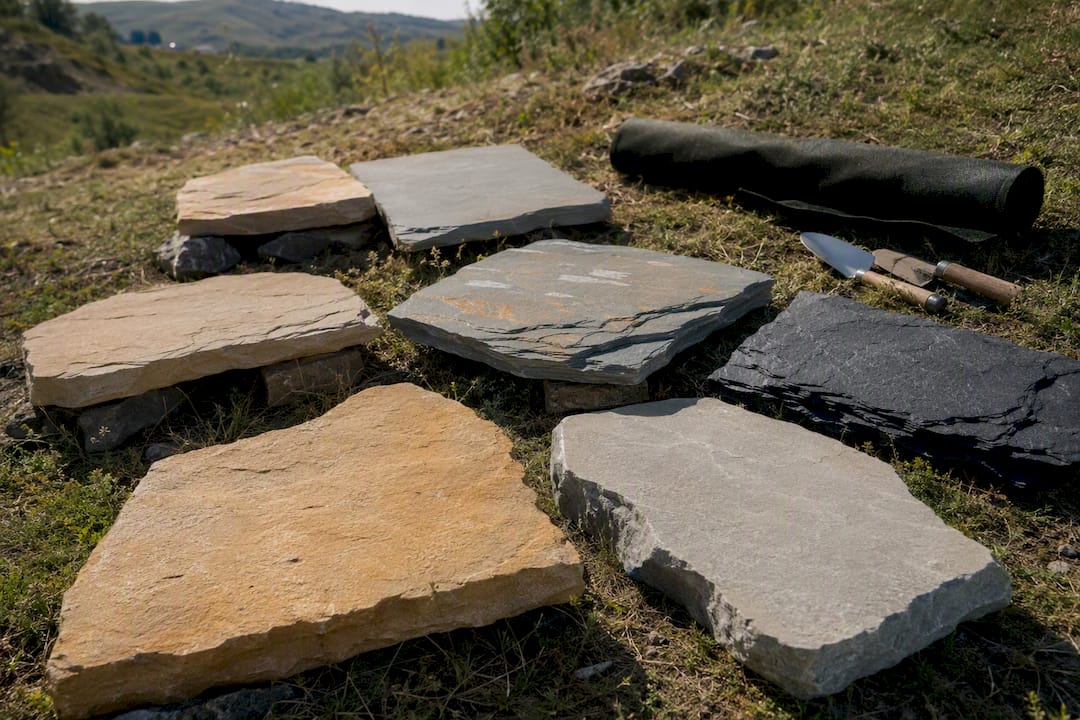
Flagstone typically runs 1 to 3 inches thick, and patio installations should use at least 1.5 inches to avoid cracking underfoot. Visit a local stone yard in person rather than ordering sight unseen, and buy roughly 10% extra. Quarry runs change, and matching a broken piece years later is nearly impossible otherwise.
Dry-Laid, Mortared, or Mortar-Over-Slab: Which Installation Fits?
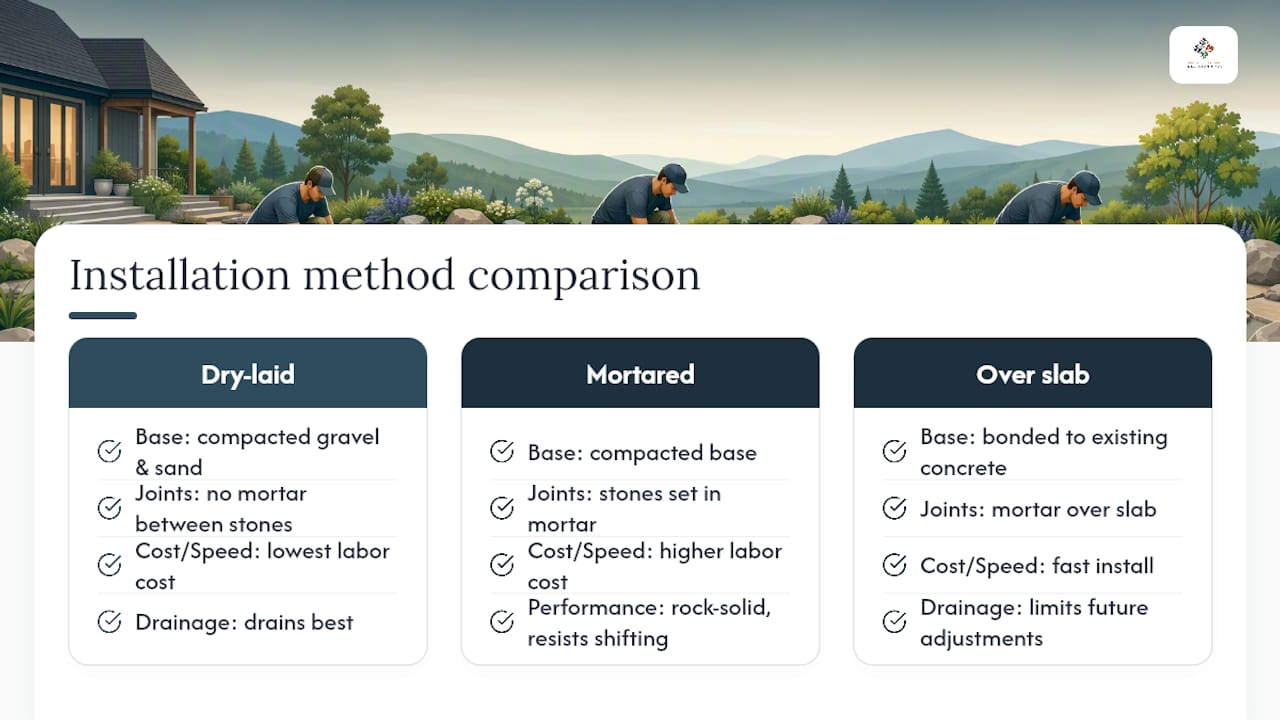
A dry-laid patio sits on a compacted gravel and sand base with no mortar between stones, which makes it the easiest system to repair and the most forgiving for DIY work. A fully mortared patio sets stones in mortar over a compacted base for a rock-solid, furniture-friendly surface that resists shifting. Mortar-over-slab bonds flagstone directly to an existing concrete pad, which is fast but limits future drainage adjustments.
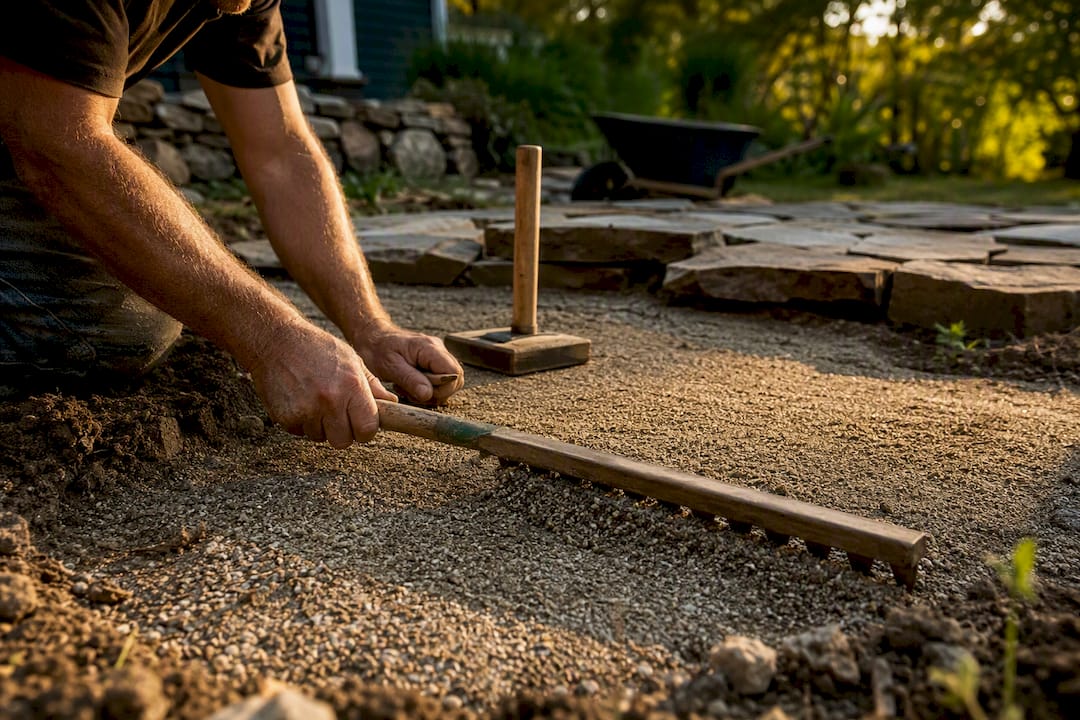
All three share a basic sequence: excavate, compact an aggregate base, add a bedding layer, set the stones, then finish the joints. Dry-laid systems drain best and cost least in labor. Mortared systems cost more but stay level under heavy grills or dining sets. Call a professional when you’re working with steep grades, integrated seat walls or fire features, or stones heavier than one person can safely lift.
What to Put Between Flagstone Joints
Joint material shapes both the look and the long-term maintenance of your patio.
- Pea gravel drains fast and looks casual, but it needs regular weed pulling and occasional refilling.
- Polymeric sand locks stones in place and cuts down on weeds in tighter joints, though performance varies by climate and rainfall intensity.
- Groundcover like creeping thyme softens the patio visually but requires irrigation and periodic trimming.
- Mortar creates the most stable, furniture-friendly joint but eliminates drainage through the surface entirely.
Pea gravel and planted joints suit informal, well-drained yards. Polymeric sand and mortar suit patios that see heavy furniture or frequent foot traffic.
What a Flagstone Patio Costs, and What You Get for It
Flagstone typically lands in the middle-to-upper range of patio material costs, well above poured concrete, because the irregular shapes require more skilled fitting labor per square foot. Cost drivers include stone type, how far the material has to travel, site access, and how much base excavation and grading the yard needs.
Pros: a natural look no manufactured product fully replicates, strong durability, and reliable traction even when wet. Cons: higher upfront cost, a surface that’s never perfectly flat, and weeds that can creep into wide joints if maintenance lapses. Fading is a minor risk with lighter sandstone in full sun. If budget is tight or you need a dead-flat surface for a dining set, a paver patio or manufactured flagstone-style paver is worth comparing before you decide.
Flagstone Patio Maintenance Tips and Common Repairs
Routine care is simple: sweep debris regularly, hose down the surface a few times a season, and reseal every couple of years if you want richer color and stain resistance. Check joints each spring for weed growth and top off pea gravel or polymeric sand as it settles.
The most common repair is resetting a stone that’s gone low or started rocking, usually caused by base erosion underneath. Cracked pieces should be replaced rather than patched. In freeze-thaw climates, inspect joints and edges each fall for gaps where water can pool and expand. If more than a few stones are shifting at once, that usually points to a drainage issue below the surface, and it’s worth calling in a contractor before it spreads.
When a Professional Installation Makes the Difference
Villageprecisionpros has completed more than 2,000 outdoor projects across Central Arkansas, and the flagstone jobs that go wrong almost always trace back to skipped base prep or ignored drainage, not the stone itself. Steep grades, integrated fire features, and complex water flow are exactly where professional grading and drainage planning earn their cost. A consult typically includes a site visit, a ballpark cost range, and stone options suited to your yard, drawing on the same hardscape and stone masonry expertise behind those completed projects.
Our Take: Skip the Pinterest Trap, Plan the Ground First
Most flagstone patio content sells the fantasy and skips the groundwork, literally. Homeowners fall for a photo of loose, irregular stone set in lush moss and assume it’s a weekend project. It rarely is. The single biggest driver of a flagstone patio’s lifespan isn’t the stone you pick. It’s what happens underneath it before a single piece gets set.
Conventional advice spends most of its energy on aesthetics: which stone color, which pattern, which joint filler looks best in photos. That’s backwards. A gorgeous stone selection sitting on a poorly compacted base will heave, shift, and rock within two or three seasons, freeze-thaw climates especially. Get the base and drainage right first, then choose the look you want. That order matters more than any single material decision in this article.
If you’re weighing DIY against hiring out, be honest about the physical reality: flagstone pieces are heavy, irregular, and unforgiving of shortcuts. A weekend warrior can pull off a small dry-laid path. A full patio with proper grading is a different job entirely.
Ty
Ready to Plan Your Flagstone Patio?
Villageprecisionpros handles the part most DIY guides gloss over: correct grading, drainage, and base compaction that keep flagstone from shifting or pooling water years down the road. Instead of guessing at stone thickness or joint spacing from a blog post, you get a site visit tailored to your yard’s actual grade and soil.

Schedule a landscaping consultation and bring a few photos of styles you like, rough patio dimensions, and any drainage trouble spots you’ve noticed. After the site visit, expect a written estimate outlining stone options, base work, and a realistic installation timeline. From there, it’s a straightforward path from idea to finished patio.
Sources
- Flagstone Patios: What to Know
- Flagstone Patios and Walkways: Types, Cost, Installation, and Care
- How to Build a Flagstone Patio: Ideas and Tips for Success
- Flagstone Patio: Photos & Ideas
FAQ
How much does a 20×20 flagstone patio cost?
Pricing varies widely by region and stone type, but flagstone consistently falls toward the middle-to-upper end of patio material costs because of the skilled labor required to fit irregular pieces. Getting a site-specific quote is the only reliable way to know your number.
Is a flagstone patio cheaper than concrete?
No, flagstone typically costs more than poured concrete due to higher material costs and the additional skilled labor needed to cut and fit each stone.
What are the disadvantages of flagstone?
Flagstone costs more upfront, creates a surface that’s never perfectly flat, and can develop weeds in wide joints without regular maintenance. Lighter stone types can also fade in full sun over time.
What is the best material to put between flagstones?
It depends on your priorities: pea gravel and polymeric sand both drain well, while mortar offers the most stability for furniture and heavy use, and groundcover adds visual softness at the cost of extra upkeep.
Recommended
- Paver Patio Ideas: Design, Materials, and What It Really Takes
- Stamped Concrete Patio Pros and Cons: A Homeowner’s Guide
- Patio Size Guide for Homeowners: Dimensions and Layout Tips
- Patio Design & Installation: Transform Your Outdoor Space
If an existing patio rocks underfoot or its joints have failed, start with flagstone patio repair.
A timber roof over the patio changes the layout. See our cedar pergola guide.