Artificial pet turf installation is the process of preparing, selecting, and installing specialized synthetic grass designed to handle pet waste, heavy use, and daily outdoor activity. Unlike standard artificial grass for sports fields, pet-specific turf uses PE/PP fiber blends, flow-through backing, and antimicrobial coatings to prevent urine entrapment and odor buildup. Professional installation costs $7–$12 per square foot and takes 2–4 days for most residential yards. That timeline means your pets can be back outside within the same week. For Arkansas homeowners tired of muddy paws, patchy grass, and constant lawn repairs, this guide covers every step from base prep to long-term upkeep.
What tools and materials do you need for artificial pet turf installation?
Gathering the right tools before you start saves time and prevents costly mistakes. Our crews rely on a consistent set of hand and power tools for every pet turf project.
Essential tools:
- Utility knife with extra blades for clean turf cuts
- Flat shovel and wheelbarrow for excavation
- Plate compactor or hand tamper for base compaction
- Power broom or stiff brush for infill distribution
- Staple gun, galvanized nails, and a rubber mallet for edge securing
- Tape measure, chalk line, and straight edge for accurate layout
Material selection matters just as much as the tools. Traditional artificial grass was designed for sports fields and lacks the features needed to handle pet waste odors effectively. Pet-specific synthetic turf uses polyethylene or polypropylene fiber blends that resist urine absorption. Nylon fibers absorb moisture and should be avoided in pet areas.
Comparing base and infill materials
| Material | Best use | Pros | Cons |
|---|---|---|---|
| Crushed stone (3/4 inch) | Primary base layer | Excellent drainage, stable | Heavier to transport |
| Decomposed granite | Base or top dressing | Good compaction, natural look | Can shift under heavy use |
| Silica sand infill | Blade support | Affordable, widely available | No odor control |
| Antimicrobial rubber infill | Odor and hygiene control | Reduces bacteria, durable | Higher upfront cost |
| Zeolite infill | Odor absorption | Natural mineral, pet-safe | Requires periodic replacement |
Pro Tip: Choose turf with blade resiliency and permeability as your top two criteria. Aesthetics and price matter, but a turf that flattens or traps moisture under pet traffic will disappoint within the first year.
How do you prepare the site for pet turf?
Site preparation is the single most important phase of any pet-friendly lawn installation. A poorly built base causes settling, odor buildup, and premature turf failure.
- Mark and excavate. Remove 2–4 inches of existing soil across the entire installation area. High-traffic pet zones benefit from deeper base layers of 3–4 inches of crushed stone for structural integrity and odor prevention.
- Grade for drainage. Slope the base at least 1% away from structures. Water and urine must drain freely or they will pool beneath the turf and create persistent odors.
- Compact the base. Spread crushed stone or decomposed granite in 2-inch lifts and compact each layer with a plate compactor. A loose base will shift and create uneven surfaces over time.
- Handle weed control correctly. Applying pre-emergent herbicide is the right approach. Weed barrier fabric traps urine-related moisture and bacteria below the turf, causing odor problems that are very difficult to fix after installation.
- Secure the perimeter. Install bender board or treated lumber around the edges of the installation area before laying turf. This frame gives you a solid anchor point.
Perimeter edge securing options:
- Galvanized nails every 6–12 inches along the border
- Treated wood framing for high-dig-risk areas
- Concrete curbing for permanent, heavy-use installations
Pro Tip: Our crews always check drainage by running a hose over the compacted base before laying any turf. If water pools anywhere, we re-grade that spot. Fixing drainage after the turf is down means pulling everything up and starting over.
For Arkansas properties with clay-heavy soil, proper landscape water drainage is especially critical. Clay does not drain naturally, so your base layer does all the work.
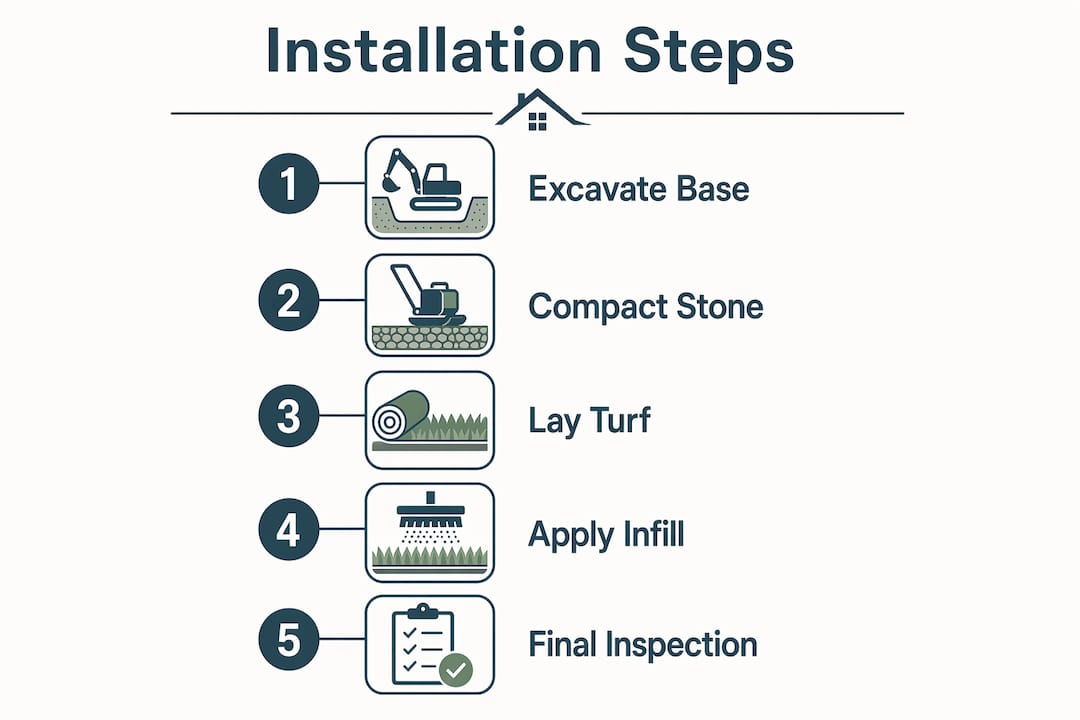
What is the step-by-step process for installing pet turf?
A clean, professional-looking result depends on following each installation step in order. Skipping steps or rushing cuts creates problems that show up weeks later.
- Acclimate the turf. Unroll the turf and let it rest flat in the sun for 1–2 hours before cutting. Heat relaxes the fibers and backing, making the material easier to cut and fit accurately.
- Measure and cut. Measure the area carefully and add 3–4 inches of overhang on all sides. Use a sharp utility knife and cut from the backing side for clean, straight lines. Score lightly first, then cut through fully.
- Fit around obstacles. For trees, posts, or garden beds, make relief cuts from the edge inward. Work slowly and test the fit before making final cuts.
- Position seams correctly. Seam placement should avoid known pet running paths. Use professional-grade adhesive rather than tape for seams. Align blade direction on both pieces so the seam disappears into the pile. The zipper seam method, where you fold back both edges and apply adhesive to the joining strip, produces the cleanest result.
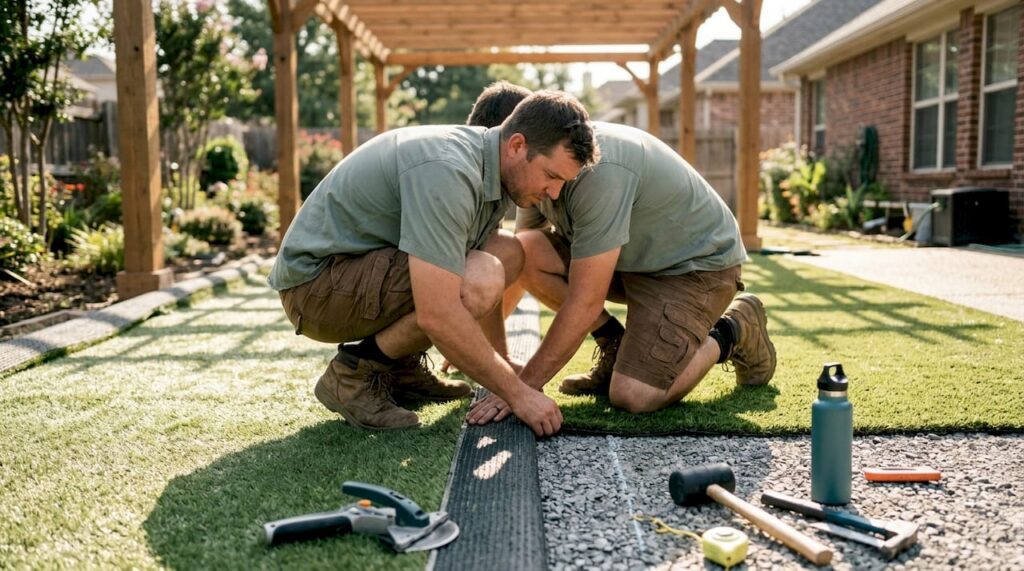
- Secure the edges. Fold the overhang under and nail or staple through the backing into the perimeter frame. Galvanized nails every 2–3 inches along all edges prevent digging damage. Loose edges are the most common failure point in pet turf installations.
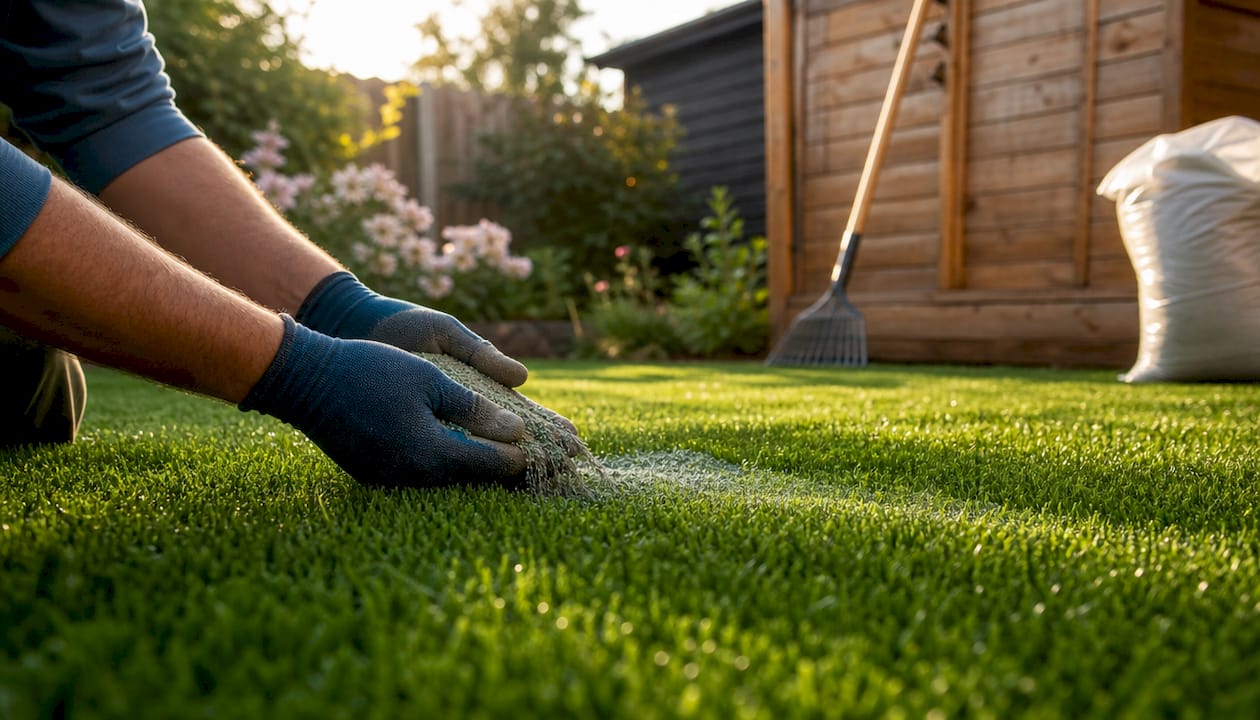
- Apply infill. Spread infill evenly using a drop spreader or by hand. Work in two passes at 90-degree angles to each other for even coverage. Antimicrobial infill, such as products using Microban technology, reduces bacteria by 99% and extends turf life well beyond 15 years.
- Brush and rinse. Use a power broom to stand the fibers upright after infill application. Rinse the entire surface with a garden hose to settle the infill and remove any installation debris.
Post-installation checklist:
- Fibers standing upright with no flat spots
- Seams invisible from standing height
- Edges fully secured with no lifting corners
- Infill distributed evenly across the surface
- Surface draining freely with no standing water
Villageprecisionpros handles all of these steps on every pet turf installation we complete in Central Arkansas, including final inspection and cleanup before we leave the site.
How do you maintain and troubleshoot artificial pet grass?
Synthetic turf for dogs is low maintenance, not zero maintenance. A consistent routine keeps the surface clean, odor-free, and looking sharp for years.
Routine maintenance tasks:
- Rinse the turf with a garden hose 1–2 times per week in pet-use areas
- Apply an enzymatic cleaner monthly to break down urine proteins that rinsing alone cannot remove
- Brush the fibers upright every 4–6 weeks using a stiff broom or power broom
- Remove solid waste immediately to prevent staining and odor
Regular rinsing combined with antimicrobial infill provides far better odor control than either method alone. Manufacturers recommend antimicrobial technology built directly into the turf fibers as a critical layer of protection between cleanings.
Managing heat in Arkansas summers
Arkansas summers push outdoor temperatures well above 90°F, and turf surfaces absorb and hold that heat. Artificial turf can reach 130–150°F in direct sun, which poses a real risk to your dog’s paws. Limit pet access during peak afternoon hours from june through august. A quick rinse with the garden hose drops surface temperatures significantly within minutes. Shade structures, pergolas, or strategically placed trees also help.
Patching and seasonal care
“The most overlooked part of pet turf ownership is the perimeter. Edges that lift even slightly invite digging, and one determined dog can unravel a corner in an afternoon. Check your edges every spring and re-nail any sections that have shifted.”
For small tears or lifted seams, apply fresh adhesive and press the backing flat. Weight the repair with a board for 24 hours while the adhesive cures. For larger damage, cut out the affected section and patch with a matching piece, aligning blade direction carefully before gluing.
Seasonal maintenance in Arkansas should include a thorough inspection each spring after winter freeze-thaw cycles. Check for any base settling that created low spots, and top-dress with additional infill where needed.
Pro Tip: Artificial pet turf breaks even versus natural lawn costs within 5–7 years when you factor in water, fertilizer, and repair savings of $1,500–$3,000 annually. That math gets even better in Arkansas, where summer irrigation costs are high.
Key Takeaways
Proper base preparation, pet-specific turf selection, and antimicrobial infill are the three factors that determine whether artificial pet turf installation succeeds or fails over the long term.
| Point | Details |
|---|---|
| Base depth matters | Excavate 2–4 inches and compact crushed stone for drainage and structural stability. |
| Skip the weed barrier | Use pre-emergent herbicide instead; fabric traps urine and causes persistent odor. |
| Secure every edge | Galvanized nails every 2–3 inches prevent digging damage, the most common failure point. |
| Choose antimicrobial infill | Products with built-in antimicrobial technology reduce bacteria by 99% and extend turf life. |
| Maintain a rinse routine | Weekly rinsing plus monthly enzymatic cleaning keeps pet turf odor-free and hygienic. |
What I’ve learned from installing pet turf across Central Arkansas
I’ve seen homeowners make the same two mistakes repeatedly. They buy the cheapest turf available, and they rush the base. Both decisions cost more to fix than doing it right the first time would have.
The base is where the real work happens. You can install beautiful turf over a poor base and it will look fine for about six months. Then the settling starts, the low spots appear, and the odors follow. Our crews spend more time on base preparation than on any other phase of a pet turf project, and that investment shows up in how the finished yard performs three years later.
Turf selection is the second place homeowners cut corners. Standard artificial grass designed for aesthetics simply does not handle pet waste the way pet-specific products do. The flow-through backing and antimicrobial fiber coatings are not marketing language. They are functional engineering decisions that make a measurable difference in daily hygiene.
Edge securing is the detail most DIY installations underestimate. A dog that wants to dig will find any loose corner within days. Galvanized nails every 2 inches, or a treated wood perimeter frame, are not excessive. They are the minimum standard for a yard with an active dog.
My honest recommendation for Arkansas homeowners: invest in the right materials, take your time on the base, and treat the edges like they matter. The result is a yard that shrugs off daily pet use, stays clean with minimal effort, and looks good for 15 years or more.
— Ty
Villageprecisionpros: professional pet turf services in Central Arkansas
Villageprecisionpros has completed over 1,750 outdoor projects across Central Arkansas since 2020, including full-service artificial turf installations designed specifically for pet owners. Our team handles every phase: site excavation, base construction, turf selection, installation, and final cleanup. We use pet-specific turf products with flow-through backing and antimicrobial infill on every project.
Arkansas homeowners can schedule a consultation to get a site-specific estimate and material recommendation. We stand behind our work with a warranty on both materials and installation labor. If you want a yard your pets can use every day without the mud, the repairs, or the water bills, we are ready to build it.
FAQ
What is the best infill for artificial pet turf?
Antimicrobial infill products, including those using Microban technology, reduce bacteria by 99% and provide the best odor control for pet areas. Zeolite is a natural alternative that absorbs odor but requires periodic replacement.
How long does artificial pet turf installation take?
Most residential pet turf projects take 2–4 days for professional installation. Homeowners can typically allow pet access within the same week after completion.
Why should I avoid weed barrier fabric under pet turf?
Weed barrier fabric traps urine-related moisture and bacteria beneath the turf surface, creating persistent odor problems that are difficult to fix without removing the turf entirely. Pre-emergent herbicide applied to the soil is the correct weed control method.
How do I keep pet turf cool in Arkansas summers?
Rinse the turf surface with a garden hose during peak heat hours to drop surface temperatures quickly. Shade structures and limiting pet access between noon and 4:00 PM in summer also reduce heat exposure risk.
How much does artificial pet turf cost compared to natural grass?
Professional pet turf installation costs $7–$12 per square foot upfront. That investment typically breaks even with natural lawn costs within 5–7 years when accounting for annual savings of $1,500–$3,000 in water, fertilizer, and maintenance.